.jpg)
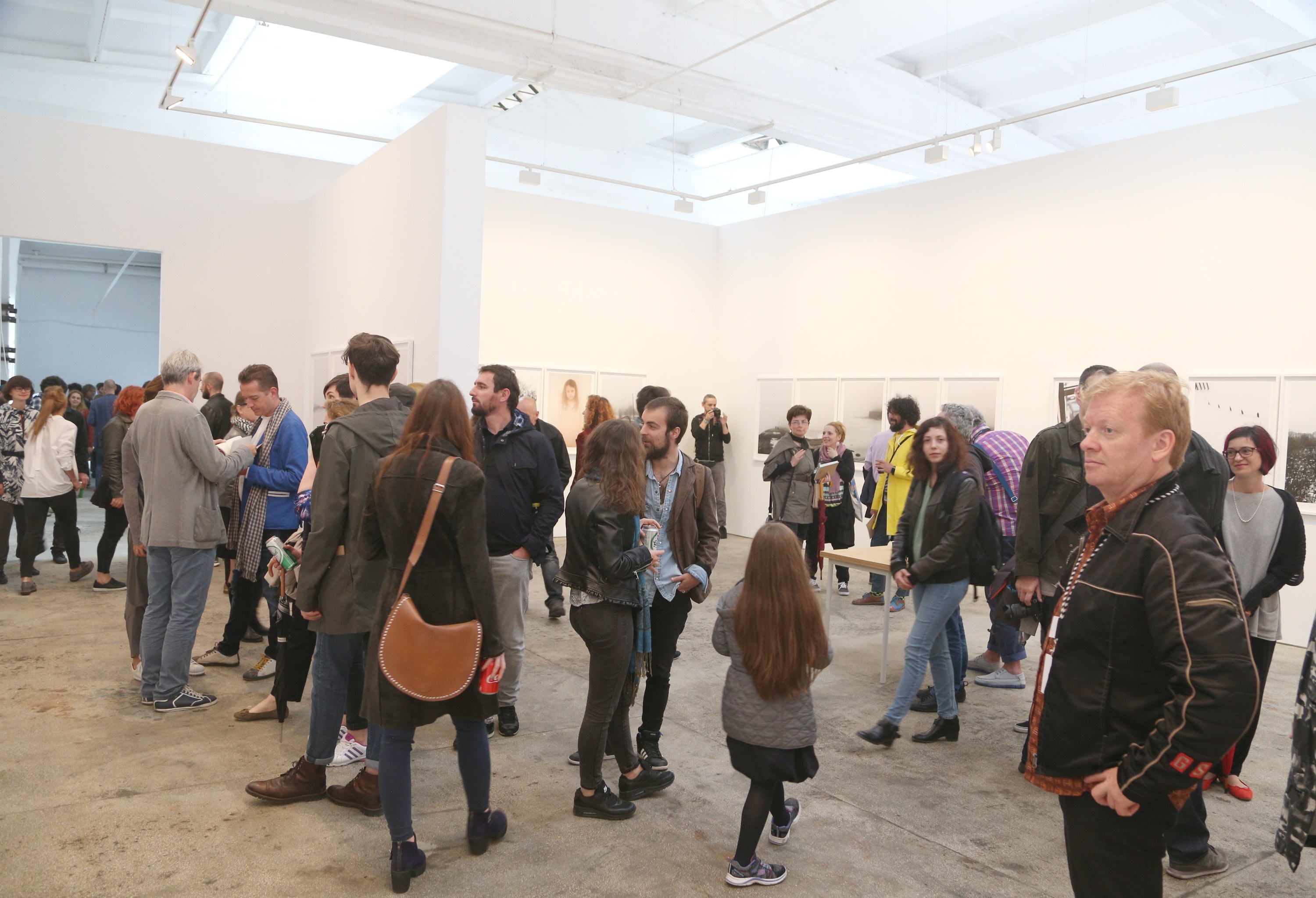
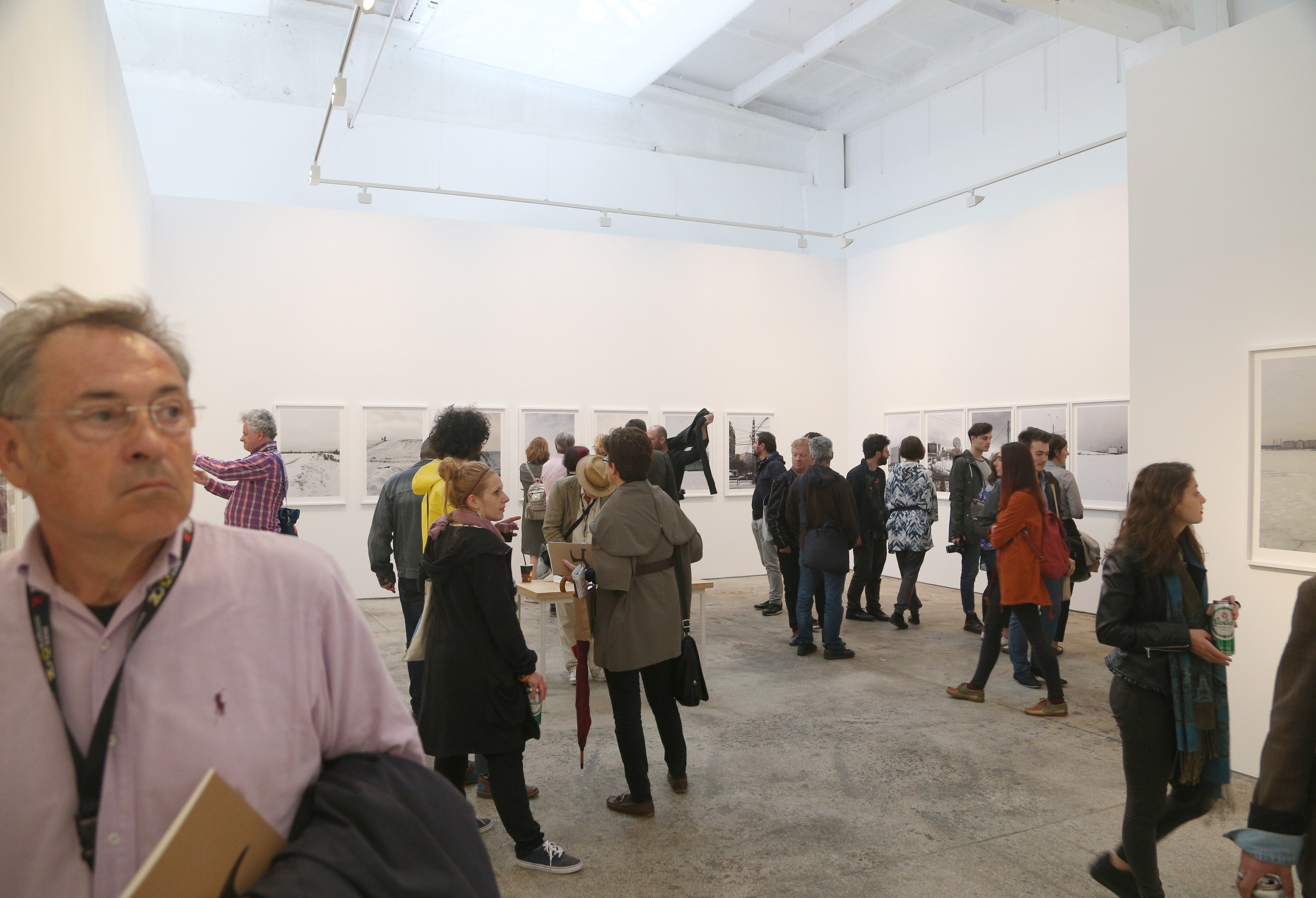
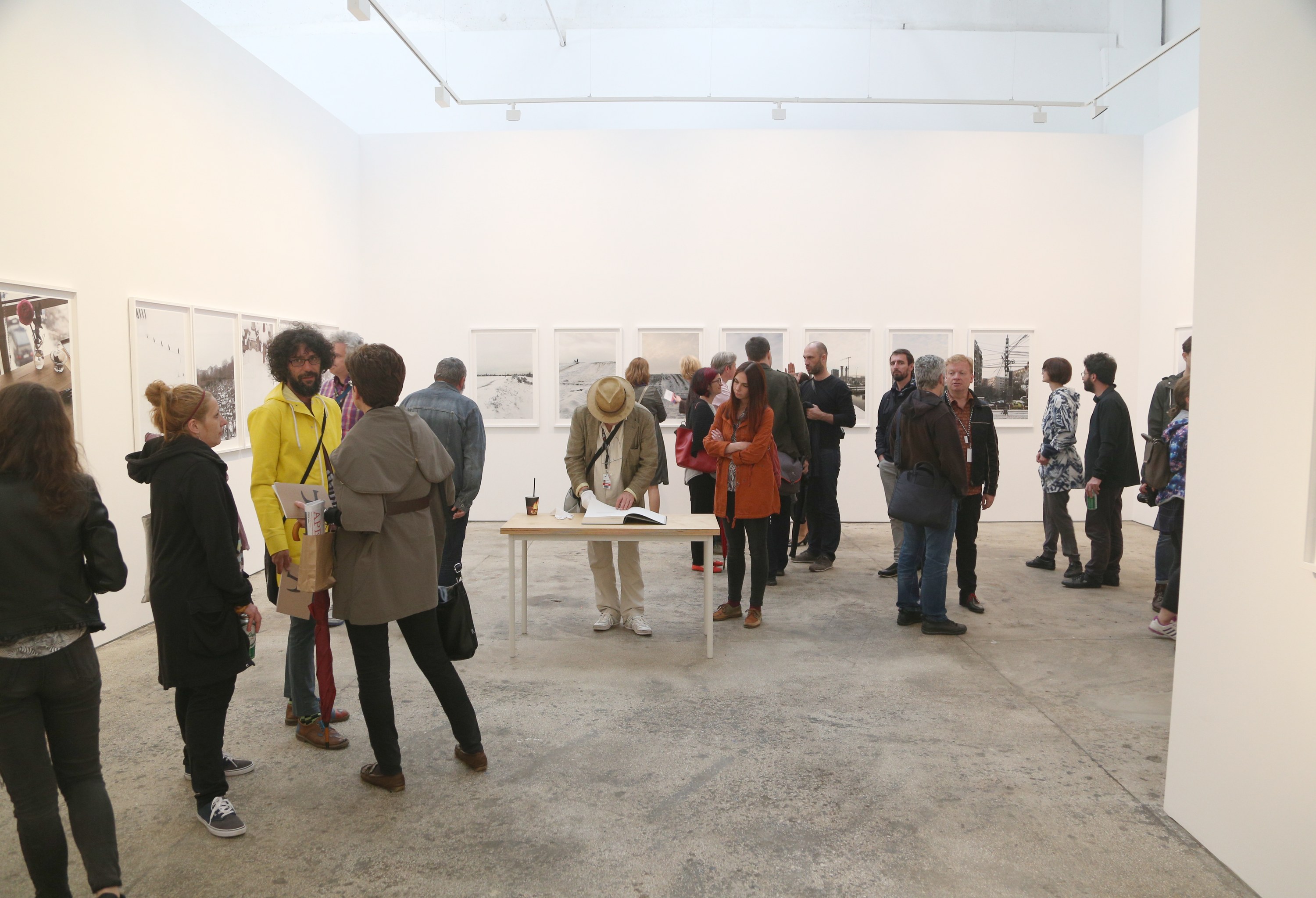
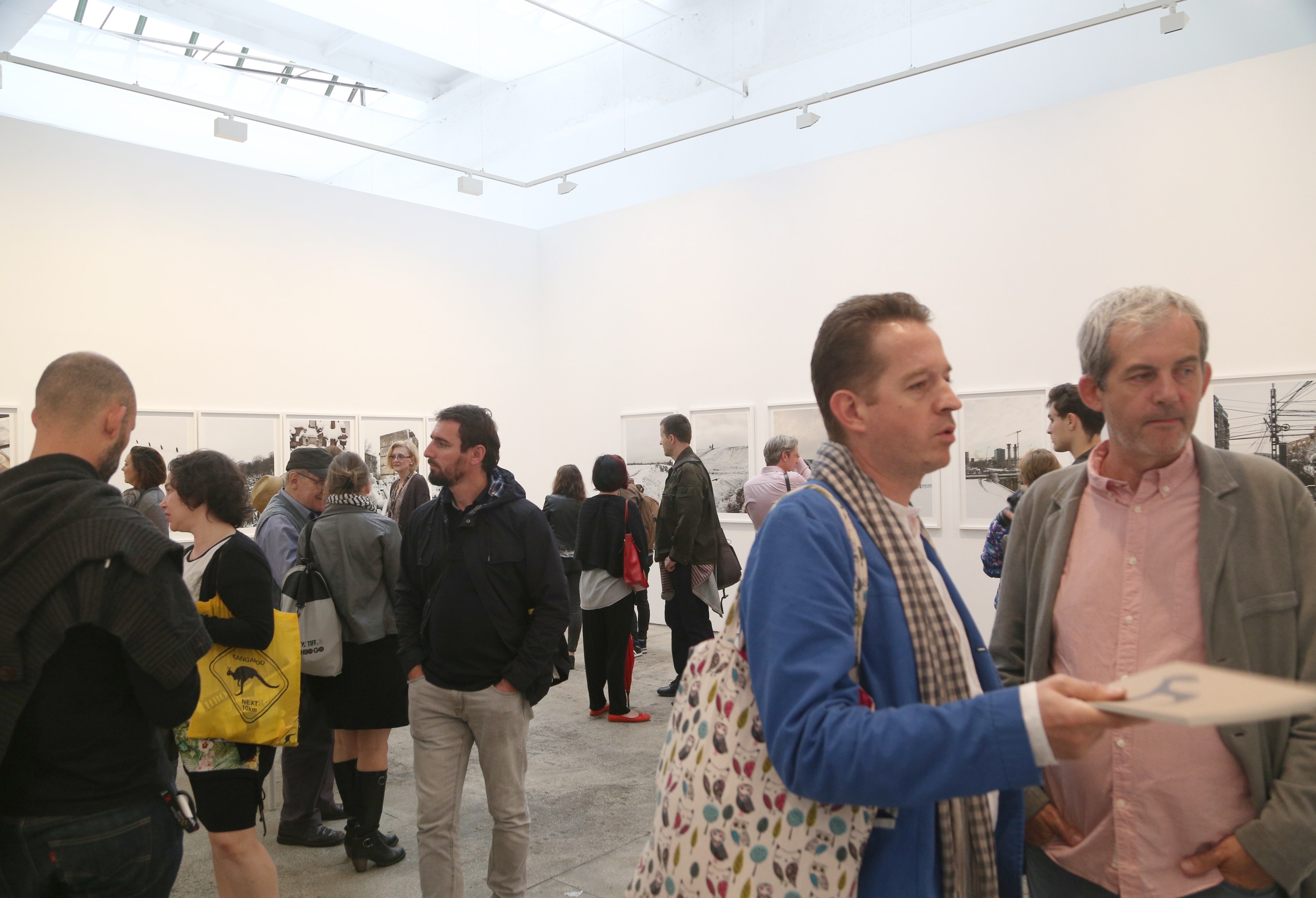
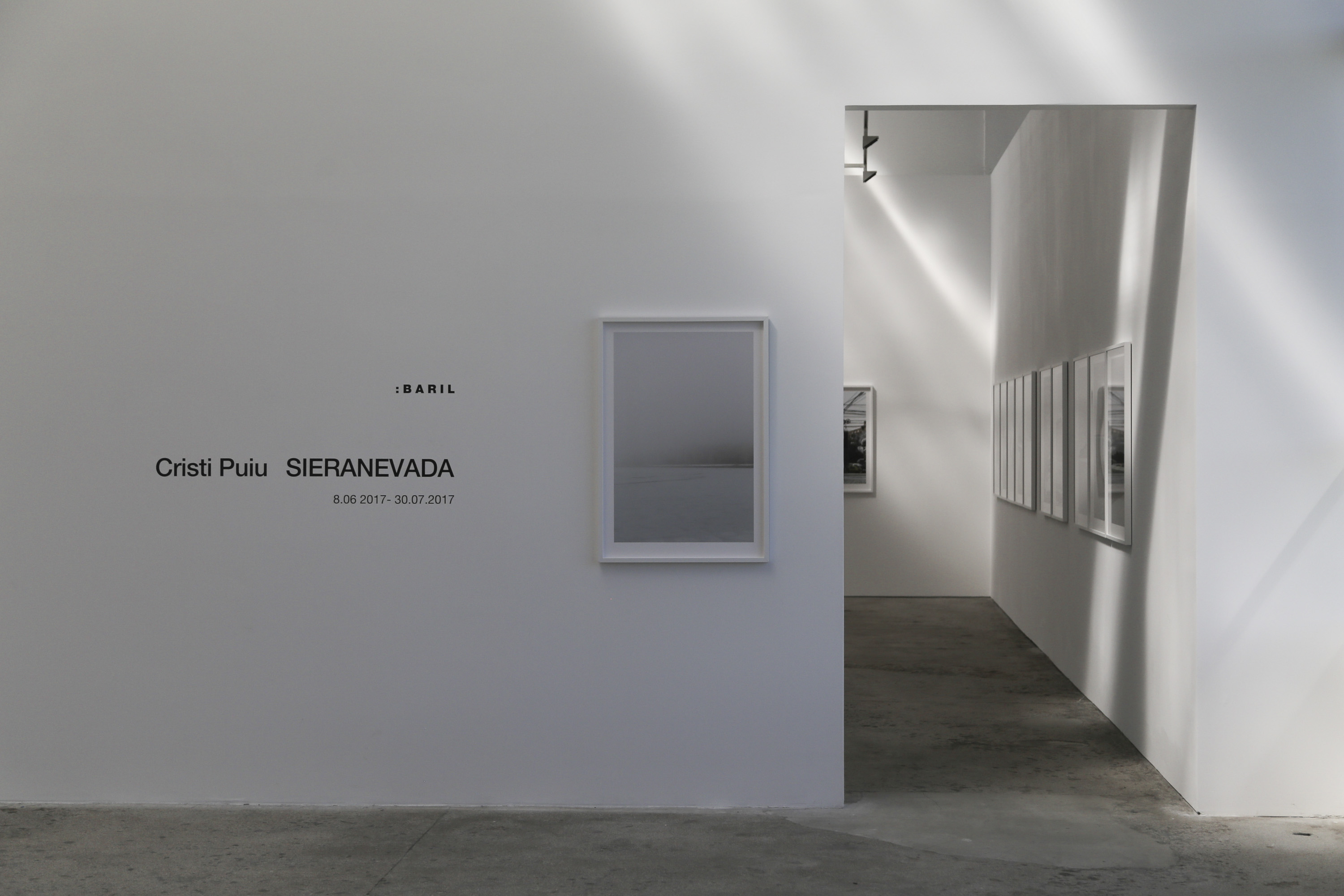
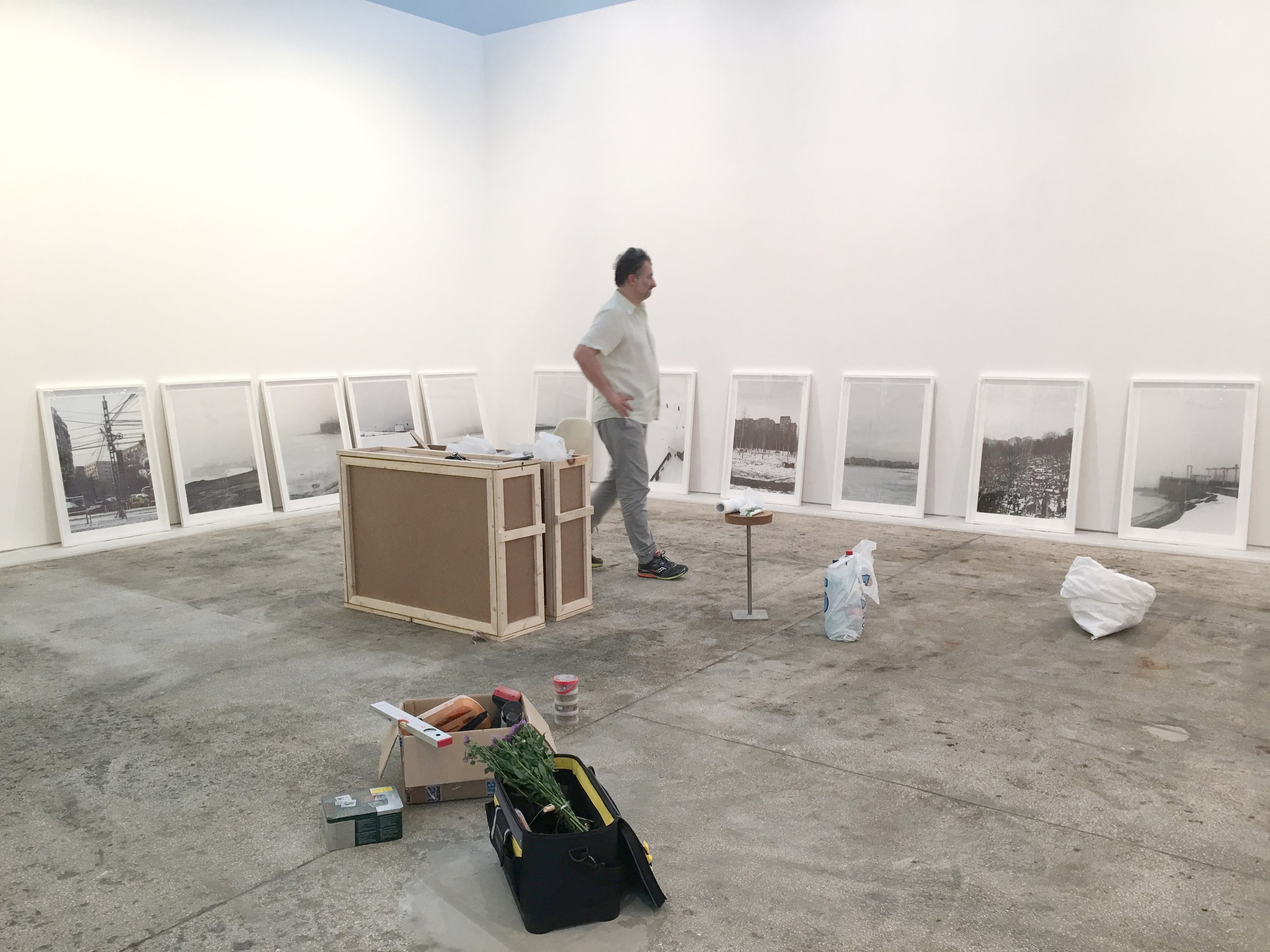
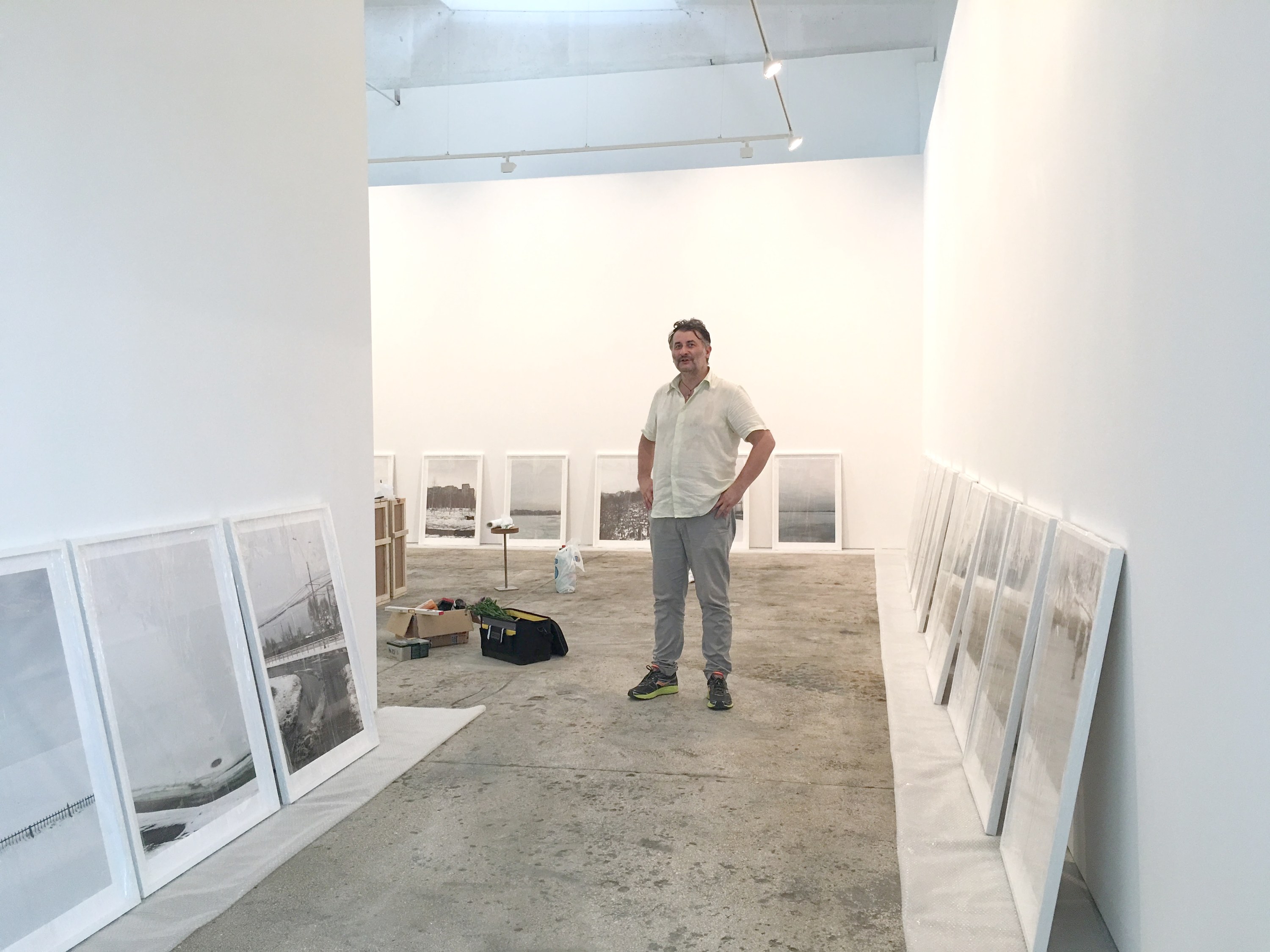
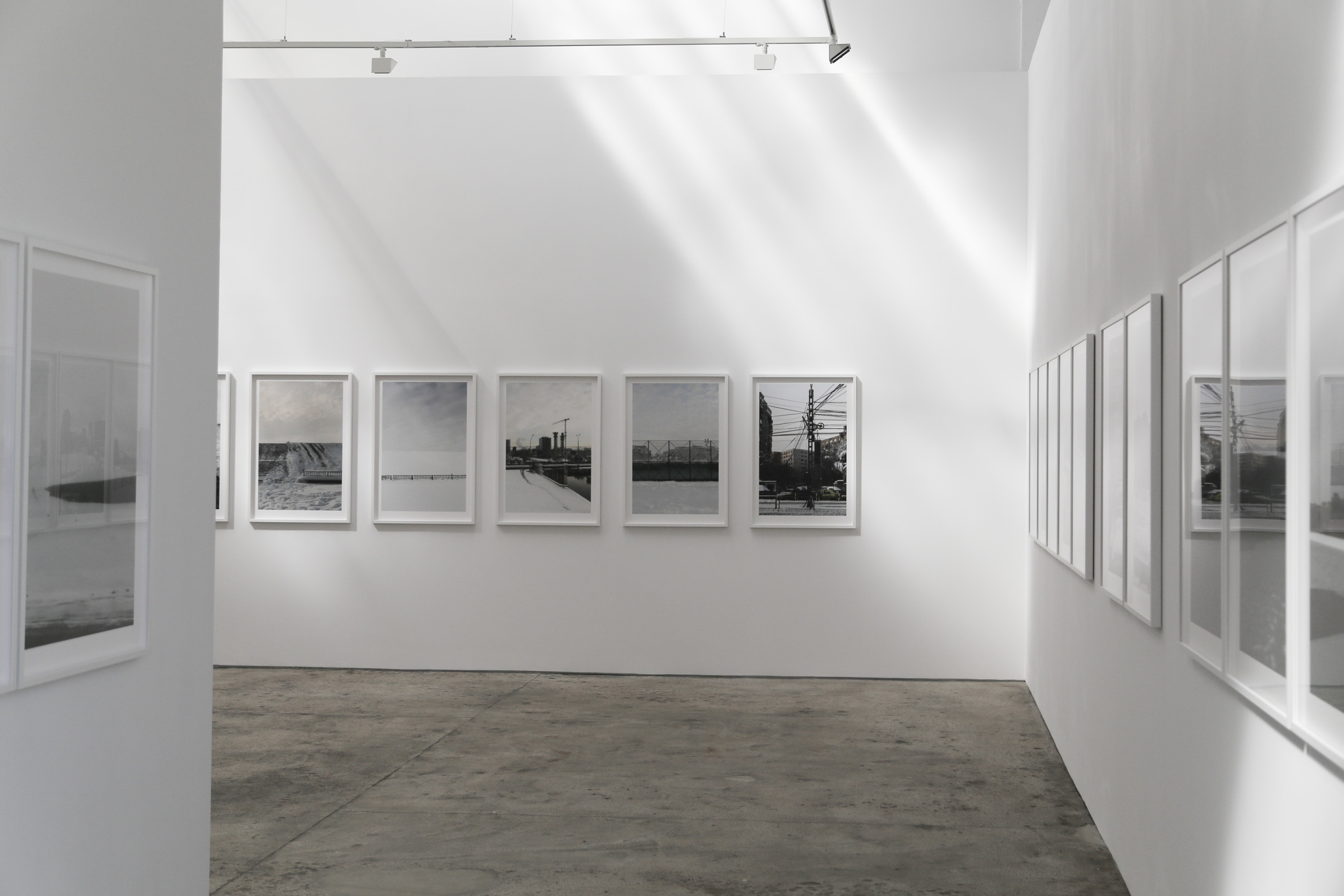
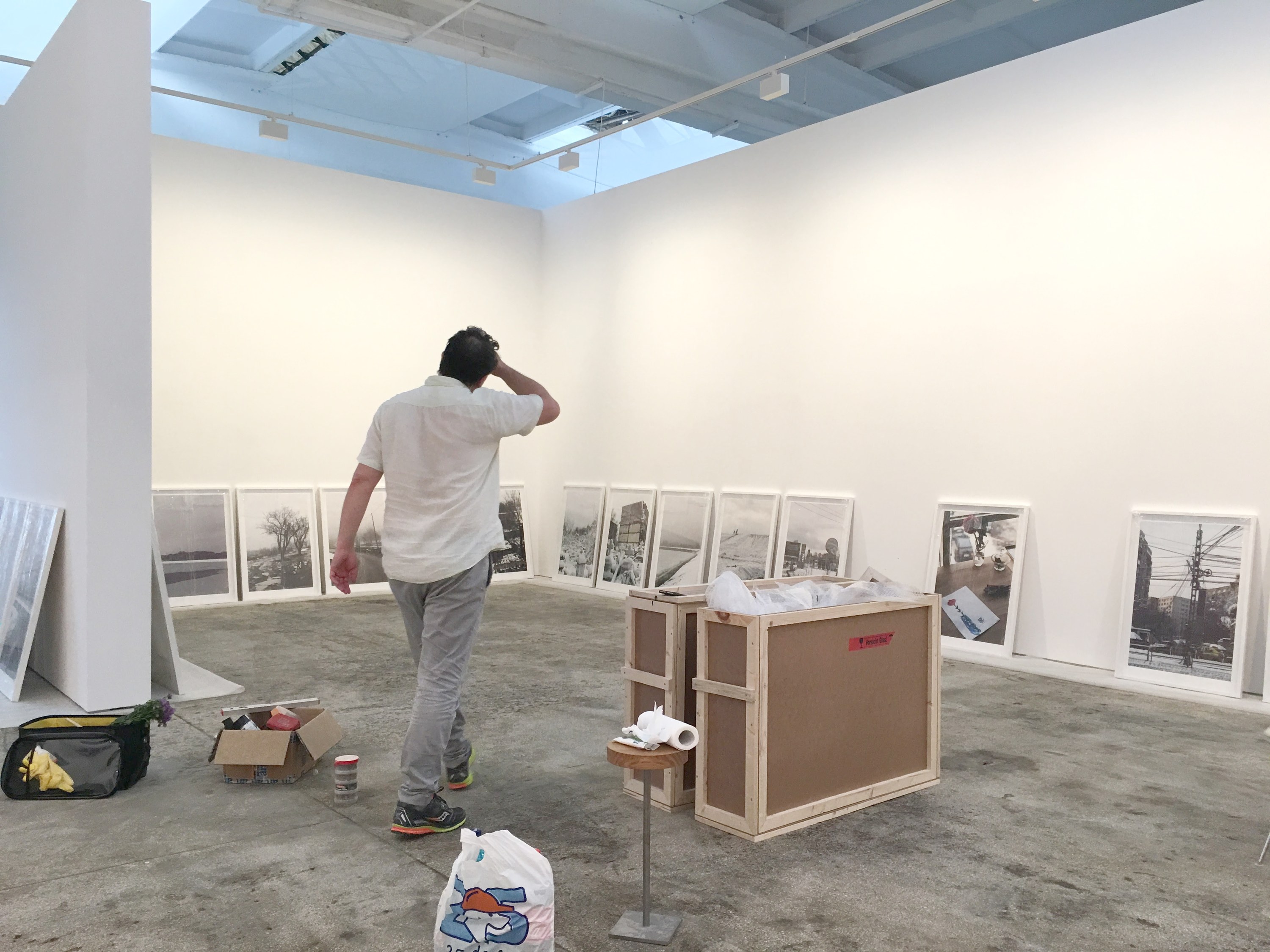
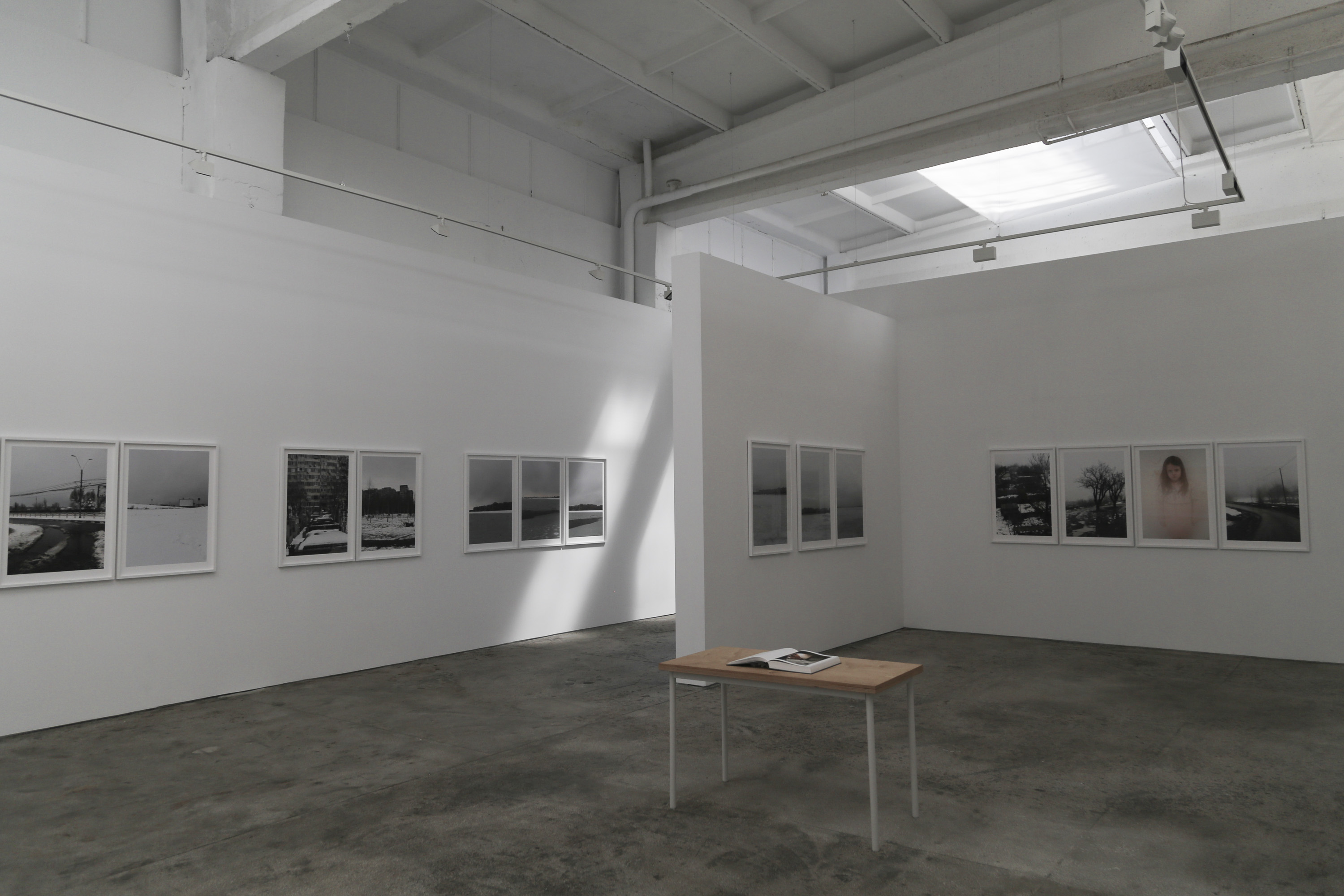
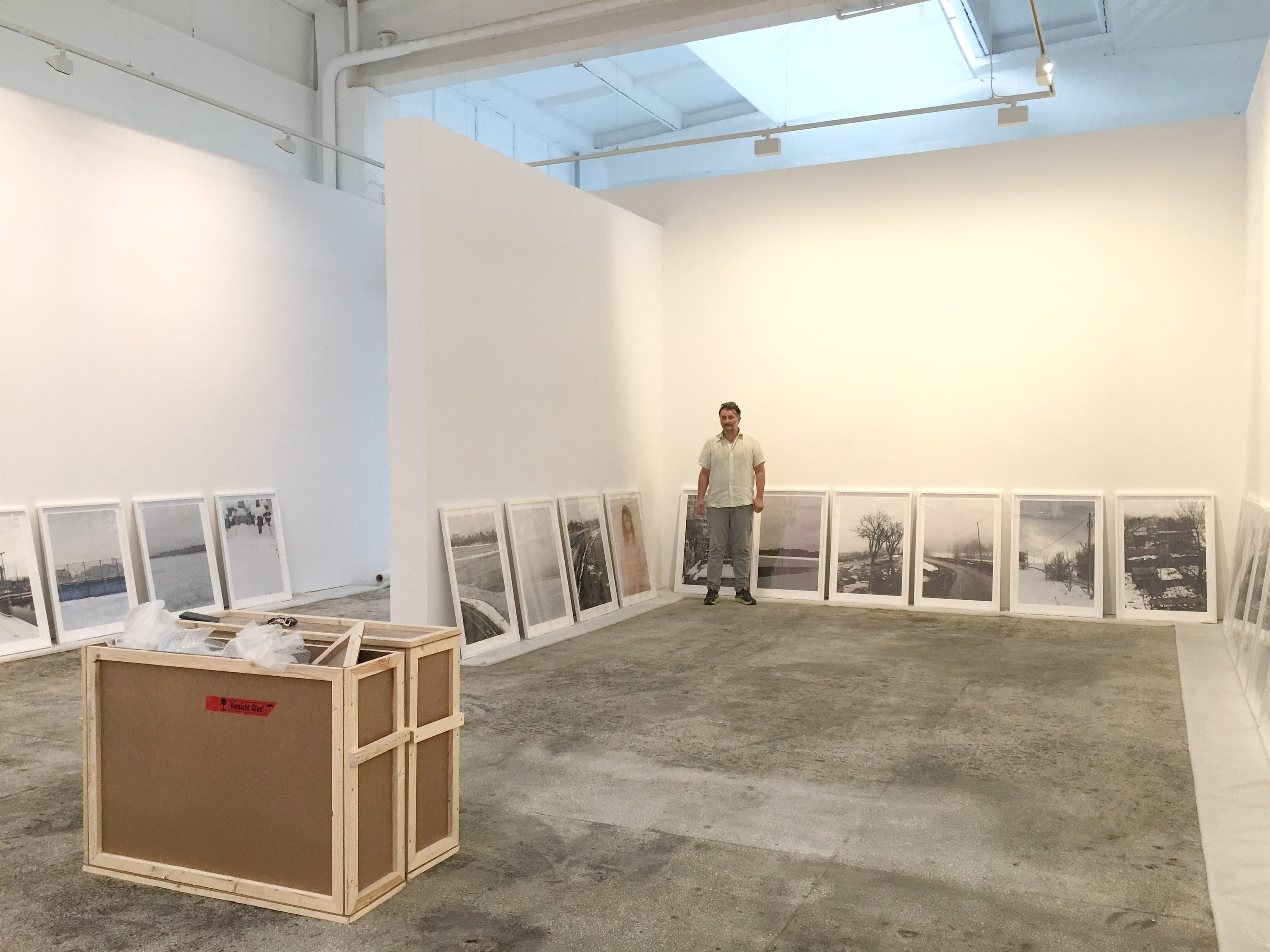
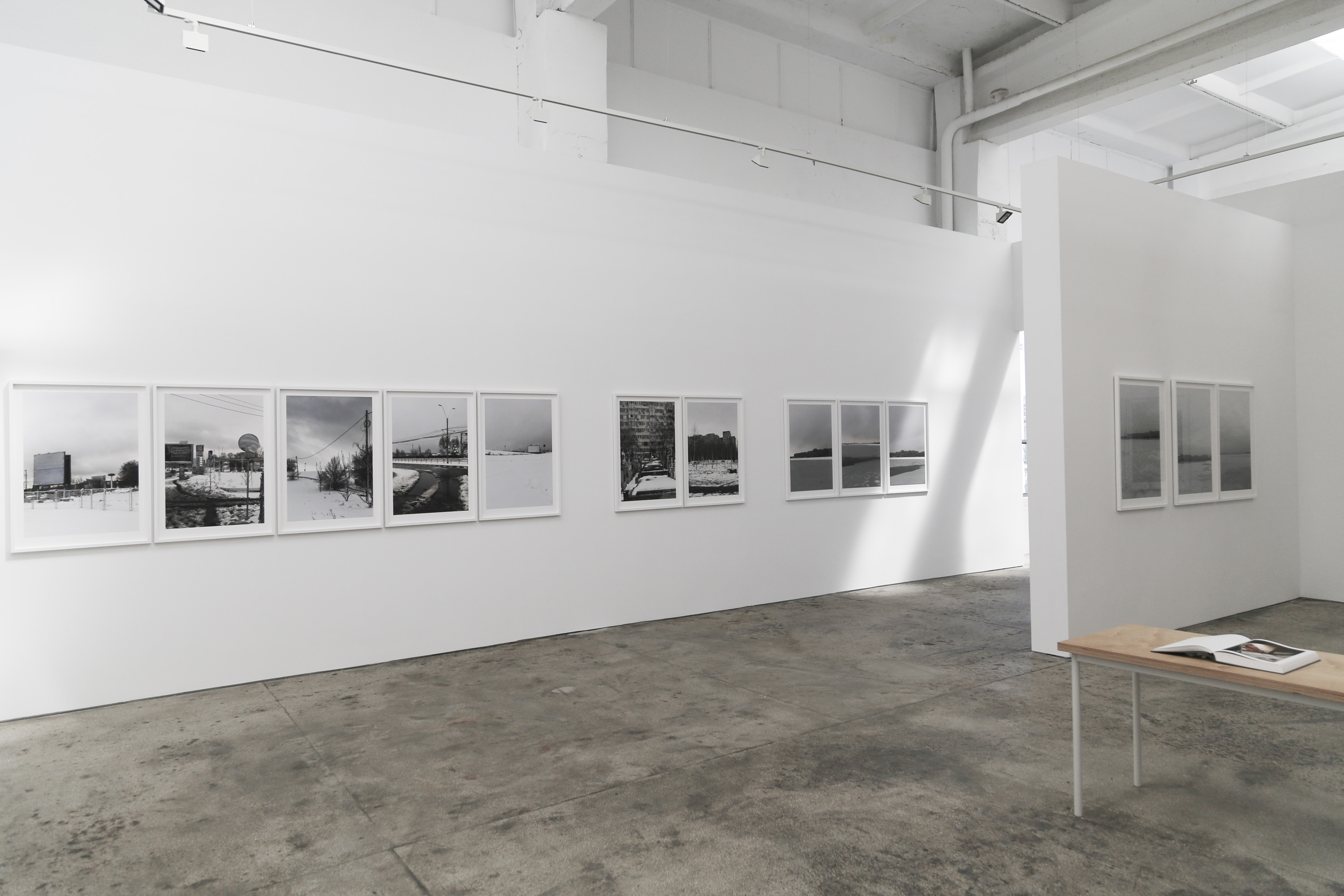
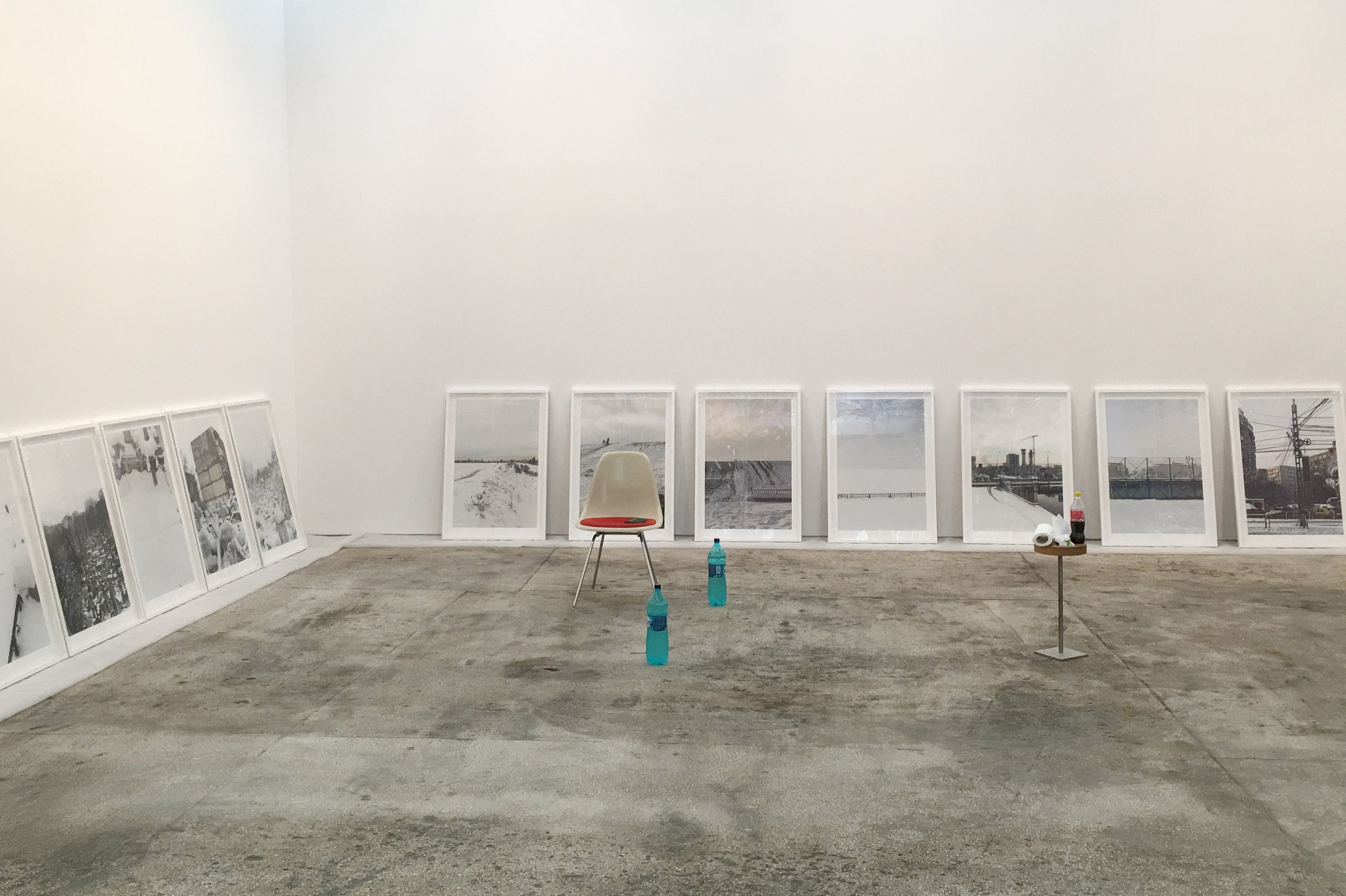
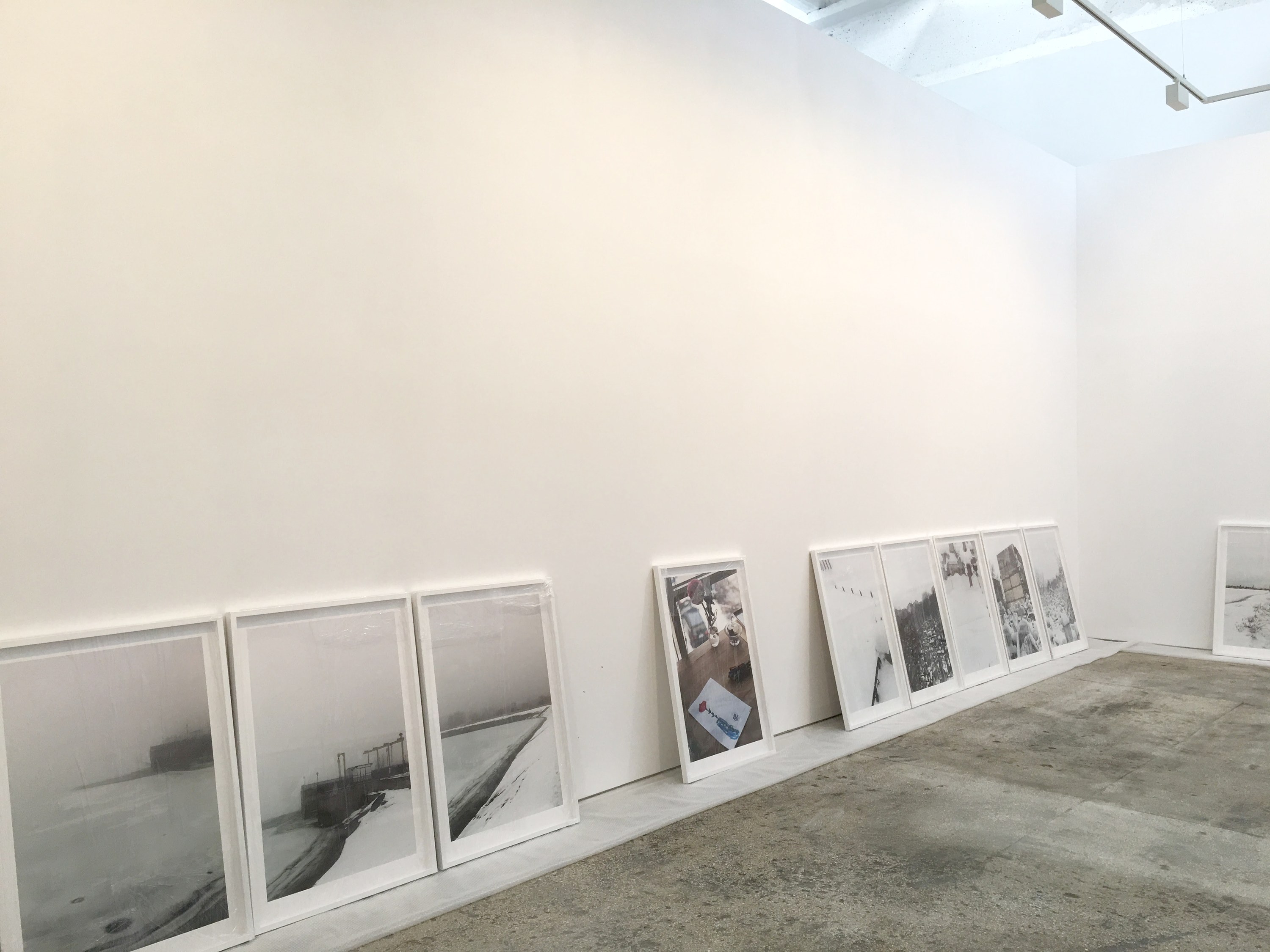

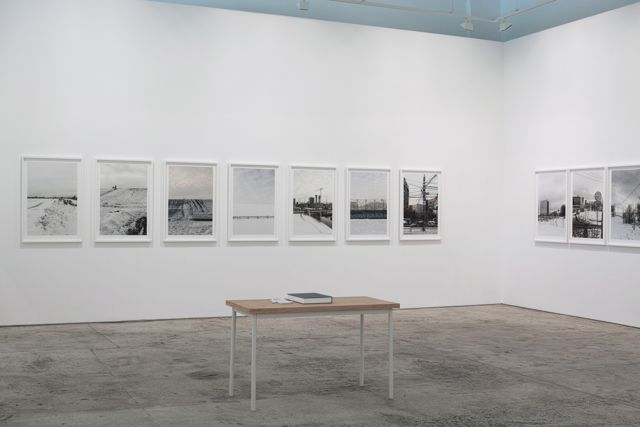
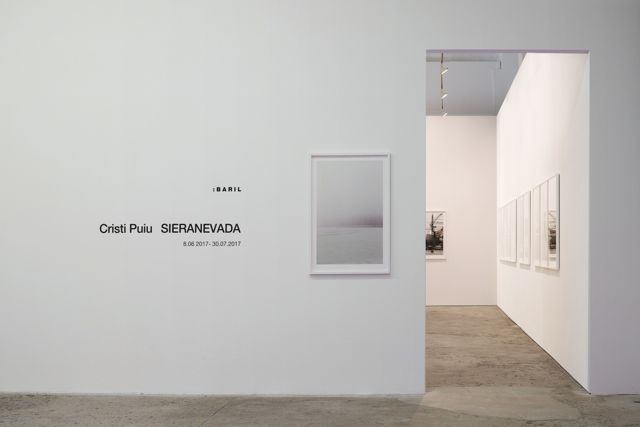
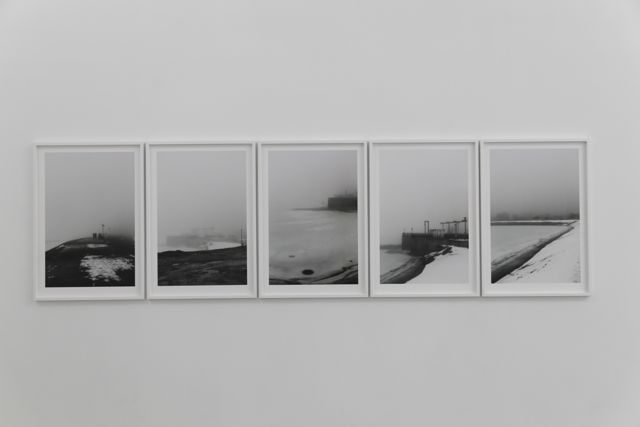
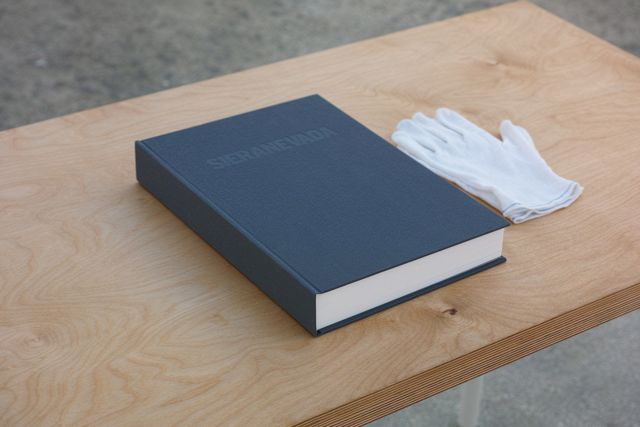
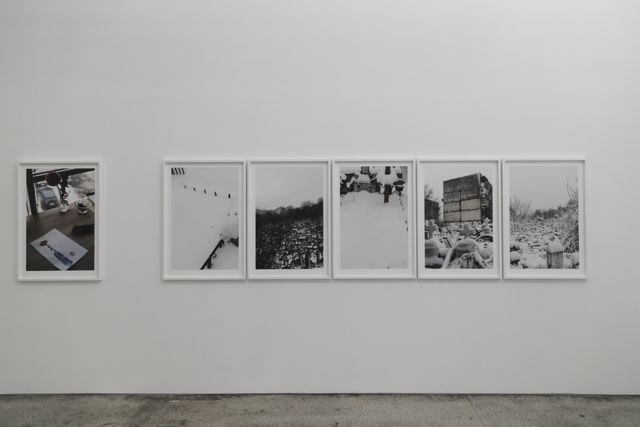
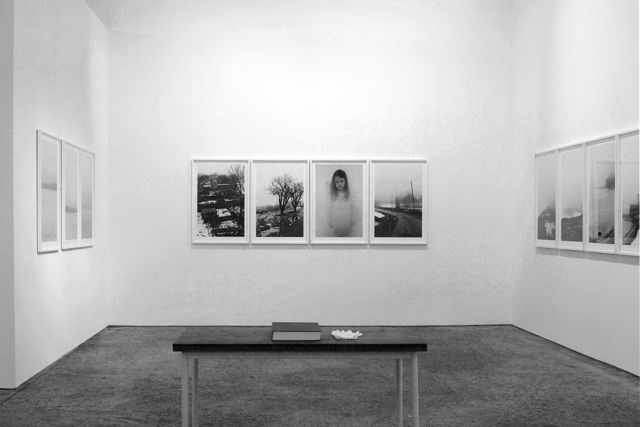
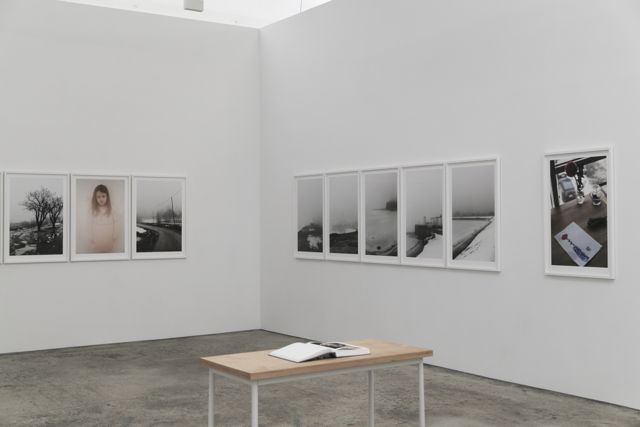
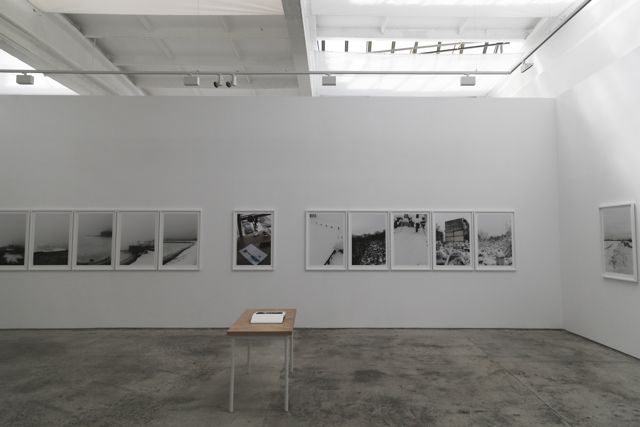
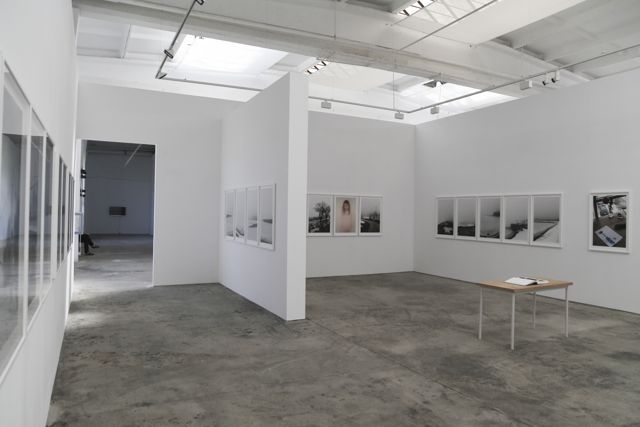
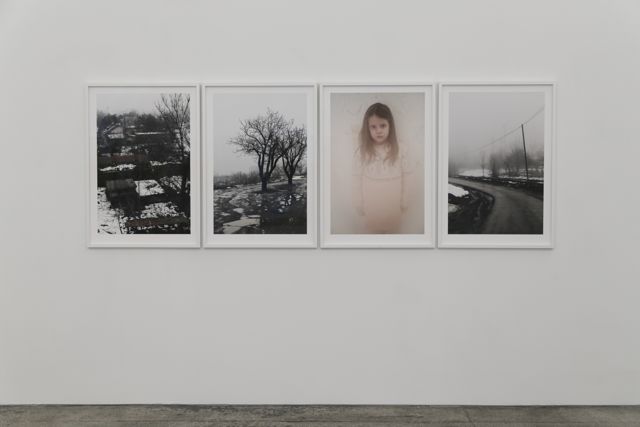
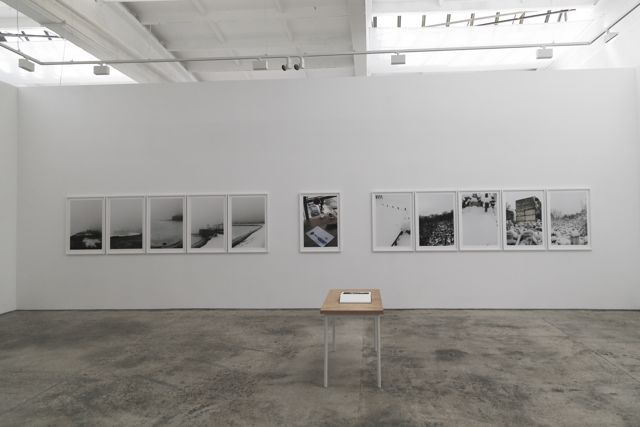
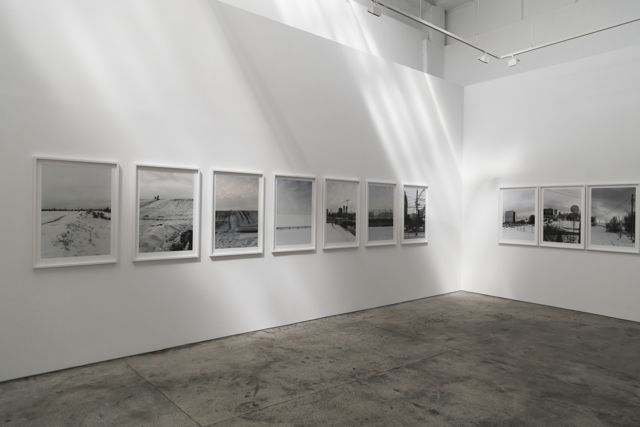
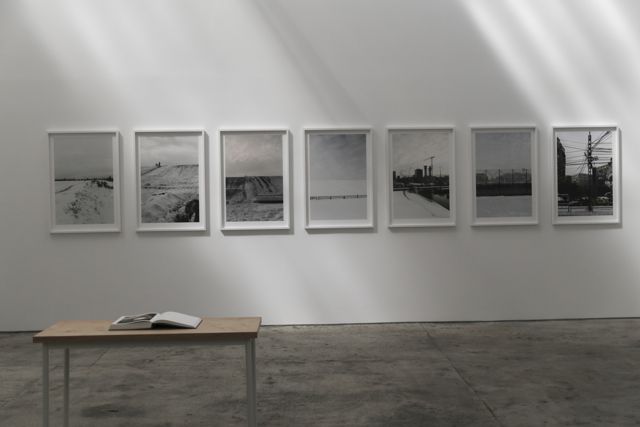
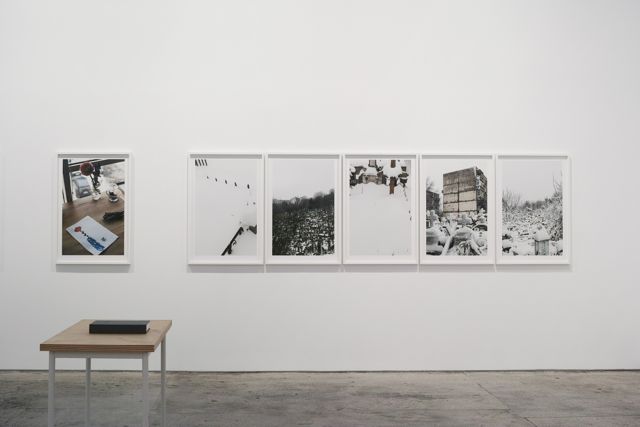
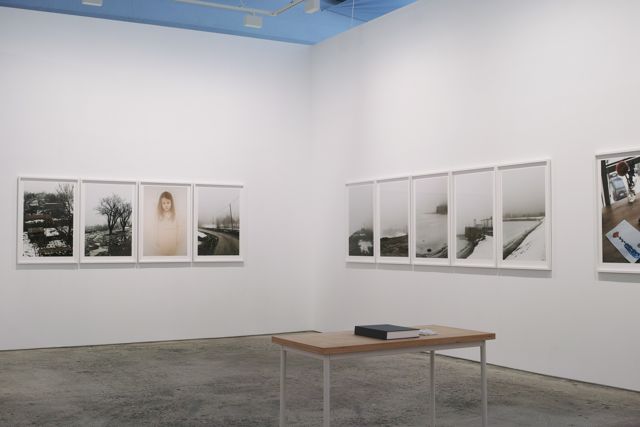
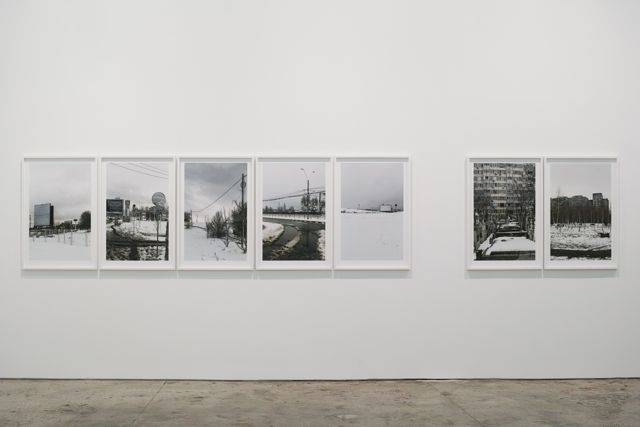
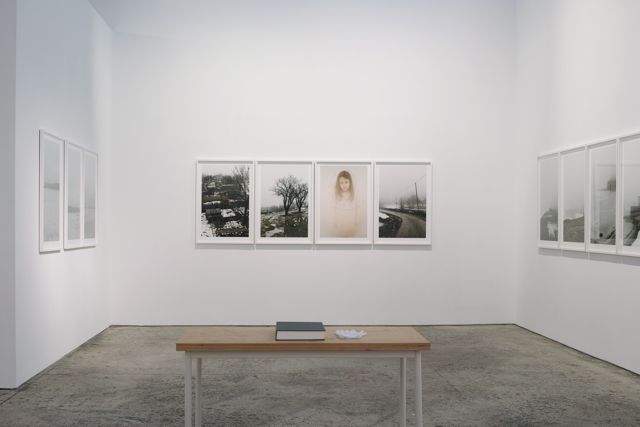
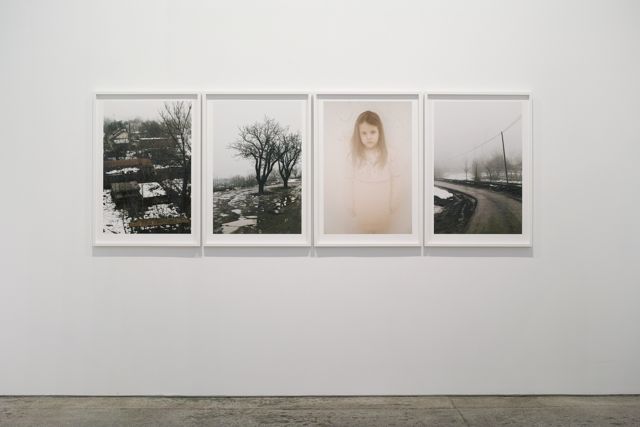
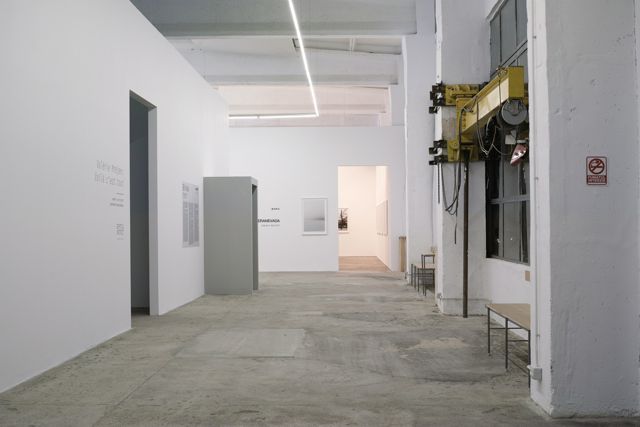
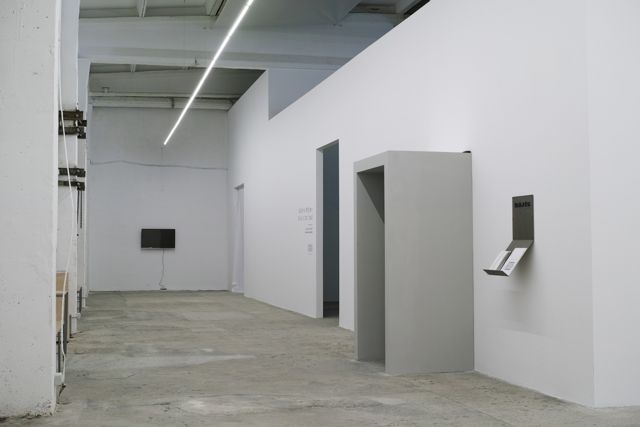
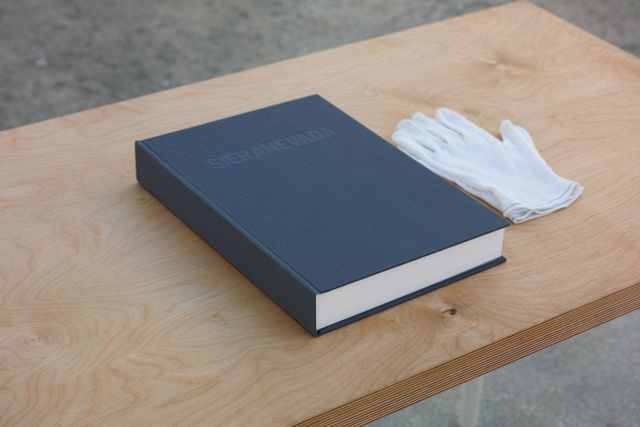
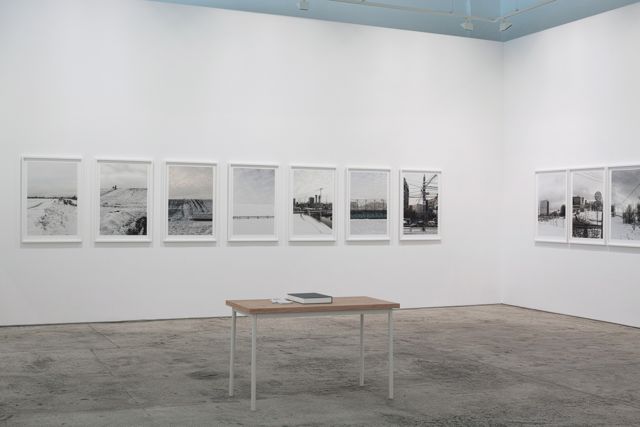
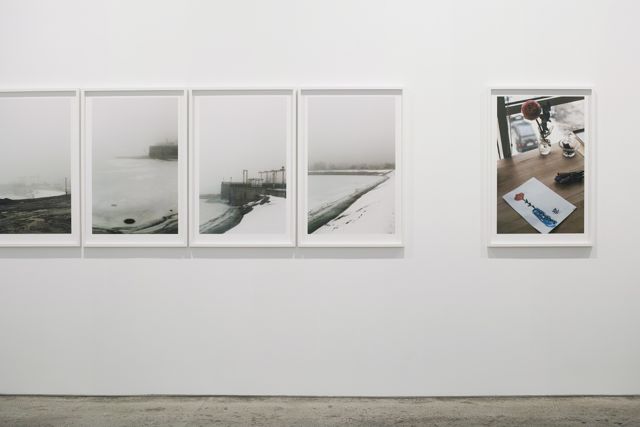
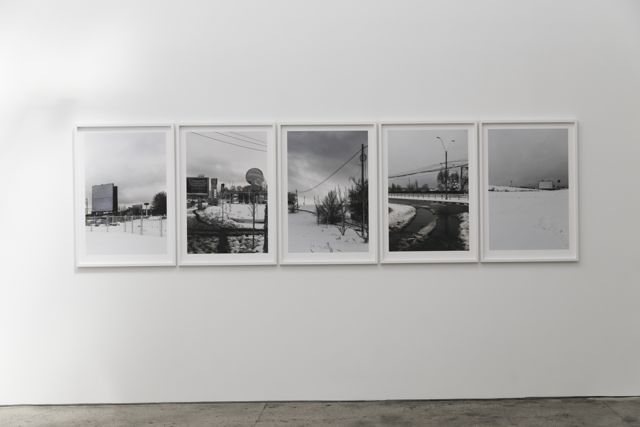
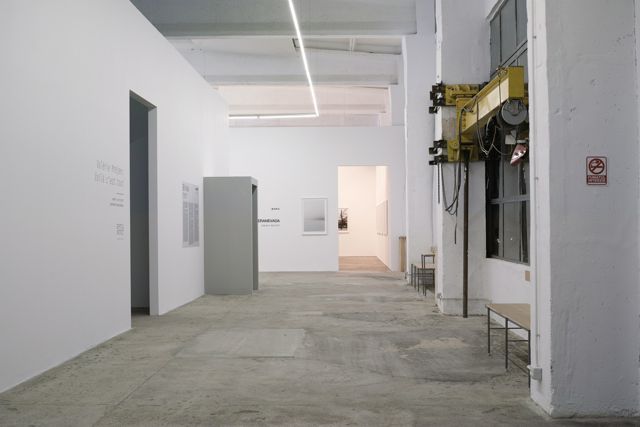
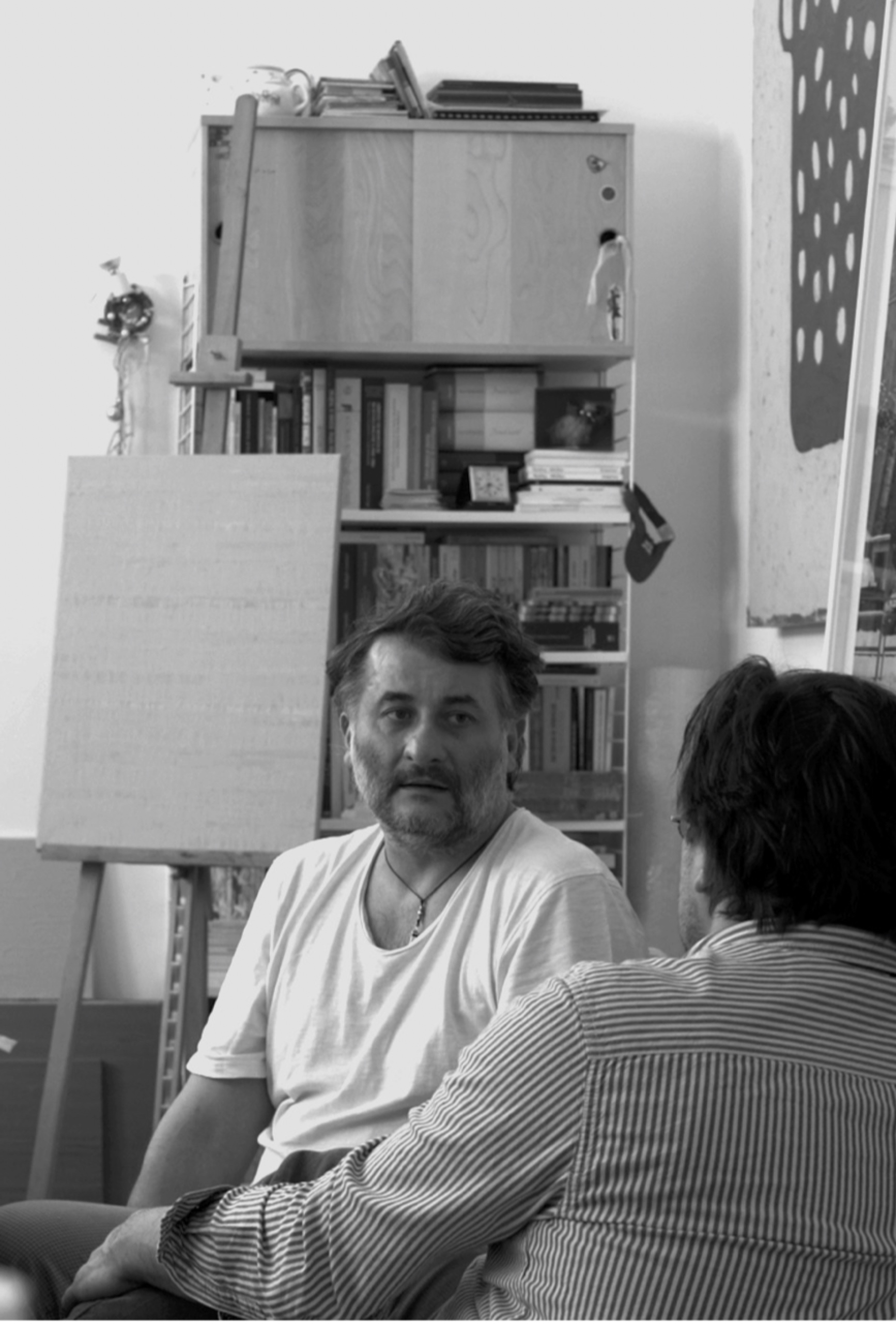
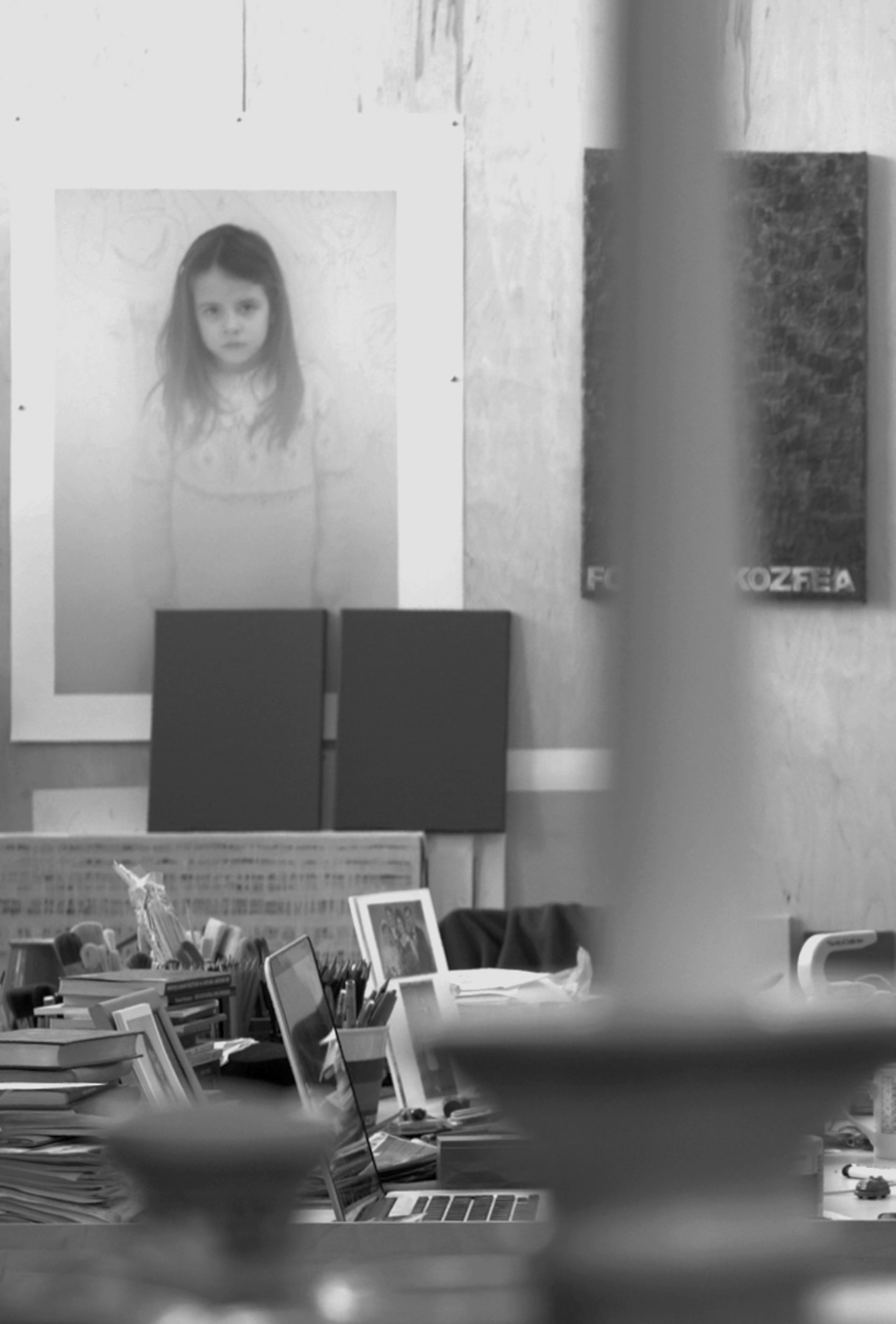
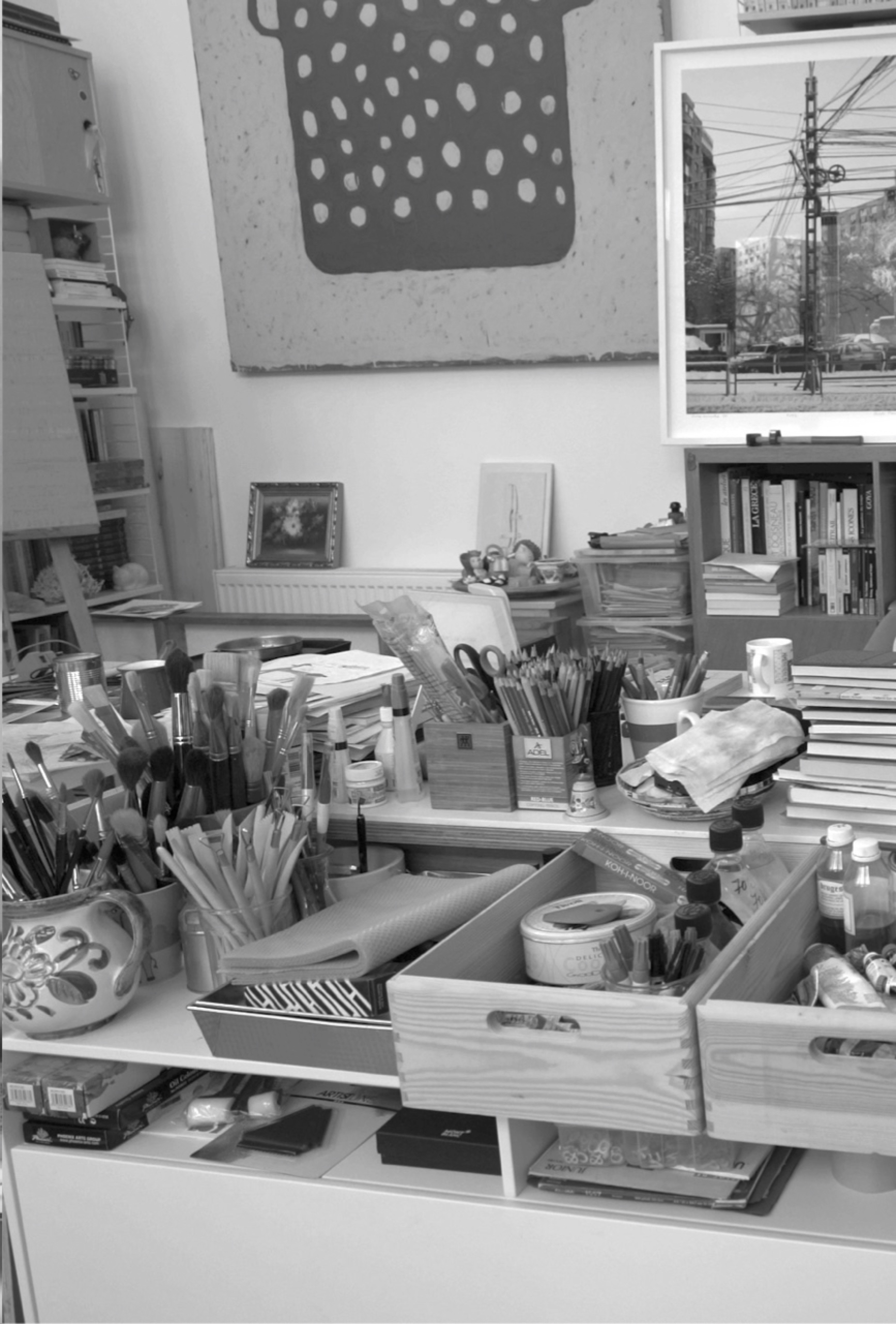
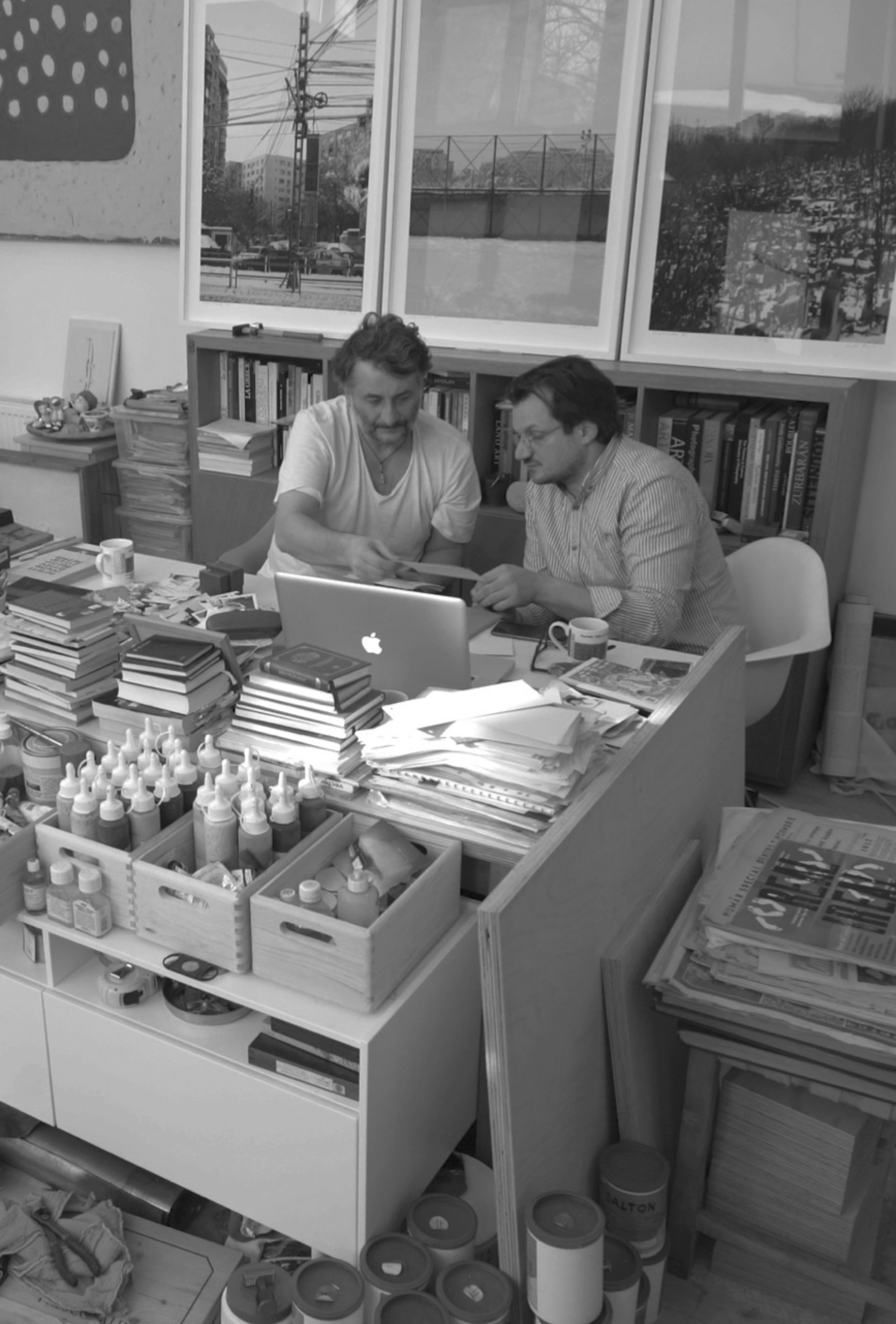
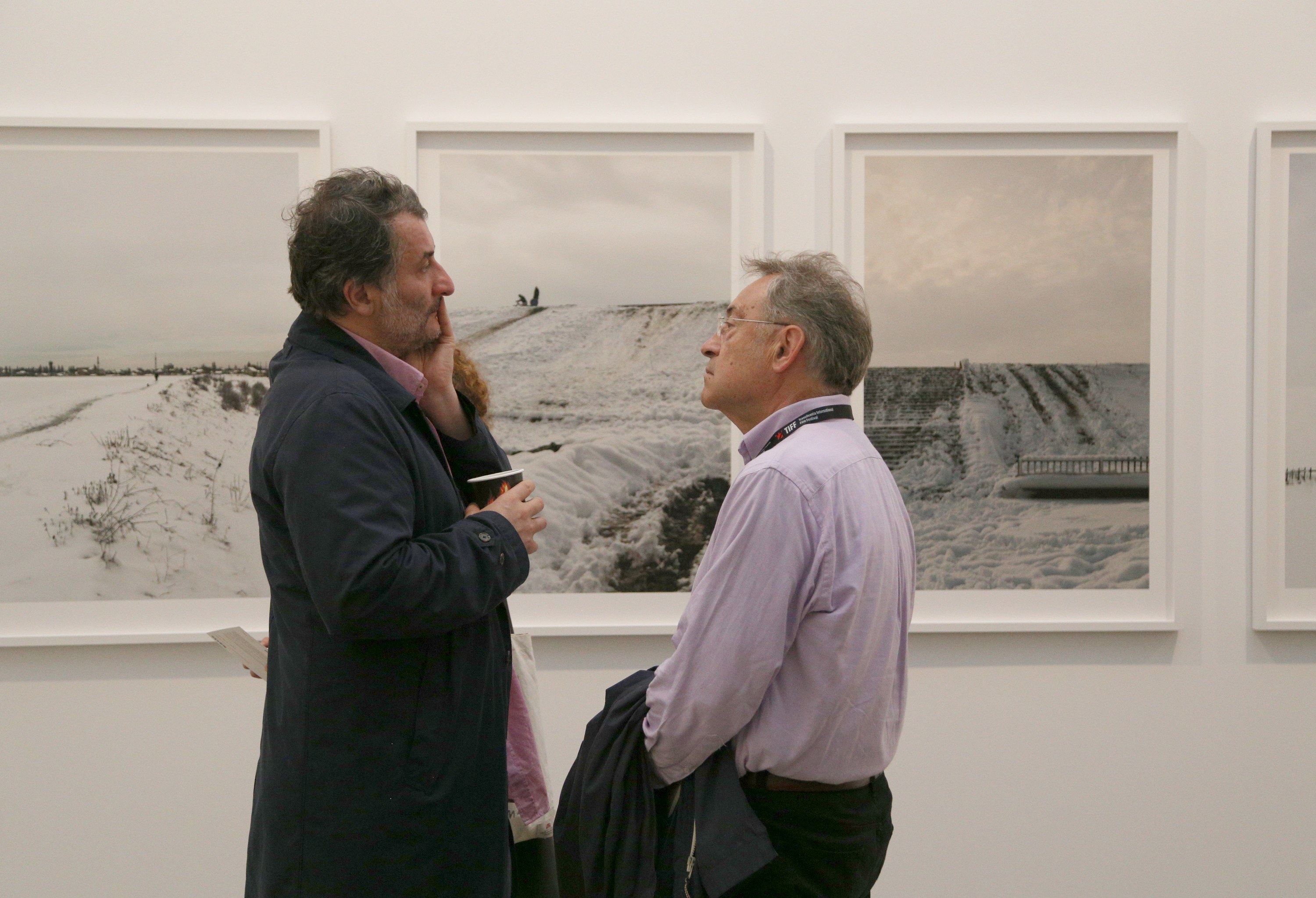
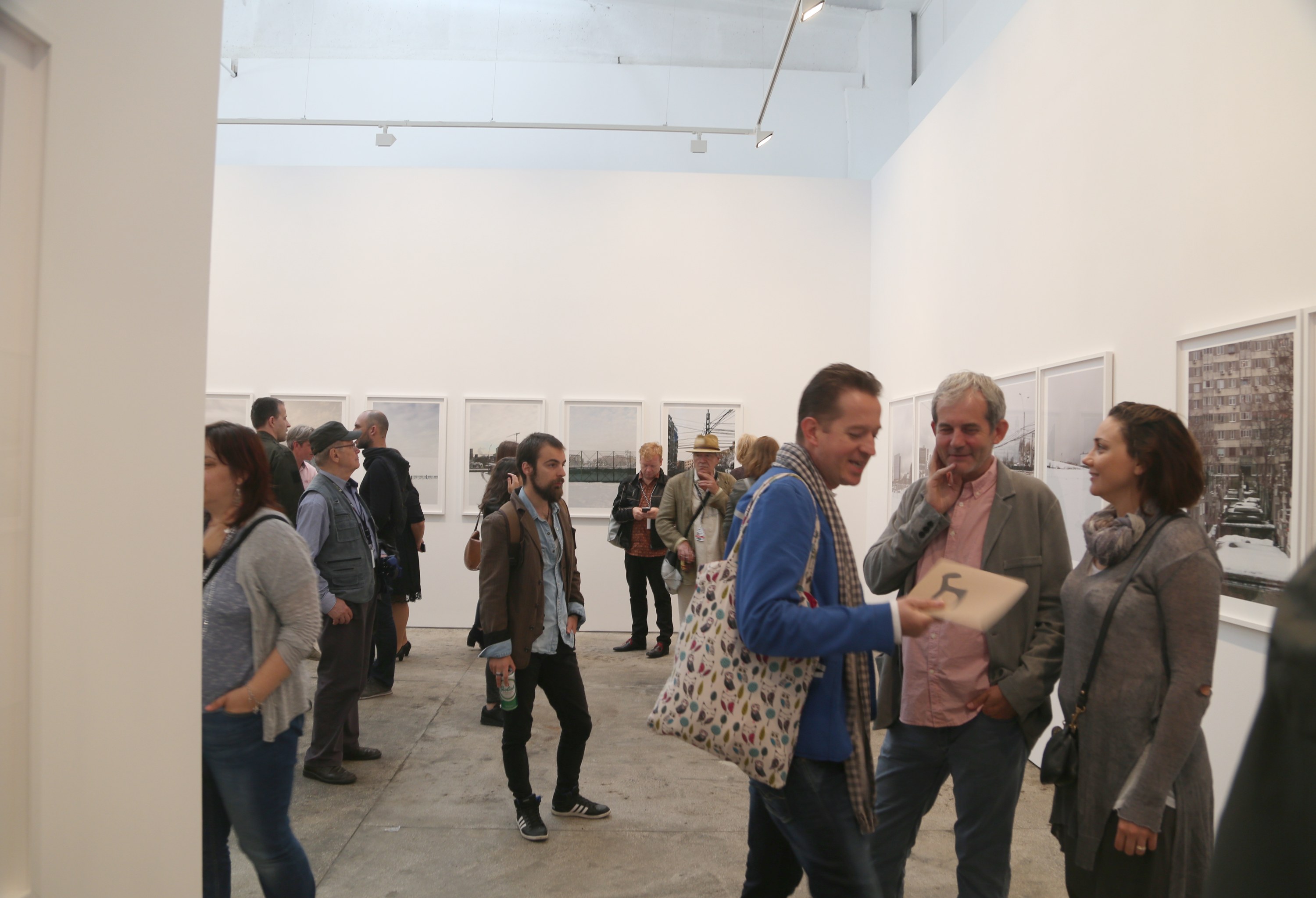
The dialogue here transcribed took place on 24 January 2017, in Cristi Puiu’s painting studio in Bucharest, and was part of the preparations for his Sieranevada photography exhibition, held at the Baril Gallery in June and July of 2017.
*
CP: The circle does not exist. It’s a concept. If you research it, it doesn’t exist anywhere in nature; its existence derives solely from our perception. If you look at the solar disk, you see a circle, but its edge is obviously uneven, and it’s the same with any other circle. If you get microscopically close, the margins cease to exist; rather you enter a world of fractals. That’s why I made these, by the way, and I included here all the figures after the decimal point of 3.14. Because this here is a fixed number, and I superimposed them one on top of the other, and these are the psalms.
SN: Wait a minute, I don’t get it.
CP: So, after the decimal point of 3.14, there’s an infinite series. It’s infinity.
SN: Yes.
CP: But I removed the ”3” and I left it like that. It’s interesting that it starts with a 1 and ends with a 7, and the same with the psalms, they start with a 1 and end with a 7. But it’s just a coincidence. And this is where I placed the psalms. In the Orthodox tradition, you have 151 psalms. And the first psalm has six verses, the second has twelve, the third eight, the fourth eight, the fifth twelve, the sixth ten, and so I placed them in a series that I superimposed on the other one. I took the psalm number from the series the comes after the decimal point of 3.14.
the object that contains within itself my vision about art and what art is
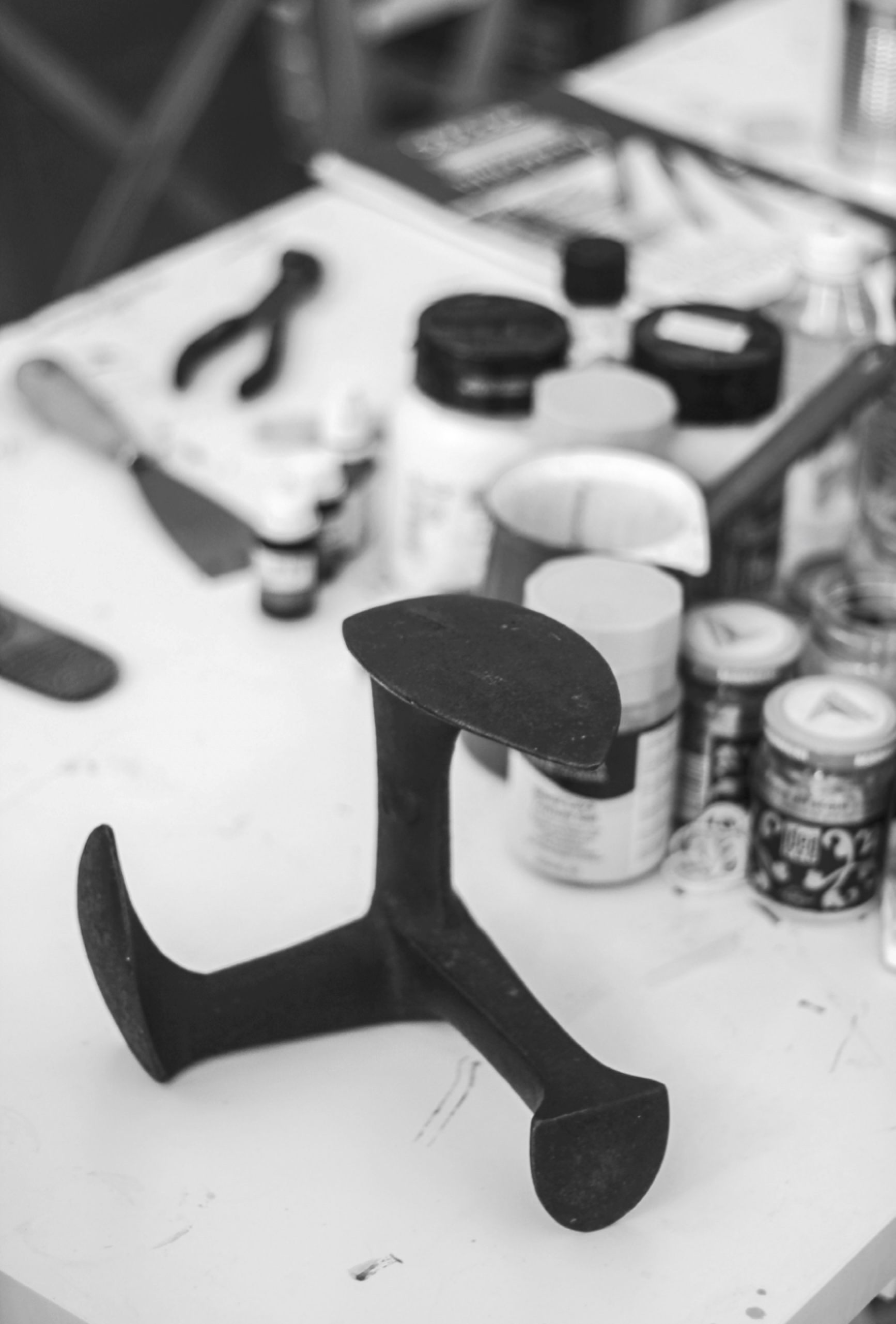
CP: I got it from Sweden; I think it’s a masterpiece. Sculpture, modern art . . . I think it’s extraordinary. I think the Romanian one is more intelligent; it has a shorter arm; it’s a little different.
SN: But I thought this was a tool used in shoemaking.
CP: Yes, it’s called a dreifuss.
SN: I thought it was used in the hammering of metal plates . . .
CR: No, I asked them to bring me one, because I think it’s the very object that contains within itself my vision of art and what art is. Actually, I think that the art object is that which, par excellence, has a function, with [“Art” occurring] as a secondary effect.
SN: This contradicts every theory of art . . .
CP: Why? Not all of them . . .
SN: Not all of them, just the theory that art doesn’t have a function.
CP: I don’t believe that. As far as I’m concerned, all I can see in it is a bourgeois whim. I think it’s a form of flirtation, you know? A form of petty bourgeoisie self-indulgence and flirtation with the idea of key historical figure, somehow. I mean a lot of things are possible, you can imagine yourself in every possible way, but how you imagine yourself as an artist will, to a certain extent, represent the idea of the unique, the original, you know? You’re not an assembly line worker; you’re not Charlie Chaplin in Modern Times. And even if you were Charlie Chaplin in Modern Times, you would still be unique, because he can’t be superimposed.
SN: All right, but where is the argument for utilitarianism? I mean functional art, pragmatic art?
CP: There are two things. I mean you can look at the story from two standpoints: From the standpoint of the author or from that of the viewer/consumer/addressee. Obviously, I can be a potential or real consumer and not necessarily the addressee, although I think we are all addressees without the author knowing who exactly the addressees are. Because you cast a word or a gesture into the abyss, and the abyss answers you. Because there are voices there, brains on the same wavelength as yours. So anyway, whether you want to be or not, you are the addressee of an act on the part of an artist, to whom you become attached because he or she is talking to you in a certain way.
SN: All right, but you’re still not providing me with an argument for . . .
CP: Right. And the question is: Why am I doing this? Do you drink petrol? You’ll never drink petrol, will you? You’ll never ingest something harmful to you, but only things that somehow build you up, that bring you into some sort of balance with the cosmos. This is the number one function of art, even if people dance around it.
SN: Yes, but it’s something that has to do with the spirit, not with concrete things, whereas we set out from this object.
CP: Yes. But from the author’s point of view, things change. As an author, the distance you have to cover, to get to an object that is somehow fuzzy in your mind and which you peel away, progressively increases within you, and it is never achieved, it is achieved only partially, temporarily, just like the satisfaction you get when the train stops in a station on a long journey. The train stops in a station, you take a breather, you get off the train, run to the water fountain, fill a bottle with some water. This is more or less what artworks, masterpieces, are like, but the journey is a very, very precise one, toward something not necessarily defined or definable. Although it might end up being defined. I mean you can define it, you might find yourself in the situation where you can put into words what you want to achieve, and you discover that there is a function, a precise purpose, you know? One that you will never reach, with everything else being just gestures you make on the way.
the fluctuation of speculation
SN: But there is a spiritual purpose. Let me give as an example the following question: Whether or not architecture is art. Most architects say it is art, because they put creativity into an object that has a final, very precise function.
CP: All right, but I think that what we also have here is the contamination produced by the fluctuation of more or less philosophical speculation as to what architecture is, what painting is, what art is. And somehow all sorts of imbalances occur. There’s the notion that art deals with what is beautiful and is connected with the beautiful, to put it crudely. Now, what I have noticed concerning the boot tree, the dreifuss, is that whoever thought it up (and maybe every brain on the planet thought it up in parallel; I suppose such instruments to serve specific purposes must exist in all cultures, more or less the same), that person didn’t set out to create a beautiful object. But its function demands that the attention be highly focused on ergonomics. And as a secondary effect this leads to a harmonious object in itself, and you can take it from there, plant it, look at it . . .
SN: But only since Duchamp.
CP: Yes, because he made the gesture first, and prior to him nobody else had made it. Because everything was in front of your eyes, like the glasses you look for when they are sitting right on your nose. It’s not because things weren’t like that, but because you never thought they were actually like that. That’s why I’m talking about the fluctuation of speculation and, moreover, everything that an art object means in one period of time cannot necessarily be superimposed on what the same art object means in another period; functions change. But to leave Duchamp aside, there is something that has appeared very clearly to me. For example, I have some paper that I want to mount on canvas, some parchment, Japanese paper. This is what I do, and the object I obtain moves me in a very strange way. Whether or not I ignore questions of transparency, texture, and the materiality of the object I obtain, my intention was to mount it not in an artistic way, but in a practical way, in as practical as possible in order to obtain from the process an object I can use as the ground for a painting. But if I step back and look at it, I like it the way it is, and it moves me in a very strange way. If I draw lines and my intention is to draw lines as straight as possible . . .
SN: So, you are constructing an object that will at some point become art . . .
CP: . . . bearing in mind a specific purpose.
SN: And on its way to becoming “art”, in inverted commas, it becomes a beautiful object, capable in itself of moving you, it might even make you want to work over it, etc. But it has that function, which moves you as a collateral effect.
CP: Exactly.
SN: It’s not an end in itself.
CP: Exactly, it wasn’t your intention to do that.
SN: In the moment when you take the finished object in order to make “art”, in inverted commas, you don’t know whether you’ll produce it or not . . .
CP: No, we don’t know . . .
SN: The object embarks upon its own purpose, in order to serve it, but there is a very clear limit. Visually and morphologically, up to a point it has a very concrete function and it’s not art, according to the theory that art is not a function, but rather a beautiful object that moves you, and as soon as you start to work on it . . .
CP: . . .you get caught in another loop.
SN: Yes. And it’s the same with the dreifuss, up until its creation, it serves a particular function, to make your further work easier, so that you produce an item of footwear. And whether or not it is beautiful perhaps also depends on the culture of the viewer.
the secondary effect of a natural gesture is the truth
CP: No, no, no! Of course, it does depend on that, on whether it is beautiful or not. It has to be beautiful. Period. If it is ergonomic, then it is beautiful. Meyerhold makes the same observation when he talks about acting. He says: Look at a lathe worker. He works on the lathe in order to obtain an object within certain parameters. Let us leave aside the fact that the lathe is also a dangerous machine; if you’re not careful you can mangle your hand. But there’s nothing superfluous, nothing of any kind at all, when he works the lathe to obtain a precise object. And he said: Look, this is acting. When you work with actors, the trouble is that they have a tendency to add things they think are important and which they want to say. But then they abandon the territory of the truth of the situation. For example, in a particular scene an actor has to drink a glass of water. But he knows that in that scene they’re discussing, let’s say, politics or love, and he will contaminate his gesture with the influences the conversation in progress supposedly has on him. “When I drink a glass of water and people are talking about Romania, I drink it in a different way . . .” No, you don’t drink it in a different way. You drink it in the same way. You drink it in the same way whatever the situation. Cinema and theatre have speculated on these situations, and you will notice that in cinema there is a game where glasses or coffee mugs or wine glasses are employed to disrupt the continuity of a story, to emphasise, to highlight a sudden state of surprise or profound emotion. I saw The Big Lebowski a couple of days ago, and Julianne Moore says to the Big Lebowski, to the Dude, that she wants to get pregnant with him, just as he is lifting a glass of white Russian to his mouth, and he spits out the drink . . . I don’t think things happen like that in real life. But from life’s continuum you take all sorts of elements that you accentuate; you highlight them because you have something to say. But if you simply allow things to tell themselves, what you get – the secondary effect of a natural gesture – is the truth.
SN: Let me see if I understand . . . this example would fit what you were saying earlier, that art is always what slips through your fingers.
CP: Yes.
SN: And in fact, the actor needs to be as disciplined as a lathe worker at his machine, to keep his mind on his work, because art will come of itself. What I wanted to ask you is this: Where does the actor’s art begin? He has a script and a director behind him. So, is art what is achieved through discipline and through what slips through his fingers?
CP: Yes, exactly. It is essential that you provide the actor with the framework to allow him to obtain secondary, collateral effects, to obtain the ineffable. If there’s no framework, the ineffable is impossible. Chasing after the ineffable leads to lies. The ineffable, the unrepeatable, can be obtained only when you employ a framework. If you do that (and that was the question concerning figurative painting), if you make abstract painting because you want to achieve a gesture, because the gesture alone is capable of generating emotion, then I think you lose a lot. Because we stretch the figurative – of whatever kind – like a rubber band until we come really close to abstract painting. In this or that image, you get to discern potential figures, and this is what you do with abstract painting anyway. It’s the same with that six-metre work by B. Newman, Who’s Afraid of Red, and with the works of Yves Klein. You’ll anyway look for some kind of ground, some kind of fulcrum from your own world, from what is the visual within you as a viewer. But I think the following idea is correct and has been noticed for a long time: In Jan Schmidt-Garre’s film about Celibidache, Celibidache refers to Schiller and identifies himself with Schiller’s statement as an artist, as a creator, where Schiller says that the purpose of art is truth, while beauty is just the bait. If this is to be understood . . . Of course, you understand it rationally, but in practice, when you are at work, you discover there is something much more substantial beyond that. Damien Hirst’s Dots are coloured circles, and I think this is something that helps you cross the threshold; this is how you arrive at painting or the artistic gesture, through quite a rigid framework. Because you cover the surface with coloured dots, which are coloured circles, which are coloured circles of the same dimension, but of different colours that create a certain type of resonance, let’s say. And it’s the same thing with Jackson Pollock, the same thing with Rothko’s surfaces and planes. And it’s the same with Velasquez, except that in Velasquez the figure stands out very strongly, and as a viewer your need for stability, for a point on which to gain purchase, is so great that you will reduce Velasquez’s painting to the figures represented within the paintings. But painting goes beyond the figure represented, you know? And we get the feeling that all of a sudden, the figurative is merely the bait to capture chromatic vibration, the ineffable, the accidental.
SN: All right. Now I’m going to challenge you some more, although probably I understand your point. In the dreifuss or any other beautiful but functional object, might the ineffable play some part in the equation?
CP: No, because that isn’t its purpose. It is part of the equation, but it hasn’t been put there by the person who conceived and produced the object. Because their sole aim was to make the object and to make it as functional as possible, in order to serve an activity that could not be more specific.
SN: All right. But for the object to convey more than its function, it must necessarily be placed in a context. Imagine Duchamp’s urinal in a public toilet as opposed to a White Cube – it is obvious that changing the context also changes the semantics; it functions aesthetically in a different way. Even if it is in a public toilet, it might mean something to someone who is visually sensitive, but in itself, in a different context than its own, it is stripped of its function. If we want to arrive at the ineffable via a beautiful-functional object, we need to change its context. Likewise, in painting, when the artist wants to represent a real image, he plays a trick. Some people cannot play this one, they play another, but let’s take the situation further. One of the tricks is that from the range of greys that exist in reality, from black to white, he will compress the greys, he will blend them. He will go from black to grey or in the opposite direction, from white to a certain grey, or from dark grey to light grey. Let me go so far as to say that in order to obtain the ineffable, he changes something, he makes some kind of intervention.
CP: No, he has to stick very close to the established framework. But by the nature of things he does what he does in an imperfect manner. Not as a performance but because he is engaged not only as a craftsman, as a fabricant, a creator or whatever you want to call him, but also with all his personal history, I mean the options he makes; if he allows himself the freedom to listen to his inner impulses, they will add up and make the ineffable possible. But by sticking very close to the rigour demanded, the framework demanded. Whether self-imposed or not. For me, painting in general overlaps with the icon. What I mean is that for me all paintings are in fact icons.
SN: I would like you to clarify what you mean by icon.
CP: Whether or not he admits to it, a painter does nothing but paint icons his whole life. Windows onto something else. The function of such an object is to convey something else, something much higher.
SN: In the Byzantine icon, we have the liturgical function.
CP: Not directly . . .
SN: With religious artists, a painting has to take the icon as a reference, even if it's not an icon.
CP: I’m not talking about that aspect. I’m talking about the most concrete aspect of when things happen in a felicitous and unconditional way. Looking at yourself from the perspective of death, you will discover what things are really important, and the only thing that is really important is what you are in yourself. Period. It is almost impossible to get away from that. If you travel down that path. But it has nothing to do with what we know about this or that. About icons or religious faith.
SN: When you said icon, I thought about the fact that the Icon is in a way the opposite example. To sum up, we’ve gone from the object, from Duchamp, to the ineffable. But the icon is an object without functionality, without any explicit functionality, and its purpose is not aesthetic. On the contrary, it is beyond any reading of emotionally moving beauty. It aims at the truth, since we’re talking about Schiller. This is why I asked you to clarify the term icon. In the range of the aesthetic that generates the ineffable, the icon goes beyond the threshold of the human.
CP: Yes, but as an artist, you are not in that situation, and it’s wrong to believe that, to put yourself in the position of someone who says something about the absolute, about transcendence, about God, about the cosmos, etc.
SN: In other words, that is not your argument . . .
CP: You shouldn’t even say it . . .
SN: Yes . . .
one of the author’s major problems: where to stop?
CP: It's very wrong to set out from that premise. When in fact the only thing you can do is to confess. And confession is a very laborious process. It is not very easy. The fact is that the history we construct about ourselves and about the world will be a history consisting of words and employing words. Consequently, starting with words, phrases, sentences, elementary grammar, you will end up constructing all sorts of histories about your own existence. That’s what a confession is, isn't it? You talk about yourself, using all the attributes of the language to talk about something that has happened to you, about something you have experienced, something you have lived; you evaluate yourself, you judge yourself in numerous ways, and you read your own life, your own emotions, your own thoughts, delivering yourself up, delivering up your thoughts. But that is the frame. The result may be a specific painting, whether abstract or figurative. It's about being committed to something, something very difficult to commit to, because the discourse is focused so strongly on the human. There is no room for any kind of participation other than your own, not only as an individual but also as a human being. And in reality, what I think is that anything connected to the high vibration of an art object belongs not to the author, but rather it comes from somewhere else. But it is necessary that the frame exist. For example, if you imagine it as a bowl, it should be able to contain what drips, what flows into it, what fills it from somewhere else, not from you. I mean it's like in that English saying – God gave man hands, but it’s the man who builds the bridge. And I think it is very important. It's to do with the fact that you are never alone. All right, maybe modern science will now say that the gestures you call ineffable belong to a psychological area, the unconscious, the subconscious, that all sorts of gestures and impulses that belong to the individual are rooted there, and that God has nothing to do with any of it. But such an analysis, such an evaluation, also comes from the standpoint of the need to focus speech on the human and value on control. The greater the author, the better able to control every detail of his canvas or film he is. But I don't believe that. Because from my direct experience with film, I cannot help but notice that the really good things, the spectacularly good things, that exist in my films – and they are very few – are not things that I put there myself. And if I’m not the one who put them there, and if I can understand that when I paint, from time to time I hit upon a solution, a gesture appears, a chromatic relationship, because you allow yourself . . .
SN: . . .a gesture you cannot repeat.
CP: That you cannot repeat! But even so, it appears, and you should be happy about it. But what can you do to preserve it? Because you have to work in a different area of the canvas, too, and more often than not it gets ruined, more often than not you’re going around and around in a circle, like an infinite loop. But it is very difficult, one of the author’s greatest problems: Where to stop? When to say it's finished? It’s from this perspective that I talk about the dreifuss, because not even for one second did that person have any intention of producing an object that was beautiful, that was a sculpture; he wanted a functional object. If you look at it, you'll see that it meets a large number of artistic demands. At some point in the history of mankind, a phenomenon arose, something similar to a kind of a robbery. What I mean is you steal from the created world in which you have been placed – each of us can choose: either the Big Bang or God – you steal a harmony, you put it on your canvas, and you say that you were the one who created it. No! This is one of the greatest tricks, I think. In order to get away from that, a lot of authors resort to dissonance, in order clearly to delimitate their territory. “This is something I created! Why? Because it is dissonant! Because it is disharmonious.” And it is obvious that nature doesn't create disharmony, does it? We have the three very precise functions of the living world: relation, nutrition, and reproduction. Somehow, in an indirect way, a human struggling to make a functional object will abide by the mathematics of the created world, whether created by the Big Bang or by God. In this sense, I think that if I were to conceive of a poetics, I would sooner say this: when you aim at a function, you get art. Because if you aim at the functional, you get harmony and a superior vibration.
SN: Are you saying this somehow in the sense that this is the safe option, that you don't let yourself get carried away by the thought that you might be a creator?
CP: You can call it the safe option, but I think it is the natural option. Because there are temptations of all sorts. And the one I call demiurgitis is one of the worst temptations in the world. Because all of a sudden you steal something, and you put your signature to something that doesn’t belong to you, that isn’t yours.
SN: Yes. Why do I say the safe option? Because, for example, if you want to make a film or a painting, you have no reference point in the physical world; you will never say that this painting will make better shoes. But you can say that when you make a dreifuss.
CP: Yes, but the thing is – and I think this is the function of art in a general sense, although of course things are more complex here, and depending on the period there is a margin of tolerance – the dreifuss is possible only if it comes from a world in which the function of the art is present. More specifically, if it refers the individual to the created world. What I mean is that I think the dreifuss was created at a time when . . . let's say it was conceived in Bach’s Germany by a man who went to church and listened to music, and music had a function that we now call art, but still it had a function . . .
SN: . . . an iconic function.
CP: Yes, exactly. He goes to church and understands the story told there, in musical notes and all kinds of rhythms and harmonies. And I think this has the effect of reconfiguring the world and everyday life. You can imagine a disharmonious object like the dreifuss only if there is disharmony around it. But this is pointless speculation.
SN: And the dreifuss is not disharmonious.
CP: It’s not disharmonious; it comes from a world where harmony was the norm, the reference point or the aim.
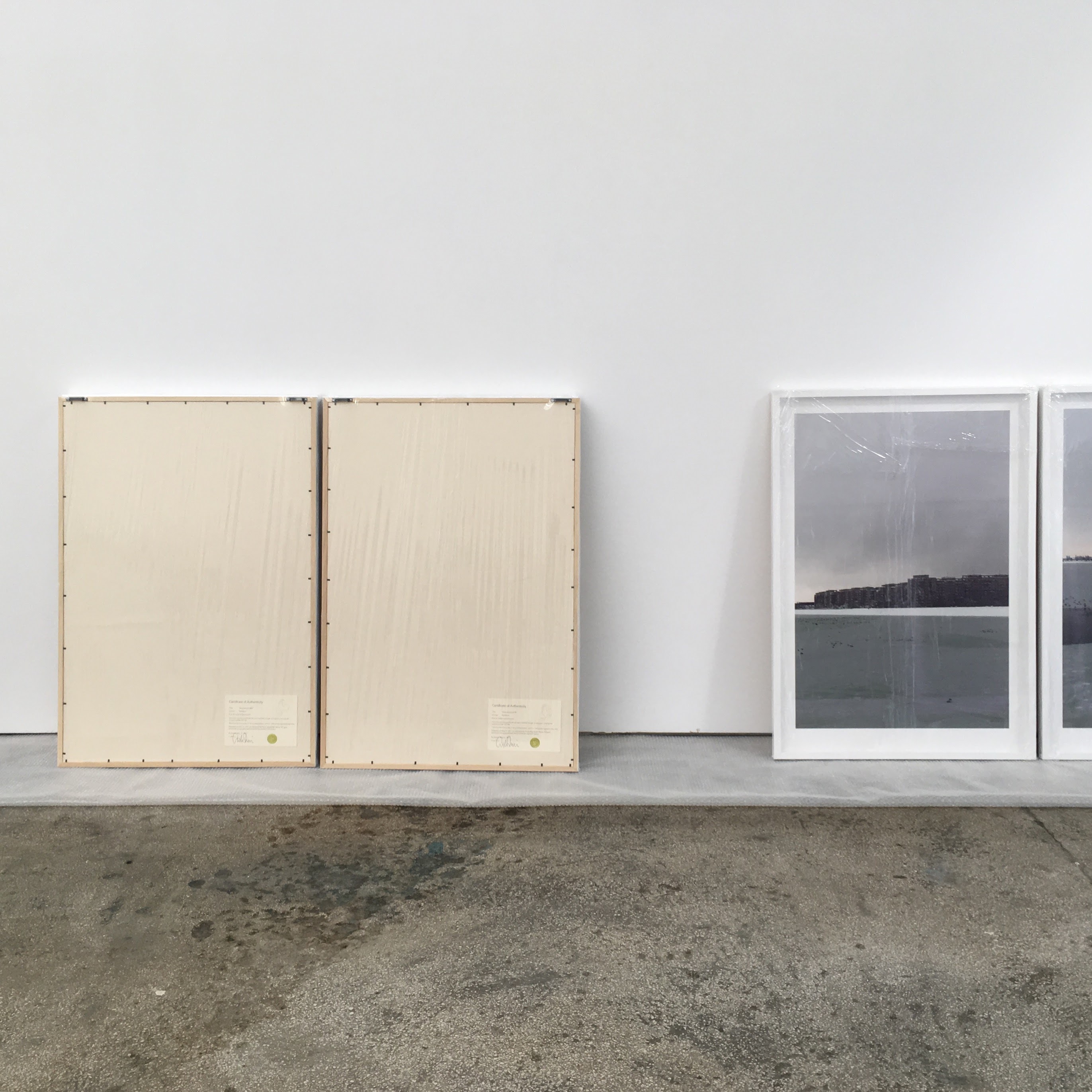
I went to take pictures for the Sieranevada poster and I don't want to trick anyone or invest them with more than what they are.
CP: I think it’s a problem if the images get jumbled up and we aim in more than one direction at once. They were made on different days and every day I made a lot. The question is whether or not it’s better to have a single day in a single place or to group them according to a different criterion. I mean you either have a variation or you have a situation of a different kind.
SN: Were I to seek some kind of logic, I would sooner begin with the logic of the image rather than necessarily a logic of behind the scenes, let's say. I mean I would combine them according to their poetics, not according to their function as . . .
CP: . . .their poster function.
SN: Not necessarily. Maybe you have them selected according to the different days, but I would rather proceed from one to the next; I would arrange them according to what is required by an image that has already been selected. Which one comes next on the musical stave. I would rather think of them . . .
CP: Rather a pre-established concept, a framework concept, and according to that . . .
SN: Yes, and consequently from those you have selected you exhibit numbers 15, 19, 48. But from what I saw of them the last time, I think they function well together and maybe the foreground/background ruptures are good, they go together well. Actually, I would postpone this discussion to the moment when they are on the wall in the gallery.
CP: Of course, you also make your selection according to the available space.
SN: Like we said last time, the Tarkovsky-esque atmosphere probably requires a counterpoint. Those images are very refined, misty, in a high range, maybe they need to be placed in opposition to something, to a more concrete image. An exhibition is also a kind of painting. You’re still making decisions when you construct an exhibition.
CP: Yes, yes, yes. Because it is an orchestration of voices.
SN: Have you printed a larger number of images yet?
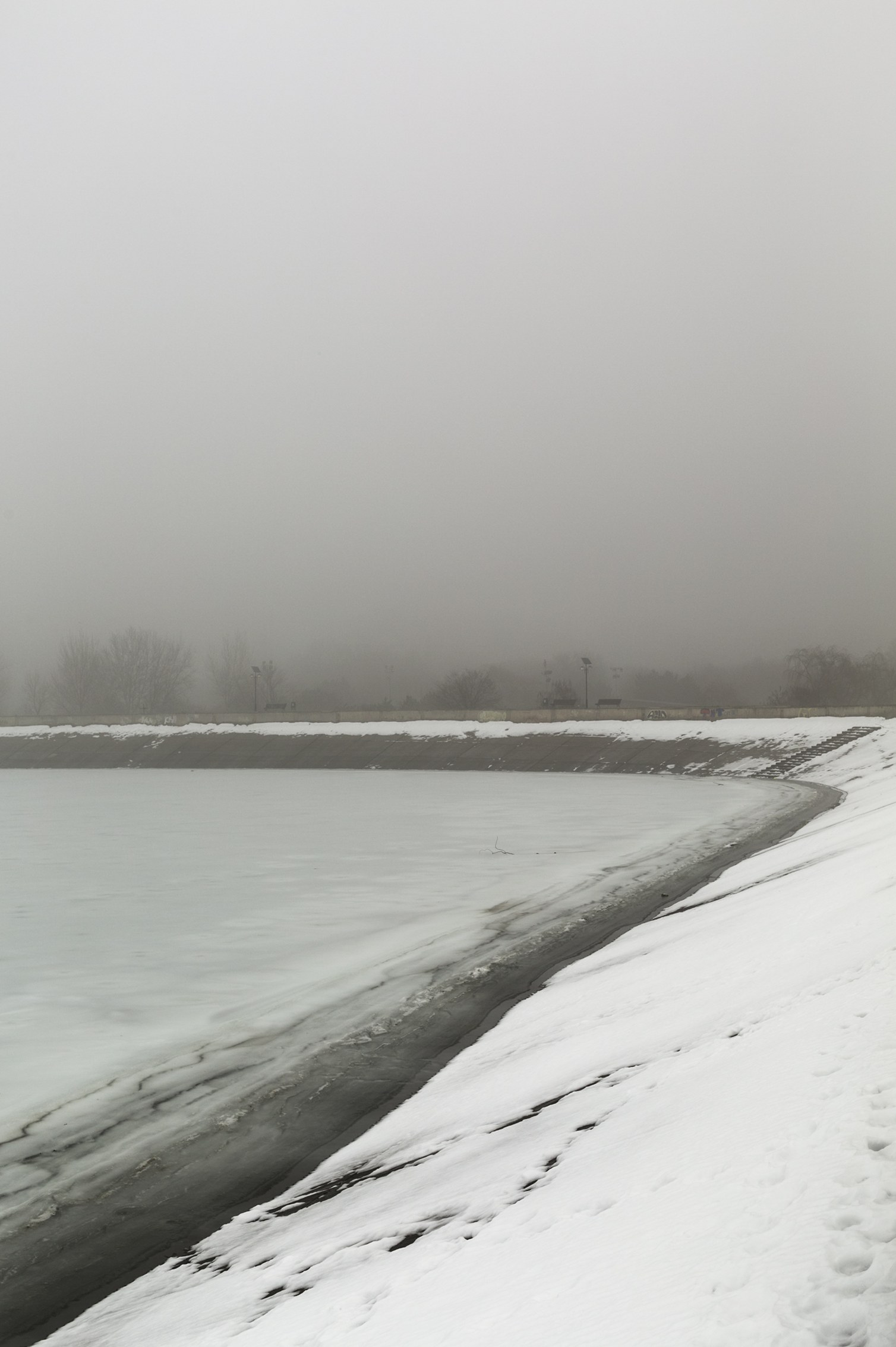
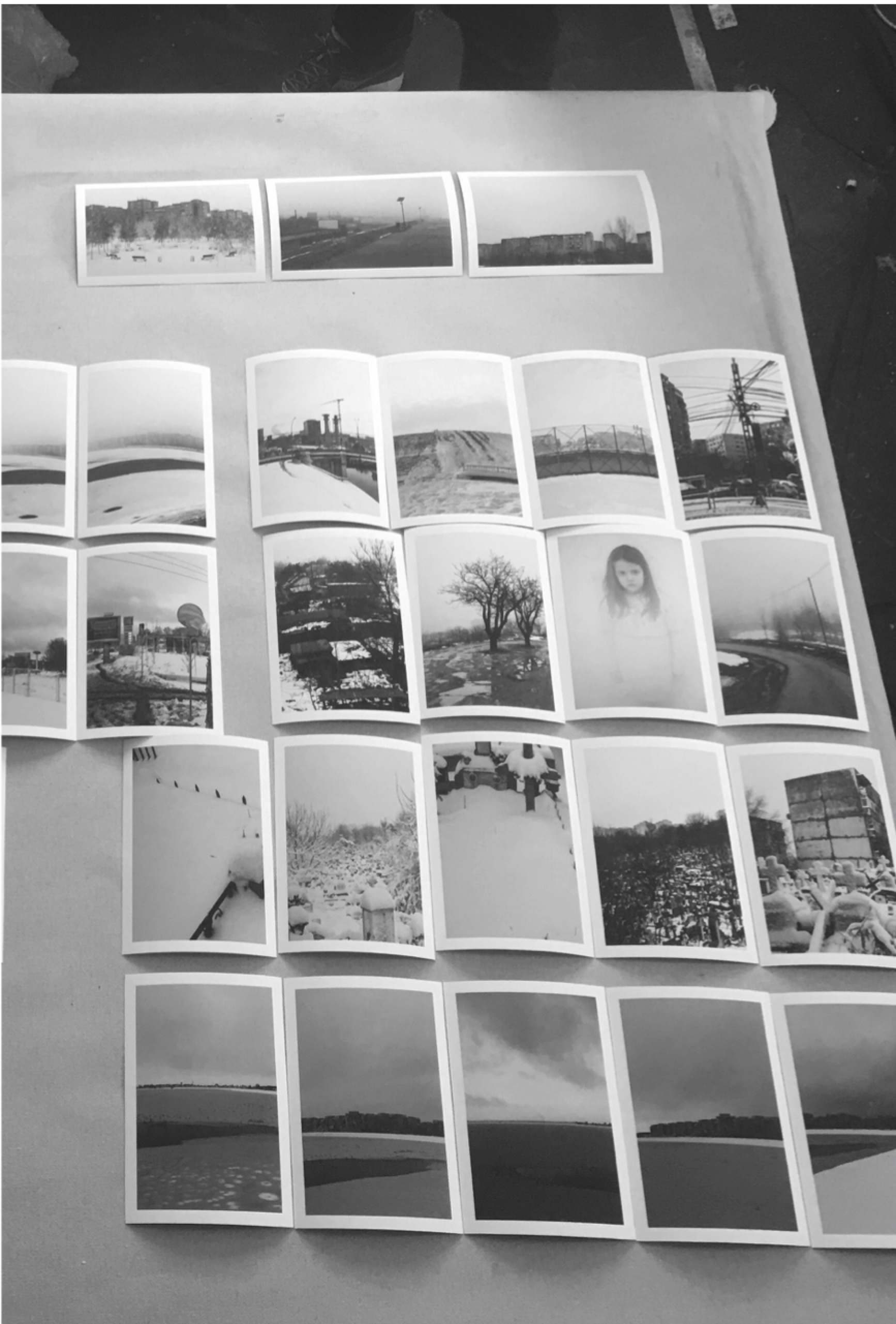
CP: No, the only ones are these tests you can see. That’s all. And these are rough tests, you know, because all these greys need to be resolved; it mustn’t be too dull. Obviously, things are different on a larger scale. But they need to be lit. In this series of concrete images, there are a few that I think strike up a correct relationship with the most lyrical of the images, if I can call them that, which obviously give me some bother. For example, an image like this one quite rightly contradicts the deviations from the poetic setting, which verge on the kitsch, Kodak calendars, IKEA catalogue pictures. If there is anything that can be said about this, then that something is to be found where the concrete and the abstract meet. The dead end resulting from the identification of the subject after the first hiccough, if one might call it that. For example, in a certain image you need time to situate yourself. You ask yourself: Is this the sky here? I think I see a road. Is this sky again? No, it can’t be. Maybe the way down to the lake, you know? Sometimes it is clearer, at other times it is less clear. Because from a certain farther distance you can’t see. You can assume it’s a landscape but at the same time you can also assume that it’s a photograph on a folded piece of paper. Once the image is enlarged, you can see the blocks of flats, for example. Once the viewer gets closer, he is able to identify a structure.
SN: Aren’t you tempted by the idea of having one or more enlarged images, ones much more enlarged, two metres, let's say?
CP: I don't know if technically that’s possible. It's beyond me. If you can do it without getting a pixelated image . . .
SN: On the other hand, the idea is at odds with the way you set out. That they should be in a poster format.
CP: Yes. As far as exhibiting them goes, I think I establish an honest relationship with the audience, with the viewer. I went out to take pictures for the Sieranevada poster, and I don't want to trick anyone or invest them with more than what they are. After I enlarged them and made them poster size, I thought: aren't they a bit too big? Wouldn't they benefit from being smaller? But I think not. I think that at least with the first approach, in poster format they are in an honest relationship with the object, with what was in the mind of the person who made the pictures and what he was looking for. I cannot ignore the fact that when I was taking the photographs, I was almost always thinking that they were suitable for a poster. Obviously, there were also photographs that I took because I happened to see something that I thought was cool, without thinking about the poster, but the standard was set by the poster.
SN: Was almost every photograph you took a candidate for the poster, if only for a fleeting second?
CP: Not only that, but the composition impelled me to choose in such a way that I would be able to include the title and all the film information on the poster.
SN: And eventually you chose a landscape format, on which you heightened the sky.
CP: Yes, for resolution reasons. Because in fact I wanted to use another photograph, in portrait format. But in the end, I faked it. In fact, I didn't use the raw photograph, I made alterations to the photograph, not only with the writing, but also to the image itself. And this has to be very a clear and overt thing. It says something about the fact that you, as an author, get to interfere. In Truffaut’s film L'homme qui aimait les femmes, there is a character who starts writing his story, a mainly autobiographical novel. In the film, we see him at a certain point, when he is going home he meets a little girl who is sad and who is waiting at the entrance to a building, a little girl wearing a red dress. We see this action unfold in the film. He writes the book, the book is about to go to press, he goes to the printer’s to have a last look, and asks the lady doing the proofreading to allow him to change red to blue. That is a very beautiful gesture, because it says a lot of things about the process, the way in which we betray what is human in us in order to save the artist in us. I mean the creative impulse comes first. It becomes more important and it has to be protected, even to the detriment of the historical reality. I think that is very beautiful. And I wanted to do the same thing here, I wanted to be as correct as possible with myself and with those who were going to see the poster, but in fact I wasn’t able to. I didn't crop the frame, but even so, here and there I had to remove two or three things. There is a particular problem with the chip on which the image is stored. It creates a blotch. A lot of photographers have told me that this happens frequently. But anyway, I was a little annoyed that the blotch was in the same place in quite a few images. I didn't want to change the frame. No. I said to myself: That’s as much as I captured there. I mean it's not just a confession about me looking for the poster for Sieranevada, but also, it's about me, the person who excises from reality this fragment of an image, without manipulating it in Photoshop afterward. In reality, the photographer manipulates the images back in the lab. Because the object as an art object becomes much more important than the object as the expression of a confession, of a journey, of a lived experience. This is what happened to the poster too. Afterward, when I arranged them, I thought about a series, I thought about what they would look like in a series, and it was clear that if the criterion was the mist, they would give a very coherent appearance in the exhibition. In painting, if you want to create harmony, you mix ochre into all the colours and then it’s done, everything will be on the palette. These are primary school tricks.
SN: You told me last time that the poster, the image on the poster, is an extension of the film, not an illustration of it.
CP: Yes, and I think that is important. If it's not the number one criterion, it's one of the criteria. This was also what I did in Aurora and The Death of Mr Lăzărescu. A lot of the time, the posters are made up of images taken from the film, or if not, they are at least a re-enactment of a shot.
SN: You showed me the French poster for Sieranevada . . .
CP: Yes, over there they recreated the poster in order to illustrate the lunch, so that the audience would get the feeling that their money was well spent. If you see on the poster that people are having lunch, it might look like that this is what it is about. If you show blocks of flats, crows, cormorants – what on earth are they doing there? We don't want to see stuff like that in a film! I think this is the honest relationship you have with both cinema and photography. Cinema cannot do what photography does, and photography cannot do what cinema does. And then you have to let photography play its part – if the poster is a photograph – rather than make it say the same thing as the film. Above all else, the poster is a frozen image . . .
SN: Not ventriloquism of another art . . .
CP: Yes. If I push things to the extreme, it's like translating a piano sonata into a poem. It’s obvious that unless you call your poem The Moonlight Sonata, you won't find any connection between Beethoven's Moonlight Sonata and your poem. But you can call your poem Grazing Cows in the Year 2000 and when you read it, it might occur to you that you come across some vague echoes of a possible encounter between the author and something that might be distantly and very tenuously connected to music, not to Beethoven. Such things are impossible; this is something that the author knows, but not so much the audience, the reader, the addressee. With cinema and photography, we are talking about contiguous territories; it is easier to compare them with each other than it is to compare film and music. You could create a musical piece that talks about a given film, if there were no music in the film. But photography is the same thing, I mean a moment removed from something else, a fraction of a second stolen from time, the world seen from a precise position, from the stationary position of the camera, and from that perspective there is very little to say about the relationship that kind of photography might have with cinema.
CP: I went to Basel once, when I was a student. I no longer knew where to look. I got the feeling that everything was tugging at me, that everything was yelling: Look at me, look at me! The same as on a fashion catwalk. There is something highly important here, which isn’t taken into account, a condemned word, as condemned as the word “solidarity” because of communism. The word humility is also condemned to the same degree, because of a faulty reading of the texts. It’s a misreading. I think that’s very important. Hence too the fear of dimension.
I don’t mean the things that are shouted out loud . . . but a way of focusing on yourself
CP: With the dreifuss it is as if there ought to be a poetic focused on the manufacture of functional objects and we ought once and for all to let art happen while we make functional objects. And the functional object does not necessarily have to be a dreifuss, God forbid, or a screwdriver or anything like that; it can also be a surface covered with lines traced according to a precise rule or a surface covered with numbers inscribed according to a precise rule. I think this is one of the strong fulcrums of painting, the fact that such objects are icons. But not in a Christian sense. They offer you the opportunity to place yourself in a relationship with that which is beyond the brain’s power of understanding through the use of words. Therefore, a relationship with a meaning, a different one, a higher one, something else. “A higher one” sounds wrong. I mean a relationship with the object you contemplate. You sit and look at it and it connects you to your own mechanisms. It is merely the fulcrum that enables the meditation in your mind; it's not merely a decorative object. Not merely the gesture that arises from a need to perform. Not a something hormonal that places you in the position of competing in some kind of sport or places you within a relationship with all the others in your field, as so often happens. It's not necessarily a bad thing; I’m merely making an observation.
SN: That makes me think about . . . anyway, I still see a difference between the examples you have given. The first one was the dreifuss and after that you mentioned a surface covered with lines following a certain rule. It reminds me of Agnes Martin.
CP: Yes.
SN: She says something like: In order to be able to paint, I must have no thoughts. Or to work as a lathe worker making an object, to take your example, but on the other hand, I can’t get past the fact that there is no function in Agnes Martin’s work. She is focused on a certain discipline . . .
CP: Yes, but there is something different here, and if we clarify it, then we clarify everything. There is an additional element, and something takes place in the case of Agnes Martin. What I think is that the function of her paintings is indissolubly connected to her, to the addressee in the singular, who is part of the loop that is created. She has the painting as author, the painting has her as viewer, in a circular way. More than in the case of traditional painting or the rest of us who make films or write books, where the addressee is somewhere outside you, a person at whom you cast the message. In this sense, she is somehow making a dreifuss. Do you see what I mean? This needs to be clarified. Basically, you start out along a road; the roads are infinite. If you start out along the road of a certain type of asceticism, the relationship is solely with yourself, and those things have a function in relationship to you. The relationship is placed in context by historians and theoreticians, it’s minimalist, it’s somewhat overlooked, put forward again, revived, but it’s not really part of the world of artists who address others.
SN: Demiurges?
CP: More or less. Artists who take the other into account. I think she takes herself into account. Thus, her works are the result of a meditation. I mean I meditate by painting. I meditate by walking. Walking cannot be recorded. The peripatetic. He’s in a thinking process. Like somebody else is in a thinking process by playing football or whatever . . . but there is a dimension that is probably obsolete or even inexistent in her work, the dimension of the thinking-in-dialogue process. Because those who make things for others, who have the other in mind, in a more or less responsible way, also feed on the same thing. I know that I myself am like this. I too feed on dialogue with others, on the reactions of others. I saw a film about her and I thought she was in a completely different category. What’s more I think she is in the category of the ascetics. I don't know. I mean not things that are shouted out loud, but a way of focusing on yourself. Something that generates changes in your own life. If you are a person with a social life within the norms and practices, it is impossible for her kind of painting not to be connected to her own life. But this has to do with the honesty of the artist. What you do cannot be honest and correct if it doesn't engage you, if it doesn't cost you. If it doesn't cost you, it doesn't matter. If it didn't cost you, then it won't cost the other either.
SN: When you say this, are you thinking about sacrifice? What kind of cost is that?
CP: Personal exposure, that is the cost. The boomerang effect of your gesture of generosity toward the others. Or toward yourself. You are in your own laboratory, in your own workshop, and at a given point the works are made public and the world shits on them and thereby on you. And that brings you a lot of suffering. You have a withdrawal reaction, you go back inside your own shell, you want to forget about the world. It can’t happen any other way. This is how human beings function. And I was thinking about Agnes Martin – maybe she is more intimately connected to her own life. The same as in the case of any other artist, the first works reveal the mark of belonging to a group or trend, but little by little you distance yourself from the world and move closer to yourself. If you get beyond that level of being accepted by others, you might be able to move things forward, to do them in a way that is yours alone and that testifies to your struggle with your demons. For me, that is what art is; it is in fact the struggle with demons. Period. And the secondary effect is this: What results is an object, a rôle, and you cannot see the whole work, you see only fragments. Not because you are a whistle blower, but because you are listening to your own human impulses and you are being yourself, a single element of a whole and also a part of the whole.
SN: And because you cannot do anything else except that.
CP: And because you have to do it. It’s an urgent need. And the urgent need does not arise from the fact that you have to sell in order to get famous, because that will show. This stays there. There are rare cases in which the urgent need to famous is accompanied by the dimension we are talking about, by the generous laying of your own entrails on a platter. A lot of the time, you compose a public image for yourself. A lot of people fake it. I think you can find traces of truth in every artist. To my mind, they are arranged in a sort of an approximate and random hierarchy. But were I to listen to myself, I couldn't discount the mark of authenticity in every painting on this planet. Be it high art or not. And it's not a matter of quantity. It has to do with a precise geographical point on the road you have chosen. One is nearer, another one is farther away. Everything is a struggle with yourself, a struggle with the demons that tempt you. It's a world full of temptations. I don't know whether that is the correct translation, because there is a tendency to salvage statements that belong to different worlds and adapt them to your own philosophy. And a faulty reading also occurs. What do those demons mean? Or the people who talk about demons?
caught in the act of permanent translation, on and on
If you take the Lives of the Fathers, you can read there about all sorts of temptations. But that was the only language those people spoke. The language that they spoke was no guarantee that the event, the circumscribed reality, was covered. It was a translation of a state of things. And you employ that language. If you are a peasant from a village and you decide to become a monk or go up into the mountains and become a hermit, and you have a certain experience and an urgent need to share it with others, how do you do it? If you start to roar, to make all sorts of sounds, to make gestures, they can’t be translated. The urgent need also implies a will to reach your addressee and therefore you will use a language that others are able to understand. But you don't master it very well and you will say some things that will sound wrong from a Cartesian reading. Come on, what is this? Do you really buy it? They’re lunatics. But if you take into account the state of things, also in a Cartesian manner, then you need to take into account the fact that the person we are talking about has had a certain education, maybe he knows only a few words and he is employing those words with the meaning that he himself ascribes to them. You are reading a written text; you don't hear him telling it. When he speaks, he employs intonation, body language, facial expressions, and it may be that certain things that sound dull on paper move you; you might tremble when you hear him. Which often happens. We have a tendency to discount this and to be caught in the act of permanent translation, on and on. And then I ask myself the following question: Man, those guys are talking about temptations, but I experience the same thing in my own life, I am prey to temptations all the time. What literature and art have done all this time has been to put words and images to what the demons mean. But I know there are temptations, I know I was tempted to do this or that. Radical Cartesians will say: Yes, but you are weak and you succumbed. But wait a second, the thing is not that I succumbed, but rather that it’s calls to me. Those things call me to go there. I don't need them. Making a Cartesian evaluation, in that situation I'm not allowed to do this or that or that. Why do I go? How is it that I go? Out of curiosity? But each of us experiences it. And those are very fuzzy moments. Moments when I am stuck, when I have dark days and the feeling that everything I do is stupid. Not that I do something stupid, that’s part of the package, but that there's no possibility of escaping the dead end. It's as if you have accidentally got onto another wavelength and something is happening. It's not that you hear voices or you don't hear voices . . . sometimes it happens to me that I hear voices. But as resonances, as reverberations of the lack of meaning. Come on, really? What is this? I look at whatever you want, I look at the great masterpiece. Hey, I'm sorry, I’ll end up saying, like Maurice Denis: A painting is a rectangular surface covered with colours according to a certain rule. And I shit on his rule and I don't care. I know that such thoughts are a temptation. Because it is the temptation of complete power. I mean you should be able to the meaning into words. Don’t be humble, simply do things and don’t ask yourself questions when there's no reason to ask yourself questions, because your mind cannot contain them. This is something that Arsenie Papacioc used to say, in his own manner of speaking. I like Papacioc a lot. Maybe it’s a matter of education, but I like to look at simple people more than at sophisticated people. I get the feeling that sophistication is a smokescreen. It’s not the real thing. And he used to talk about the six kinds of temptation. The upward temptation, when you want to do more than you’re capable of. The downward temptation is not doing as much as you were meant to. He gives the example of St Augustine, when he walked along the seashore and saw a child who scooping water from the sea with his hand and pouring it into a little hole. The saint asked the child: What are you doing? I want to put the sea here in the hole. (At the time, St Augustine wanted to write a very complex work about God.) You can’t do that; can't you see how big the sea is? And how do you think you will be able to put God in a book?
Why am I moved by things that are not perfect?
To leave to one side its meaning in the economy of Christian discourse, this is a situation that I have to deal with. And it appears to you. And you do your best so that your film will be exactly like Gide said of the artwork, that it should be as perfect as an egg, that you shouldn’t be able to add to it or take away from it even the tiniest thing without ruining it. And this is something that we learned at school. And it's not only that we are educated in school and outside school, in the world in which we are born. The perfect artwork is somehow a goal. In reality, if I think about myself, I am not moved by the Maiastra, by the Bird in Space, which seem to be super-syntheses. No. The others. The imperfect ones, the wrong ones, the illustration of the journey. The others already seem dead to me. I think of whoever it was who said that only death is perfect. Death is perfect. Life is not perfect. It has all sorts of surprises, residues, leftovers. I never used to like Delacroix at all, for example, but when I went to Switzerland for the first time, in 1990, for the exhibition with Ștefan, Matei and Corina, I went to the Art Museum in Bern and saw a Delacroix self-portrait, a sketch. I thought, wow, wait a minute, this is a relationship. Why am I moved by things that are not perfect? But they must be imperfect in a natural way, like a breath that follows the pulsation of a body, a mind, a history contained in that individual.
SN: Before I came here, I was looking for some notebooks to put in my bag. And I had one that I had received as a present, it was nice, a little commercial, but it had a quotation. It said: “I’m attached to my imperfection as a raison d’être.”
CP: Yes, it's wonderful that it’s put like that: “I care about”, not with any intention of giving a definition. Because in fact you get attached to it. But you don't know what it is that you get attached to.
*
CP: I want to make this work and frame it, I want to glue it on red velvet and put it in a golden frame. Something doesn't require further comment, on the subject of the ready-made. Cinema. I think there is no better definition of cinema. Look at how she’s dressed! It also has that thing with the authenticity of the situation, because that guy has nothing to do there, he doesn't fit in the picture, I mean you have spangles, gold, Hollywood, fake, glued smiles: CINEMA. Well, yes, cinema. And politicians. Both of them debatable.
SN: The truth is that Elena is quite a character here.
CP: Look at her! It's like she's the Queen of Sheba.
SN: They’re not looking anywhere…
CP: They are not together. Elena is looking at the camera.
SN: By the way, there’s something else I wanted to ask you; we talked about it a little last time. What tools does an artist work with? At one point, you talked about about the metaphor as a tool. But technically you were talking about the position of the camera. How you position the camera . . .
CP: Yes, but the metaphor is just a consequence. It is born . . .
SN: The metaphor is not a tool.
CP: It is a secondary effect of a choice you have made. Meaning where you place the film camera.
SN: Is a metaphor an extension of the gesture of choosing a frame or is it a collateral effect of attaining the ineffable?
CP: This too intersects with the dreifuss. Because as a director you are interested in staging a given situation and this is the only thing you should be interested in. And you choose where to place the camera. Beyond that, the stage set is constructed, obviously; you have everything there. For all sorts of reasons, you choose certain objects, certain chromatic relations, the characters’ costumes, you direct the actors, and you get a film sequence. That sequence needs to lead to something. To a point that will become a hook for the next sequence. I mean each sequence should carry you to the next one and so on to the end of the film. So, it should have a sort of peg on which you should be able to fit the next sequence, and so on. These are the data you need to keep in mind. If you keep in mind only these strictly functional things, afterward you will discover in the given sequence, in the content of the image, numerous elements, numerous parts of metaphors, of thoughts. I would be wrong if I said that they come from outside you. I don't know where they come from, but they are definitely not connected to anything you have done. It's as if your innermost self would be able to operate only within an established convention. You have to film that sequence. A character enters a sock shop and buys a pair of socks, he has a conversation with the shop assistant, and that’s all. There are a lot of possible camera positions. But you are interested only in a few things. The things you are interested in are connected to the wider story. I mean you can create a sequence that might be added to or inserted between other sequences, as part of a continuum. And if you pay attention only to this, the rest will come of itself. It will be given to you. I don't know how to put it. If on the contrary you are looking to stage metaphors, you will get a propaganda film. The metaphor is a secondary effect of a confession. The confession is not a metaphor. I want to tell the story of a man who going to bed. He goes about it like this: he makes himself a cup of tea, sits down in front of the TV, watches the end of a TV show, doesn't go to bed because he falls asleep in front of the TV, without turning it off. Or on the contrary, he turns off the TV, leaves the room, gets into bed, and lays his head on the pillow. And you have a sequence there. What is the sentence? What is the statement I'm interested in? What I'm interested in first and foremost is the story at the level of the character. To be more exact, the fact that the character goes to bed. And this is what you need to film. Rather than filming him going to bed as if it were an allegory of going to bed. An allegory of death . . .
SN: Of the suspension of reality . . .
CP: The concrete reality. The concrete reality comes in a package like all the rest. Obviously, here you will say wait a minute, it actually has to do with the person watching, because that is the person constructing the metaphor. That’s true, but you also do it yourself, as a director. But not when you’re filming. You discover it when you edit. Or you discover it after you finish filming. When you are editing and you return to what you have filmed, you suddenly see all sorts of objects, some of which you didn’t put there. Or the way the event links up and grows – no matter how banal it might be, it leads you to a different kind of emotion connected with the metaphor contained in the image. It's not you who put it there. It comes from the depths of your being. But that is something very difficult in cinema. It is very difficult to obtain, cinema is not made in your workshop, where people leave you alone while you work. You have a certain number of days, you have a budget, and you need to place yourself in quite an unfortunate position, under pressure. If you don't do it today, then maybe tomorrow the actor won’t be able to turn up, because he has a show somewhere else. There are all sorts of constraints – as vulgar as they may be – that basically compel you to give everything here and now. And probably that’s why I come and say that you have to take care only at the first level. A man goes into a sock shop and buys a pair of socks; that’s a very stupid film. If a situation like that moves you as viewer, it’s because the first level has been achieved. Living people are the most spectacular things. The most spectacular thing in absolutely every movie is life. It’s very hard to talk to actors about this, although I don't care about that and talk anyway. It's a struggle against the demons; as an actor, you have to say those words. But you need to be open toward the viewer and let the struggle with the demons show. Actors are people like the rest of us, and they have the tendency to conceal their own workshop. And I think that’s a big mistake. You need to let people see that you are pure flesh. You say those things to yourself, you let them show. You need to perform such an exercise in order ultimately to put yourself in the position of giving yourself to the other. When people talk about this, they think they need to be hysterical on stage or in front of the camera. No, that’s a different mask. I mean you shouldn't be ashamed of what you are. It’s the opposite. Not the image of a character, but the character as a pretext to deliver your own world. The human being that you are. The person with an ID, with a real life. And people will appreciate that. I think it's the same with all the rest.
there is nothing more important than what Papacioc says – the state of presence
SN: What do you pay most attention to when casting?
CP: To the human. Here’s something I liked, although I don't remember where I read it: King Carol I said we don't need professionals, we need characters. Yes, professionals don't matter, professionals can very easily make your life a living hell. And what about the rivalries! The fellow actors from your generation with parts in a film, who are having success, while you’re in torment . . .
SN Because of their success . . .
CP Yes, because that’s where education get us. Rivalry, rivalry, competiveness, hit him, punch him in the face. And there are also highly bizarre forms of getting your signature back. It’s incredible. You work with actors and cameramen and other people, there may be things that escape you, although you need to have a very good memory – in general, directors don't have bad memories, by the very nature of the job, you know? You know when that actor helped you; you know when that cameraman helped you. It’s very important when the film is finished to render unto Caesar what is Caesar’s. It’s valid for everybody else, you know? It doesn't happen like that in reality. And you will see that there are directors who recover . . . they did everything. You went into a cafe when you were writing the screenplay, you talked to some guy, you saw some situation there, and then you went and wrote them down . . . so you should be thankful to that anonymous guy too. Who is the author in fact? You know? Yes, it's you, but they might as well say it’s not you. You are a part of the world that is moving and that offers up on a plate all the information you need. This is about things that cannot be noted down, that you miss, that you forget. But what about the things that you know very well on the film set, aren’t you supposed to talk about those either? What interests me is that this thing happens in the film . . . I am the first viewer, I should be happy. I cannot be happy about the things that I included there. That is impossible for me. It means I'm an idiot. The things that I included there are not a surprise for me any more, are they? Because it's not a question of the surprise that moves you or about the novelty. It’s a question of something somehow related to them, you know? This is the ineffable. Not the surprise as a shock, not the surprise as the big truth hidden behind some trivial gesture, nothing like that. It’s impossible to put in words. A breath, a look, something which, all of a sudden, places you in a relationship with yourself. With you as a viewer. And you the director, as a viewer at the editing table, a viewer of your own film after you have seen it 15,000 times, after you have done the sound and the photography, and you discover something you didn't put in there and you thank God that it happened like that, that the actor had that particular look in that particular second. In Sieranevada I did eight takes of the final shot, and in the last Bughi sneezed at a crucial moment. I never thought of asking him to sneeze, I never think about things like that, I think it's the stupidest thing to try to construct an accident. An accident is an accident. That’s why it's an accident, because it's an accident, not because you have constructed it. And constructed accidents are very obvious. A guy drops his phone. If he drops it, all right; if he doesn't drop it, he just doesn't drop it. When it's an accident, it should be an accident. Because you cannot mimic an accident. I mean the intervention of influences alien to your petty mise-en-scène. When I made Lăzărescu for instance, Fiscuteanu was is in the ambulance and he was supposed to say: I have a married daughter in Toronto, Canada. And we film once, twice, three times and then Spahiu comes to me and says: listen, Puiu, can I say this – Torino is in Italy, pops! Great, I said! Extraordinary! Thank you! And we have also talked about this. It’s absolutely necessary, you have to say it, it's good. And do it publicly. So that people understand that the creative process takes place in a group, everybody takes part creatively. You should stimulate them in that direction. There is no situation in which an orchestra conductor will say no to a fair gesture. And an orchestra conductor would never be able to say to a violinist: This is how you play it, because I say so. He will say: No, this is too much, this is too little, and when it's just right, he will say: That’s it! When you work with actors you cannot say something else, you say all sorts of words. You mostly have discussions about the background of the character. His biography, how you imagine him, what he might have done, or what he is like. That kind of thing, very general things. But when you say: Camera, action, and everything starts, in the next take, you say: That was too much, that was too little. When it happens to be right, you say: That was very good, it’s a take! But why is it very good? Do you want me to talk about it? I'll tell you. I think it's good because . . . and I’ll still say something shit. The shot speaks for itself. You see that guy over there. You tell the actors there is nothing more important than what Papacioc says – the state of presence. If you are present, the air vibrates. But that’s not how it happens. They are there only in body, but their mind is somewhere else. To be more precise, their minds are focused on their own belly buttons, and in my case, the working relationship between director and actor is a relationship centred on therapy. And that wasn't my intention. Let’s move your focus away from your own belly button. It’s not about you, you know? But it is about you! Just let yourselves be! Don’t censor yourselves; don't put yourselves on a stage, because this is what we do every day. This is where the character protects you. The audience will say – wow, how well she acted. But you were you. You drank the water like you drink it every day. You dressed like you dress every day. In the old school, when I made Goods and Money with a state production house, there were all sorts of the employees from Buftea and they used to butt in after every take and say it wasn't good, the guy wasn't correctly dressed, his sleeve got caught. Well this is what happens in real life too, when his sleeve gets caught, it's harder for him to put on his coat. Yes, but he was supposed to get dressed in one go . . . But why? Something dripped . . . yes, something dripped on him, but things like that happen. And absolutely everything that was accidental was thought to be wrong. And I didn't know how to make accidents happen. Man, it's impossible . . . if it's not an accident, it isn't. An explosion occurs. If an explosion occurs here, it's good to make the explosion happen in such a way as to surprise the guy. You cannot act the reaction to a acoustic shock. If surprises don't happen, then you move in an ugly way and it's not aesthetic. I mean yes, this is a way of pushing things toward the documentary style, but it's not like the larger story is a documentary, it's not like your film is a documentary or the fiction that you have imagined is a documentary about the world you live in. But those authentic reactions of the people who make up the fiction, who are there in the image, those reactions are documents, you know? And that is something very hard to obtain. You can obtain it only with their approval. I mean they should let themselves go. Otherwise you would have to harass them a lot. And when they want to go home after take number 40, when they don't want to have anything to do with you any more, they stop being attentive to their own image. And things finally happen. Right, screw it! Wow, so it can be done!
I’m not a director, I get the feeling I'm a person who wants to make films from the standpoint of a director
SN: You come from the cinema and I was thinking about this route of yours between the static image, between the two-dimensional image and cinema. Things are very different obviously. I want to ask you: What do they have in common, in fact? I mean is it a coincidence in your case that you are interested in both cinema and painting? Or could you just as well have been interested in writing? I mean the differences are obvious. But I'm curious as to what brings them together. Making music for instance . . .
CP: I would have liked to do that, but I'm not good at it. I think that’s the real shit: Not to need words. It’s the same with painting. But there's a big upset there.
SN: When you start painting, you do it because you feel like doing it, right? You took a long break and in the meantime, you felt the need to paint. And years and years later, you finally started painting again, because you couldn't keep yourself from it anymore. You felt like doing it.
CP: I started again because I was able to do it. I had the opportunity.
SN: Yes, but you are still in images.
CP: Yes.
SN: So, what is it that they have in common? What does the one satisfy? What does the other satisfy? What is the shared starting point of these two drives? I don't know what it is like when you want to make a film. Because if you want to make a painting, you simply start painting. Right? You pick up a brush and in two hours you start doing it. But the need to make a film?
CP: I’ve never thought about that. I think it has something to do with the way I am. A result of my DNA or my education, I have no idea, a result of my entire life. I kept myself at a distance all the time, I didn't want to lose my mind. I cannot take myself seriously, I feel bad. When I was studying painting, I had fellow students here in Bucharest, in art school, and they all dressed in black, like priests, and they wore rocker boots . . . I think that’s stupid. I have always kept myself at a distance things like that. Maybe some people think that I’m acting clever when I say that I'm not a director. No. I'm not a director. I get the feeling I'm a person who wants to make films from the standpoint of a director. And who writes films from the standpoint of a screenwriter. I want to make a film. And that doesn't make me a director; it makes me a person who wants to make a film. That’s obvious. But if you put on this coat and it becomes part of your anatomy and you become a director, I think you are in serious error. Because all of a sudden, the way you look at the world will become the way a director looks at the world. There’s a sort of estrangement, you will live in a world where the truly important things will be those that you make, your films and your vision of the world from your director’s chair. And I was always terrified by that. Director, painter, chef, I don't know, driver, doctor, chemist, alchemist, whatever. So far as I can see, the highest level in the world of people who paint or make films is connected to the questions you ask about yourself and your human condition. You get to that level if you keep asking yourself questions over and over, or drawing or painting or making films, the echoes of your thoughts will be there in your mind, but not because you had the aim of putting them there. This implies a sort of humility and a permanent questioning of your own condition. And you shouldn't let yourself be tempted by this; you are the director. This goes along with a kind of suffering that is very special and that is provoked by people who surround you, especially when you make films, but also when you paint, except that it's not immediate, in the studio, it comes afterwards. The vast majority of those people have chosen a precise social status. Some of them are critics and they will talk like critics, not like people, some are actors and they talk like actors, not like people . . . There are some people who don't understand that they have been thrown into this world, they have been given a possibility, they have received – I'm not saying talent, because it sounds very bad and I'm not even sure what it means – they were offered a sort of ability or interest in one area or another, let's say. You should do your work and not let yourself be tricked. It’s very easy to fall into this trap and get the feeling that you are the alpha and omega. That is a very serious temptation. And you can also see it in the behavior of the director who wears a director’s cap and a director’s sleeveless jacket with a lot of little pockets: “Fuck it, I'm a director!” You’re a director my arse! I mean the business card becomes more important than the activity in itself.
[...]
Dialogul transcris în acest volum a avut loc în 24 ianuarie 2017 la București, în atelierul de pictură al lui Cristi Puiu, și a fost prilejuit de pregătirea expoziției sale de fotografie Sieranevada găzduită de galeria Baril din iunie-iulie 2017.
*
CP : Cercul nu există, e un concept. Dacă îl cercetezi, în natură el nu există nicăieri, există doar în virtutea percepției noastre. Dacă te uiți la cercul solar, vezi un cerc, dar marginile lui sunt zgrunțuroase, în mod evident, la fel ca ale fiecărui cerc. Te duci și te aproprii microscopic, ele nu mai există, este mai degrabă o lume a fractalilor, știi? De-asta am facut astea, apropo, și am pus aici tot ce este după virgula lui 3,14. Pentru că ăsta e un numar fix aici, și le-am pliat unul peste altul, iar ăștia sunt psalmii, știi?
SN : Stai un pic, că nu înțeleg.
CP : Deci după virgula lui 3,14 e o serie infinită, știi. E infinit.
SN : Da.
CP : Dar l-am scos pe 3 și am lăsat asta, așa. Dar e interesant că începe cu 1 și se termină cu 7, iar aici, la psalmi, începe cu 1 și se termină cu 7. Dar e doar un accident. Și aici am pus psalmii. În ortodoxie sunt 151 de psalmi. Și avem psalmul 1 care are 6 versete, psalmul 2 are 12, psalmul 3 are 8, psalmul 4 are 8, 5 are 12, 6 are 10 și le-am luat și le-am pus așa într-o serie peste care am pliat-o pe cealaltă. Numărul de cifre de la psalmi l-am extras din seria de după virgula de la 3,14.
obiectul care conține în el viziunea mea despre artă și ce e ea
CP :Am primit asta din Suedia, mi se pare o capodoperă. Sculptură, artă modernă... mi se pare extraordinar. Mi se pare mai deștept ăla românesc, are un braț mai scurt la români, e puțin altceva.
SN :Dar eu știam că instrumentul ăsta e folosit pentru pantofi.
CP :Da, se cheamă dreifuss.
SN :Eu credeam că îl folosești la tablă, să bați tabla...
CP :Nu, nu, nu, i-am cerut să mi-l aducă fiindcă mi se pare că este obiectul care conține de fapt în el însuși viziunea mea despre artă și ce e ea. Mi se pare de fapt că obiectul artistic este prin excelență cel care are o funcție și ca un efect secundar apare [“Arta”].
SN :Asta contrazice toate teoriile despre artă...
CP :De ce? Nu toate...
SN :Nu toate, doar asta defapt, că arta e fără funcție.
CP :Asta nu cred. Cât despre mine, cel puțin în ceea ce mă privește,nu pot să văd în asta decât un moft burghez. Mi se pare că este o cochetare de fapt, știi? O formă de alint și o cochetare mic burgheză cu ideea de personaj cheie cumva, în istorie. Adică multe lucruri sunt posibile, te poți imagina în toate felurile, dar întotdeauna felul în care te vei imagina tu ca artist va reprezenta într-o oarecare măsură ideea de unic, de singular... știi? Nu ești tu muncitor la linie, nu ești Charlie Chaplin în Modern Times. Și dacă ai fi Charlie Chaplin în Modern Times, tot unicat ai fi, pentru că el nu se pliază.
SN : Bun, dar unde e argumentul pentru utilitarism? Adică arta cu funcție, pragmatică?
CP : Sunt două lucruri, adică povestea poate fi privită din două perspective. Dinspre autor și dinspre spectator, consumator, destinatar. În mod evident, dinspre mine, ca posibil sau de facto consumator, nu neapărat destinatar, deși cred că fiecare dintre noi suntem destinatari, fără ca autorul să știe care îi sunt destinatarii. Pentru că tu arunciașa o vorbă, un gest în abis și abisul îți răspunde. Pentru că acolo sunt niște voci, niște creiere care se află pe același drum cu tine. Deci oricum, că vrei, că nu vrei, ești într-o oarecare măsură destinatarul gestului unui artist de care tu te atașezi pentru că el îți vorbește într-un fel.
SN :Bun, dar tot nu îmi dai argumentul pentru ...
CP : Așa. Și intrebarea este: de ce fac asta? Ți se întâmplă să bei benzină? N-o să bei niciodată benzină,nu? N-o să ingerezi lucruri care te distrug, doar lucruri care te clădesc cumva, care te așază într-un soi de echilibru în raport cu cosmosul. Asta este funcția numărul unu a artei, chiar dacă oamenii fac balet aici.
SN : Asta da, dar e o chestie care ține de spirit, nu de lucruri concrete, dar noi am plecat de la obiectul acesta.
CP : Da. Dar din perspectiva autorului lucrurile se schimbă. Drumul pe care îl faci tu ca autor către obiectul care se află cumva tulbure în mintea ta la început și pe care îl decojești, crește progresiv în tine și nu este niciodatăîmplinit, decât parțial, temporar, precum satisfacția pe care o ai atunci când oprești într-o stație, dar drumul e lung. Te oprești într-o stație, îți mai tragi sufletul, cobori din tren, fugi la țâșnitoare, iei apă. Cam astea sunt lucrările, operele, dar drumul este unul foarte, foarte precis, către ceva care nu poate fi neapărat definit sau definibil. Deși poate ajunge să fie definit. Adică tu îl poți defini, ai putea ajunge în situația în care punând în cuvinte ceea ce vrei tu să obții descoperi că există o funcție, un scop precis, știi? Pe care n-o să-l atingi niciodată, iar restul sunt gesturi de pe drum.
fluctuația speculației
SN : Dar e un scop de natură spirituală. Îți dau exemplu următoarea dezbatere: dacă arhitectura este sau nu este artă. Mulți dintre arhitecți spun că e artă, fiindcă ei învestesc cu creativitate un obiect, care are o funcție finală, foarte precisă.
CP : Da, dar mi se pare că aici este și un soi de pervertire dată de fluctuația speculației, mai mult sau mai puțin filosofice, legată de ce e arhitectura, ce e pictura, ce e arta. Și cumva apar tot felul de dezechilibre, apare ideea asta că arta se ocupă de frumos și are legatură cu frumosul, foarte vulgar spus. Acum, ceea ce am observat legat de calapodul de cizmărie, de dreifuss, este că omul ăla, atunci când l-a gândit (și poate că e vorba de mai multe creiere de pe planetă, presupun că instrumente de acest gen care servesc niște nevoi există în toate culturile, mai mult sau mai puțin asemănătoare), nu și-a propus să facă un obiect frumos. Însă funcția lui reclamă o atenție foarte, foarte focalizată pe ergonomie. Iar asta dă naștere, ca un efect secundar, unui obiect armonios în sine, iar tu îl poți lua de acolo și planta, te poți uita la el...
SN : Dar asta doar de la Duchamp încoace.
CP : Da, pentru că el a făcut gestul, pentru că înainte oamenii nu-l făcuseră. Pentru că toate erau sub ochii tăi: e ca atunci când îți cauți ochelarii, dar ei sunt pe nas. Nu e pentru că lucrurile nu erau așa, ci pentu că nu te-ai gândit că ele de fapt sunt așa. De-asta spun că este fluctuația asta a speculației și mai mult decât atât, tot ce înseamnă obiect artistic într-o epocă nu se suprapune în mod obligatoriu peste ce înseamnă același obiect artistic într-o altă epocă, funcțiile se schimbă. Dar lăsându-l la o parte pe Duchamp, e o chestie care mi-a apărut foarte limpede. Spre exemplu, am o pânză pe care vreau să maruflez hartie, un pergament oarecare, o hârtie japoneză. O fac, iar obiectul obținut mă emoționează, într-un fel foarte straniu.Lăsând la o parte sau nu chestiunile legate de transparență, de textură, de materialitate a obiectului rezultat, intenția mea nu a fost s-o lipesc într-un fel artistic, ci într-un fel cât se poate de practic, eu trebuie să obțin în urma acestui proces un obiect care să-mi slujească drept suport pentru o pictură viitoare. Dar dacă poposesc puțin și mă uit la el, el îmi place așa cum este și mă emoționează într-un fel foarte straniu. Dacă trag linii și intenția mea este să trag linii cât mai drepte...
SN : Deci tu construiești un obiect care va deveni la un moment dat artă...
CP : ...având în minte un obiectiv concret.
SN : Și el până să devină artă, între ghilimele, devine un obiect, care e frumos, care te emoționează el în sine, eventual îți dă poftă să lucrezi pe el etc. Dar el are funcția asta care emoționează ca un efect colateral.
CP : Exact.
SN : Nu e un scop în sine.
CP : Exact, nu ți-ai propus să faci asta.
SN : În momentul în care obiectul deja finisat îl iei și îl folosești pentru a produce artă, nu știi dacă vei produce sau nu...
CP : Nu, nu știm asta...
SN : Obiectul își intră în propriul scop, să-l servească, dar e o limită foarte clară. Vizual și morfologic până într-un punct are o funcție foarte concretă și nu e artă, conform teoriei că arta nu e funcțională, dar e un obiect frumos care te emoționează, iar din momentul când începi să lucrezi pe el...
CP : ...intri într-o altă buclă.
SN : Da. La fel și cu dreifuss, până la crearea lui el servește unei funcții, să-ți facă ușor lucrul mai departe, ca să produci un obiect de încălțăminte. Iar faptul că el e frumos sau nu depinde poate și de cultura celui care-l privește.
efectul secundar al unui gest natural este adevărul
CP : Nu, nu, nu! Sigur că depinde de chestia asta, dacă el este frumos sau nu. El este în mod obligatoriu frumos. Punct. Dacă este ergonomic, el este frumos. E o constatare pe care o face Meyerhold atunci când vorbește despre actorie. Zice: uitați-vă la un lucrător la strung. Omul acela lucrează la strung pentru a obține un obiect în niște parametri. Lăsăm la o parte faptul că strungul este și o mașină periculoasă, dacă nu ești atent poți să-ți prinzi mâna. Dar nu există niciun fel de superflu, de nicio natură, atunci când omul lucrează pentru a obține un obiect precis. Și el spunea: uite, asta e actoria. Iar pentru mine asta este actoria. Necazul este că actorii, atunci când lucrezi cu ei, au tendința de a adăuga lucruri pe care ei le socotesc ca fiind importante și de spus. Dar ei părăsesc teritoriul ăla al adevărului situației. De exemplu, un actor într-o anumită secvență trebuie să bea un pahar cu apă. Dar el știe că în secvența respectivă se discută, habar n-am, politică, sau se discută chestiuni de amor și o să contamineze gestul de presupusele influențe pe care le exercită asupra lui discuția în derulare. Domnule, când beau un pahar cu apă și se discută depre România eu îl beau altfel... Nu-l bei altfel! Îl bei la fel. Îl bei la fel în orice fel de situație. Dar cinemaul și teatrul au speculat situațiile astea și vei vedea în cinema că există jocul ăsta cu paharul sau cana de cafea sau paharul de vin folosit pentru ruptura în continuitatea unei povești, pentru a sublinia, a accentua o stare de surpriză, de emoție adâncă, instantanee. Am văzut zilele trecute The Big Lebowski și îi spune Julianne Moore lui Big Lebowski, lui Dude, că vrea să rămână borțoasă cu el, în timp ce el duce paharul de white russian la gură și el se stropește... În realitate nu cred că lucrurile se întâmplă așa. Dar tu extragi din continuumul ăsta al vieții fel de fel de elemente pe care le accentuezi, le supradimensionezi pentru că tu ai ceva de spus. În vreme ce, dacă lași lucrurile să se spună pur și simplu, ceea ce obții tu, efectul secundar al unui gest natural, este adevărul.
SN : Ca să înțeleg... exemplul acesta ar fi potrivit pentru ce spuneai mai devreme, că arta este întotdeauna ceea ce îți scapă printre degete.
CP : Da.
SN : Și că de fapt actorul trebuie să fie disciplinat ca un strungar în fața strungului lui, să-și vadă de treabă, fiindcă arta îi va ieși. Voiam să te întreb asta, unde începe arta actorului, el are în spate un scenariu, un regizor. Deci ea iese prin disciplină și prin ce-i scapă printre degete?
CP : Da, exact, este obligatoriu ca tu să-i dai actorului cadrul pentru a putea obține efectele secundare, colaterale, pentru a putea obține inefabilul. Dacă nu există cadrul, inefabilul nu e posibil. Țintirea inefabilului duce la minciună. Inefabilul, irepetabilul, nu poate fi obținut decât în momentul în care tu așezi un cadru peste. Dacă tu faci (asta era întrebarea legată de pictura figurativă), dacă tu faci pictură abstractă pentru că tu vrei să obții gestul, pentru că gestul e singurul și unicul în măsură să genereze emoție, eu cred că pierzi foarte mult. Pentru că de figurativ, de orice fel de natură ar fi, tragem ca de un elastic și ne ducem foarte tare în preajma picturii abstracte. În imaginea aia tu ajungi să discerni posibile figuri, ceea ce oricum o să faci cu pictura abstractă. La fel precum cu lucrarea de șase metri a lui B. Newman, Cui îi e frică de Roșu, sau lucrările lui Yves Klein, tu oricum o să cauți un suport, un sprijin din lumea ta, din vizualul pe care tu îl conții, ca privitor.Dar ce mi se pare mie că este just și observat deja de multă vreme: în filmul lui Jan Schmidt-Garre despre Celibidache, Celibidache face trimitere la Schiller și se reclamă de la enunțul lui Schiller ca autor, ca artist creator, unde Schiller spune că scopul artei este adevărul, frumosul e doar momeala. Dacă se înțelege lucrul acesta... Rațional sigur îl înțelegi, dar practic atunci când lucrezi descoperi că există ceva mult mai consistent dincolo de asta. Spots ale lui Damien Hirst sunt niște cercuri colorate și mi se pare că asta te ajută pe tine să treci pragul, așa ajungi la pictură sau la gestul artistic, dar prin intermediul unui cadru destul de rigid. Pentru că tu acoperi suprafața cu niște puncte colorate, care sunt niște cercuri colorate, care sunt chiar niște cercuri colorate de aceeași dimensiune, dar de culori diferite și care creează un anumit tip de rezonanță, să zicem. Și același lucru se întâmplă și cu Jackson Pollock, și același lucru se întâmplă și cu suprafețele, câmpurile lui Rothko. Dar lucrul ăsta se întâmpla și la Velasquez, doar că la Velasquez, figura venind foarte tare în față, iar nevoia ta de stabilitate, de punct de sprijin ca spectator fiind atât de mare, tu vei reduce pictura lui Velasquez la figurile reprezentate în interiorul tablourilor. Dar pictura este dincolo de figura reprezentată, știi? Și ni se pare că dintr-odată figura este doar pretextul obținerii acestei vibrații cromatice, a inefabilului, a accidentului.
SN :Bun. Acum eu o să te provoc în continuare chiar dacă probabil că intuiesc unde bați. Dar în dreifuss, sau în orice alt obiect frumos, dar funcțional, inefabilul poate fi prins în ecuație?
CP : Nu,pentru că el nu-și propune chestia asta. El este în ecuație, dar nu este prins în ecuație de cel care a gândit și a fabricat acest obiect. Pentru că singurul lui interes a fost să facă acest obiect și să-l facă atât cât se poate de funcțional pentru a sluji unei activități cât se poate de concrete.
SN : Bun. Dar atunci pentru ca obiectul acesta să transmită mai mult decât funcția lui, e în mod inevitabil raportat la context. Dacă avem pisoarul lui Duchamp într-o toaletă publică sau îl avem într-un White Cube, e clar, prin schimbarea contextului își schimbă și semantica, funcționează estetic altfel. Chiar într-o toaletă publică, pentru cineva sensibil vizual poate semnifica ceva, dar el în sine, în alt context decât al lui, e dezbrăcat de funcție. Dacă vrem să obținem inefabilul cu un obiect frumos-funcțional, trebuie să-i schimbăm contextul. Ca în pictură, când artistul vrea să reprezinte o imagine din realitate, el face un truc. Unii nu-l fac pe acesta, fac altele, dar să mergem cu scenariul mai departe. Unul din trucuri e că din plaja de griuri care există în realitate de la negru la alb, el va comprima griurile, le va nuanța. Va merge de la negru la un gri sau invers, de la alb la un gri, sau de la un gri închis la un gri deschis. Forțez și spun că pentru a obține inefabilul, el schimbă ceva, intervine cu ceva.
CP :Nu. El tebuie să țină foarte aproape de cadrul prestabilit. Dar prin natura lucrurilor, ceea ce el face, omul cu pricina, face de o manieră imperfectă. Nu ca performanță, ci pentru că el este angajat nu doar ca meșteșugar, ca fabricant, creator sau cum vrei să-i spui, ci el este angajat cu toată istoria lui personală, adică alegerile pe care le face, dacă-și acordă această libertate de a-și asculta propriile pulsiuni interioare, ele se vor adăuga și vor face posibil inefabilul. Dar ținând foarte aproape de rigoarea impusă, de cadrul impus. Autoimpus sau nu. Pentru mine, de o manieră generală, pictura se suprapune peste icoană. Adică toate picturile pentru mine sunt icoane, de fapt.
SN : Aș vrea să nuanțezi când spui icoană.
CP : Nemărturisit sau mărturisit, pictorul nu face altceva în toată viața lui decât să picteze icoane. Ferestre către altceva. Funcția acestui obiect este de a trimite către altceva, mult mai înalt.
SN : La icoana bizantină avem funcția liturgică.
CP : Nu la modul direct...
SN :La artiști credincioși, pictura, chiar dacă nu e icoană, trebuie să aibă reper icoana.
CP : Nu la modul acesta mă refer. Mă refer la modul cel mai concret, atunci când lucrurile se pretrec în mod fericit și necondiționat, vei descoperi, punându-te tu, și cercetându-te tu din perspectiva morții, lucrurile care sunt cu adevărat importante și singurul lucru care este cu adevărat important este ceea ce ești tu. Punct. Este aproape imposibil să scapi de asta. Dacă faci drumul acesta. Dar nu are legătură cu ceea ce știm noi despre una sau alta. Icoane, credință.
SN : Când ai spus icoană, mă gândeam la faptul că Icoana e într-un fel exemplul invers. Noi am plecat de la obiect, de la Duchamp, ca să rezum, către inefabil. Icoana însă e un obiect fără funcționalitate, în mod explicit, iar scopul ei nu e estetic, e dimpotrivă, dincolo de citirea asta a frumosului care emoționează. Ea țintește adevărul, apropo de Schiller. Acesta e motivul pentru care te-am rugat să nuanțezi termenul de icoană. În plaja esteticului care până la urmă generează inefabilul, icoana depășește acest prag al omenescului.
CP : Da, numai că tu ca artist nu ești în situația – și este greșit să crezi asta – să fii în poziția celui care spune ceva despre absolut, despre transcendență, Dumnezeu, cosmos etc.
SN : Adică cu siguranță nu spui asta, ca un discurs asumat...
CP : Dar nici măcar să nu-ți propui...
SN : Da...
una dintre marile probleme ale autorului: unde pui stop?
CP : Este foarte greșit atunci când pleci de la premisa asta. Când de fapt singurul lucru pe care cred eu că-l poți face este să mărturisească și să se mărturisească. Iar mărturisirea asta este un proces foarte laborios. Nu este o chestie așa de simplă. Se întâmplă ca istoria pe care noi o construim despre noi înșine și despre lume să fie o istorie construită din cuvinte și cu ajutorul cuvintelor. Prin urmare, plecând de la cuvinte, propoziții, fraze, de la gramatica elementară, tu vei ajunge să construiești tot felul de istorii legate de propria ta existență. Asta este mărturisirea, nu? Tu vorbești despre tine folosindu-te de toate atributele limbii pentru a spune ceva despre ceea ce ți s-a întâmplat, despre ceea ce ai experimentat, trăit, evaluându-te, judecându-te, în fel și chip, făcând acest parcursal propriei tale vieți, propriilor tale emoții, gânduri, livrându-te și livrând gândurile tale. Dar acesta este cadrul, rezultatul poate fi un tablou oarecare. Fie că este vorba despre o pictură abstractă sau figurativă. E vorba de asumarea unui lucru, un lucru foarte greu de asumat pentru că discursul este centrat atât de tare pe om, încât nu mai este loc pentru alt fel de participare străină de tine, nu doar ca individ, ci de tine ca om. Și în realitate, ceea ce cred eu este că tot ce ține de vibrația înaltă a unui obiect artistic nu aparține autorului, ci vine din altă parte. Este obligatoriu însă ca acest cadru să existe. De exemplu dacă ți-l imaginezi ca un vas, să poată conține ceea ce picură, ceea ce curge în el, ceea ce-l umple din altă parte, nu de la tine. Adică e ca proverbul acela englezesc care zice „Dumnezeu i-a dat omului mâinile, dar omul construiește podurile”. Și cred că este foarte important. Este vorba despre faptul că tu nu ești singur niciodată. Bine, acum poate că știința modernă o să spună că gesturile pe care tu le numești inefabil aparțin unei zone psihologice, inconștient, subconștient, că răsar de acolo fel de fel de gesturi și pulsiuni care sunt ale individului și Dumnezeu nu are niciun fel de amestec în povestea asta. Dar analiza asta, evaluarea, este făcută tot din perspectiva nevoii de a centra discursul pe om și valoarea pe control. Adică autorul este cu atât mai mare cu cât el controlează fiecare detaliu al pânzei lui sau al filmului lui. Or, eu nu cred asta. Pentru că din experiența mea directă cu filmul, eu nu pot constata altceva decât că lucrurile cu adevarat bune, în mod spectaculos bune, care sunt în filmele mele și sunt foarte puține, nu sunt lucruri pe care le-am pus eu acolo. Și dacă nu le-am pus eu acolo și dacă pot înțelege că atunci când pictez un tablou mă opresc din când în când pe o soluție, apare un gest, un raport cromatic acolo, pentru că te lași...
SN : ...pe care nu-l mai poți repeta.
CP : Pe care nu-l mai poți repeta! Și care apare acolo și trebuie să te bucuri de lucrul acesta. Dar cum faci să-l salvezi, pentru că tu trebuie să intervii și în altă zonă a lucrării, iar de multe ori se strică, de multe ori e o muncă aproape în cerc, într-o buclă infinită. De asta e foarte greu și este una dintre marile probleme ale autorului: unde pui stop? Unde ai zis: s-a terminat! Din perspectiva aceasta zic de dreifuss, pentru că omul respectiv nu și-a propus nicio secundă să facă un obiect frumos, o sculptură, ci un obiect funcțional. Te uiți la el și vezi că respectă o seamă întreagă de exigențe artistice. Cumva a apărut la un moment dat în istoria omului un fenomen, similar cu un soi de jaf. Adică tu furi de la lumea creată în care tu ai fost parașutat – fiecare alege, Big Bang sau Dumnezeu – tu furi armonia, o pui în pânza ta și zici că tu ai creat-o. Nu! Aici mi se pare că e una dintre marile păcăleli. Și pentru a ieși din chestia asta, foarte mulți autori se duc în disonanță pentru a-și delimita foarte limpede teritoriul. „Ăsta e făcut de mine! De ce? Pentru că este disonant! Pentru că este dizarmonic!” Și este evident că natura nu creează dizarmonie, nu?Sunt cele trei funcții foarte precise ale lumii vii, de relație, nutriție și reproducere. Așa mi se pare că se întâmplă și cu arta. Cumva într-un mod indirect, un om care se străduiește să facă un obiect funcțional, va respecta matematica lumii create, de Big Bang sau Dumnezeu. În sensul acesta mi se pare că dacă ar fi să imaginez o poetică, aș spune mai degrabă asta: că în momentul în care vizezi funcția, obții arta. Pentru că dacă vizezi funcționalul obții armonie și obții o vibrație superioară.
SN : Spui asta cumva în ideea în care aceasta e varianta safe, în a nu te lăsa furat de gândul că tu ai putea fi un creator?
CP :Poți să-i spui varianta safe, dar cred că e varianta naturală. Pentru că ispitele sunt de toate felurile. Iar aceasta, pe care eu o numesc demiurgită, este una dintre cele mai serioase ispite care există pe fața pământului. Pentru că dintr-odată tu ai furat și-ți pui semnătura pe un lucru care nu-ți aparține, nu e al tău.
SN : Da. De ce zic varianta safe? Fiindcă tu, de exemplu dacă îți propui să faci un film sau o pictură, nu ai niciun reper în lumea concretă. Nu vei spune niciodată că această pictură va fi folosită pentru a face pantofi mai buni. Ceea ce îți poți spune în momentul în care faci un dreifuss.
CP : Da, numai că ceea ce se întâmplă, și aceasta mi se pare că este funcția artei de o manieră generală, sigur, aici lucrurile sunt mult mai ramificate și în funcție de epocă există o margine de toleranță, este că dreifussul nu este posibil altfel decât venit dintr-o lume în care funcția artei este prezentă. Și anume, trimiterea individului către lumea creată. Adică, cred că dreifussul ăsta a fost creat la un moment dat într-o epocă în care... să zicem c-ar fi fost imaginat în Germania lui Bach, de către un om care se ducea la slujbă și asculta muzică, iar muzica avea și ea o funcție, pe care azi o numim artă, însă ea avea o funcție...
SN : ...o funcție iconică.
CP : Da, exact. El se duce și înțelege povestea care e spusă acolo, pusă pe note și pe fel de fel de ritmuri și armonii. Iar acest lucru cred că generează, are ca efect reconfigurarea lumii și vieții cotidiene. Nu poți imagina un obiect dizarmonic cum nu este acest dreifuss decât dacă este dizarmonie împrejur. Dar aceasta este o speculație inutilă.
SN: Iar el nu este dizarmonic.
CP: El nu e dizarmonic, el vine dintr-o lume în care armonia era normă, reper sau țintă.
m-am dus să fac fotografiile pentru afișul de la Sieranevada și nu vreau să umblu cu fofârlica, să le învestesc cu mai mult decât sunt ele
CP : E, cred că e o problemă dacă imaginile sunt amestecate și țintim în multe direcții dintr-odată. Sunt făcute în zile diferite și în fiecare zi sunt făcute multe. Întrebarea e dacă nu e mai bine să fie o zi într-un loc sau să fie grupate după un alt criteriu. Adică ori ai o variație, ori ai o situație de alt tip.
SN : Dacă ar fi să găsesc o logică, eu aș pleca mai degrabă de la o logică a imaginii și nu neapărat o logică a culiselor, să zicem. Adică le-aș asocia în funcție de poetica lor, nu în funcția...
CP : ...funcția de afiș.
SN : Nu neapărat. Poate fi, să le ai selectate pe zile, dar mai degrabă aș pleca de la una la cealaltă, aș face selecția în funcție de ce cere o imagine deja aleasă. Care e nota următoare pe portativ. Mai degrabă le-aș gândi...
CP :Mai degrabă un concept prestabilit, un concept cadru și în funcție de asta...
SN : Da și drept consecință, expui din cele selectate, 15, 19, 48. Dar ele, așa cum le-am văzut eu data trecută, mi se pare că funcționează bine împreună și poate că rupturileplan apropiat – plan depărtat sunt bune, fac bine. Eu aș amâna de fapt discuția asta, aproape până în momentul punerilor pe perete, în expoziție.
CP : Sigur, selecția se face și în funcție de spațiu.
SN : Vorbeam data trecută, atmosfera tarkovskiană probabil că are nevoie de un contrapunct. Imaginile acelea foarte rafinate, cețoase, în gamă înaltă, poate au nevoie de punere în opoziție cu ceva, cu o imagine mai concretă. O expoziție e și ea un fel de pictură. Tot decizii iei în momentul în care o construiești.
CP : Da, da, da. Pentru că este o orchestrare a unor voci.
SN : Tu ai printat deja un volum mai mare de imagini?
CP : Nu, singurele lucruri sunt testele acestea pe care le vezi. Atât. Iar acestea sunt niște teste brute, știi, pentru că toate griurile acestea trebuie rezolvate, să nu fie prea tern. Sigur, pe dimensiune mare lucrurile stau altfel. Dar trebuie luminate, în seria asta de imagini concrete sunt câteva care mi se pare că intră într-o relație corectă, cu cele mai, să le zic așa, lirice, care sigur că-mi dau de furcă. De exemplu, o imagine de genul acesta (...) contrazice just, știu eu, ieșirile în decor poetice, la limita kitch, calendar Kodak, ilustrată-tablou Ikea. Dar dacă există ceva de spus despre asta, ceva-ul se afla la zona întâlnirii concretului cu abstractul. Adică impasul pe care ți-l dă identificarea subiectului, după un prim sughiț, ca să spun așa. De exemplu, într-o anumită imagine, îți trebuie timp ca să te situezi. Te întrebi: aici e cer, parcă aici un drum, aici e iar cer? Nu, nu are cum. Coborârea către lac, poate, știi? Uneori e mai limpede, alteori mai puțin limpede. Pentru că de la o anumită distanță ceva mai mare, nu vezi. Poți presupune că e un peisaj, dar în același timp poți presupune la fel de bine că este o hârtie pliată fotografiată. Când în schimb imaginea e mărită, se văd de exemplu blocurile. Având în vedere faptul că spectatorul se apropie, el identifică o structură.
SN : Ideea să ai una sau mai multe imagini mărite, mult mai mari, la doi metri, să zicem, nu te tentează?
CP : Nu știu dacă se poate, tehnic. E o chestie care mă depășește. Dacă se poate fără să obții o imagine pixelată...
SN : Pe de altă parte, ideea asta contrazice felul în care ai pornit. Că ele trebuie să aibă formatul afișului.
CP : Da. Mi se pare că în ceea ce privește expunerea lor, este o relație onestă pe care eu o stabilesc cu spectatorul, cu privitorul. Eu m-am dus să fac fotografiile pentru afișul de la Sieranevada și nu vreau să umblu cu fofârlica, să le învestesc cu mai mult decât sunt ele. După ce le-am mărit și le-am dus la dimensiunea asta de afiș, m-am gândit: oare nu sunt cam mari? Oare nu ar câștiga dacă ar fi mai mici? Dar mi se pare că nu. Mi se pare că așa, în format de afiș, lucrurile stau, cel puțin la o primă abordare, într-o relație onestă a obiectului cu ce a fost în mintea ăluia care a făcut fotografiile și ce a căutat el. Pentru că eu nu pot să fac abstracție de faptul că atunci când făceam fotografiile, mă gândeam aproape în permanență că ele sunt făcute pentru afiș. Sigur că au fost și fotografii pe care le-am făcut fiindcă mi s-a întâmplat să văd o chestie care mi s-a părut mișto, fără să mă mai gândesc la afiș. Dar norma era dată de faptul că afișul era în calcul.
SN : Aproape fiecare imagine făcută a fost măcar pentru o secundă candidată la afiș?
CP : Nu numai atât, dar și compoziția mă împingea să aleg de așa manieră încât să se poată pune titlul și toată informația pe afiș.
SN : Și până la urmă ai ales una landscape, căreia i-ai prelungit cerul.
CP : Da, din rațiuni de rezoluție. Că de fapt aș fi folosit o alta, în format portret. Dar da, până la urmă am falsificat de fapt. Nu a rămas fotografia crudă, am intervenit pe fotografie nu doar cu scrisul, ci și asupra imaginii. Iar asta trebuie să fie un lucru clar și limpede. Asta spune ceva despre felul în care ajungi să intervii, tu ca autor. Cum era în L’homme qui aimait les femmes a lui Truffaut, personajul principal care se apucă să-și scrie povestea, un roman în mare măsură autobiografic. Noi vedem în film cum el la un moment dat, întorcându-se acasă, se întâlnește cu o fetiță care era tristă la intrarea în imobil, o fetiță care purta o rochie roșie. Vedem acțiunea aceasta, derulându-se, petrecându-se în film. El scrie cartea, ajunge la tipar cartea, ajunge și el la tipografie să arunce un ultim ochi și o roagă pe doamna de la corectură să-i permită să schimbe roșul cu albastru. Iar ăsta e un gest foarte frumos pentru că spune foarte multe despre procesul, felul în care noi îl trădăm pe omul din noi pentru a-l salva pe artistul din noi. Adică pulsiunea creatoare primează. Ea devine mai importantă și ea trebuie protejată în defavoarea realității istorice. Mi se pare foarte frumos. Și aici, faptul că da, vreau să fac chestia asta, și am ținut cu tot dinadinsul să fiu cât se poate de corect cu mine însumi, și corect cu cei care privesc afișul, dar nu am putut de fapt. Nu am intervenit în cadraj, dar mi s-a întâmplat ca ici-colo să mai curăț două-trei chestii. În special e o problemă pe cipul care înregistrează imaginea. Îmi dă o pată. Și mi-au zis mai mulți fotografi că asta apare frecvent. Ok, dar pe mine m-a cam deranjat ca apărea pata în același loc în mai multe imagini. Dar altfel, să schimb încadratura, nu. Mi-am zis: atât am cuprins acolo. Adică nu este doar o mărturisire despre mine, căutând afișul la Sieranevada, dar și despre mine, cel care decupează din real fragmentul acesta de imagine și nu mai umblu apoi în Photoshop să-l manipulez. În realitate, tu fotograf, atunci când ajungi în laborator, le manipulezi. Pentru că devine mult mai important obiectul ca obiect artistic decât obiectul ca expresie a unei mărturisiri, a unui parcurs, a unei experiențe trăite. Asta s-a întâmplat și cu afișul. M-am gândit după aceea, când le-am așezat, la o serie, cum ar sta ele în serie și e clar că dacă criteriul ar fi ceața, ele vor apărea în expoziție foarte coerente. Adică, în pictură dacă vrei să creezi armonie, bagi ocru în toate culorile și s-a terminat, o să fie totul în gamă. Adică trucuri de școală primară.
SN : Îmi vorbeai data trecută de felul în care afișul, imaginea lui, e prelungirea filmului, nu o ilustrare a lui.
CP : Da. Și asta mi se pare important. Adică mi se pare că dacă nu este criteriul numărul unu, este unul dintre criterii. Asta am făcut și la Aurora și la Moartea domnului Lăzărescu. De multe ori, afișele sunt compuse din imagini extrase din film sau dacă nu, un fel de reenactment al unei secvențe.
SN :Mi-ai arătat afișul franțuzesc pentru Sieranevada...
CP : Acolo da, au recompus afișul ca să vorbească despre masă, pentru ca omul să aibă sentimentul că a dat banii pe ceva. Adică vezi pe afiș că oamenii sunt la masă, iată că despre asta ar fi vorba. Dacă pui blocurile, ciorile, cormoranii, ce caută ele acolo, fiindcă nu le vedem în film? Mi se pare că este o raportare onestă pe care o ai și cu cinemaul și cu fotografia. Pentru că cinemaul nu poate face ce face fotografia, fotografia nu poate face ceea ce face cinemaul. Și atunci trebuie să-i lași fotografiei, dacă afișul este o fotografie, locul ei, nu s-o faci să spună ceea ce filmul spune. Dincolo de absolut orice, afișul este o imagine înghețată...
SN : Nu un ventriloc al altei arte...
CP :Da. Dacă împing lucrurile la extrem, este cum ar fi să traduci o sonată pentru pian într-un poem. E clar că dacă nu-i spui poemului tău Sonata lunii, n-o să gasești nicio legatură între Sonata Lunii a lui Beethoven și poemul tău. Dar tu poți să-i spui poemului tău Vaci la păscut în anul 2000, iar atunci când citești ți se poate întâmpla să te întâlnești cu niște ecouri vagi ale unei posibile întâlniri ale autorului cu ceva ce ar putea avea legatură, de departe și foarte vag, cu muzica, nu cu Beethoven. Lucrurile acestea sunt imposibile, este un lucru pe care-l știe autorul, dar pe care îl știe mai puțin spectatorul, cititorul, destinatarul. În cazul cinemaului și al fotografiei, vorbim despre teritorii vecine, e mai ușor să le pui în relație decât ai putea pune în relație filmul cu o bucată muzicală. Poți face o bucată muzicală care să vorbească despre filmul respectiv, asumând că în film nu există niciun fel de bucată muzicală. Dar fotografia este și asta, adică un moment extras, o fracțiune de secundă furată timpului, lumea văzută dintr-o poziție precisă, dintr-un punct de stație a aparatului de filmat și din perspectiva asta sunt foarte puține de spus despre relația pe care o poate avea fotografia de tipul ăsta cu cinemaul.
CP : Am fost odată la Basel, când eram la școală. Nu mai știam unde să mă uit. Părea că toate trag de mine, toate strigă: uită-te la mine, uită-te la mine! Ca pe catwalk, la prezentările de modă. Există aici un lucru foarte important de care nu se ține seama și este un cuvânt la fel de condamnat pe cât de condamnat este cuvântul „solidaritate” din pricina comunismului. Pe atât de condamnat este și cuvântul „smerenie”, din cauza unei proaste citiri a textelor. E o lectură greșită. Mi se pare foarte important lucrul acesta. De aici și teama de dimensiune.
nu lucrurile strigate... un fel de a te aduna asupra ta
CP : Dreifussul e ca și cum ar trebui să existe o poetică centrată pe fabricarea de obiecte funcționale și să lăsăm odată arta să se întâmple în timp ce noi facem lucruri funcționale. Și lucrul acela funcțional nu trebuie să fie neapărat un dreifuss, Doamne ferește, sau o șurubelniță sau ceva de genul acesta, poate să fie și o suprafață acoperită cu linii după o regulă precisă sau o suprafață acoperită cu cifre după o regulă precisă. Ăsta mi se pare că este unul din punctele de sprijin tari ale picturii, faptul că obiectele alea sunt icoane. Dar nu înțelese în sensul creștin. Îți oferă posibilitatea de a te pune în relație cu ceea ce este dincolo de puterea de înțelegere a creierului cu ajutorul cuvintelor. Așadar cu un sens, altul, mai înalt, altceva. Sună prost „mai înalt”. Adică obiectul de contemplat. Să stai să te uiți și el să te branșeze la propriile tale mecanisme. El e doar punctul de sprijin care generează reflecția în mintea ta, nu doar un obiect decorativ. Nu doar o gesticulație venită din nevoia de a performa. Nu o chestie hormonală, care te pune pe tine în poziția unui competitor, de orice fel de sport, în relatie cu toți ceilalți care se află în branșă, cum se întâmplă de multe ori. Nu e neapărat un lucru rău, e o constatare pe care o fac.
SN : Asta mă duce cu gândul la..., în fine, eu încă văd o diferență între exemplele pe care le-ai dat. Primul a fost dreifuss, după care ai zis o suprafață acoperită cu linii după o anumită regulă. Asta mă duce cu gândul la Agnes Martin.
CP : Da.
SN : Ea zice cam așa, ca să pot să pictez, trebuie să nu mai am niciun gând. Sau să lucrez – preiau aici exemplul tău – ca un strungar care face un obiect, dar pe de altă parte rămân blocat în această chestie, că funcția nu există la Agnes Martin, de fapt. Are în vedere o disciplină...
CP : Da, doar că aici este o chestie diferită, și dacă noi clarificăm asta, clarificăm tot. Există un element suplimentar, iar la Agnes Martin se întâmplă o chestie. Ceea ce cred eu este că funcția tablourilor ei este indisolubil legată de ea, de destinatar la singular, care e parte din bucla care se creează. Ea cu tabloul ca autor, tabloul cu ea spectator, într-o chestie circulară. Mai mult decât se întâmplă în pictura tradițională, sau ce se întâmplă cu noi, toți ceilalți, care facem filme sau scriem cărți, unde destinatarul e undeva în afara ta, și către care arunci tu mesajul. În sensul acesta, ea face un dreifuss, cumva. Înțelegi ce zic? Asta trebuie clarificat. Practic tu o apuci pe un drum, drumurile sunt infinite. Dacă tu apuci pe drumul acesta al unei asceze de un anumit tip, relația e doar cu tine, iar lucrurile respective au funcție în relație cu tine. Ea este contextualizată de către istorici și teoreticieni, minimalistă, puțin trecută cu vederea, repusă pe tapet, resuscitată, dar ea nu face parte în mod real din lumea artiștilor care se adresează celorlalți.
SN :Demiurgi?
CP :Mai mult sau mai puțin. Dar care îl au pe celălalt în calcul. Mi se pare că ea se are pe sine în calcul. Și atunci, lucrările ei sunt consecința unei meditații. Adică eu meditez pictând. Eu meditez mergând. Mersul nu poate fi înregistrat. Peripatetician. El este într-un proces de gândire. Cum altul este într-un proces de gândire jucând fotbal sau nu știu..., dar există o dimensiune care probabil la ea e atrofiată sau inexistentă, dimensiunea procesului de gândireîn dialog. Fiindcă cei care fac pentru ceilalți, care îl au pe celălalt în minte, mai mult sau mai puțin asumat, se și hrănesc din asta. Eu știu că așa sunt. Eu mă și hrănesc din dialogul cu ceilalți, din reacția celorlalți. Am văzut un film cu ea și mi s-a părut ca ea este din cu totul altă categorie, mi se pare că face parte mai degrabă în categoria asceților. Nu știu. Adică nu lucrurile strigate... un fel de a te aduna asupra ta. Chestie care provoacă schimbări și în propria ta viață. Dacă tu ești un om care are viața socială în norme și practici, pictura asta cum zici că zice ea, e aproape imposibil să nu fie legată de propria viață. Dar asta ține și de onestitatea artistului. Nu se poate ca ceea ce faci tu să fie onest și corect dacă nu te angajează, dacă nu te costă. Dacă nu te costă, nu contează. Dacă nu te-a costat pe tine n-o să-l coste nici pe celălalt.
SN : Când zici asta te gândești la sacrificiu? În ce sens să te coste?
CP :Expunerea personală, asta te costă. Efectul de bumerangal gestului tău de generozitate către ceilalți. Sau către tine însuți, ești în propriul tău laborator, în propriul tău atelier, iar la un moment dat lucrările ies în public și lumea se cacă pe ele și pe tine, prin asta. Iar asta îți aduce foarte mare suferință. Și apare reacția de repliere, de reîntoarcere în propriacochilie și de uitare de lume. Este imposibil să nu se întâmple așa. Omul funcționează așa. Și mă gândeam la Agnes Martin, că e posibil să fie mai intim legată de propria ei viață. Știi că lucrările de la început, ca în cazul oricărui artist, poartă marca apartenenței la un grup sau a unei tendințe, a unei epoci, și încet-încet te distanțezi de lume apropiindu-te de tine. Dacă depășești nivelul acesta al acceptării de către ceilalți, vei putea ajunge să pui lucrurile pe masă, să le faci într-un fel propriu și care mărturisește despre luptele tale cu demonii. Pentru mine asta este arta, arta este de fapt lupta cu demonii. Punct. Iar efectul secundar e ăsta: iese un obiect, un rol, și nu se vede opera în totalitate, doar fragmente. Dar nu fiindcă tu ești un whistle blower, ci pentru că tu îți asculți propriile tale pulsiuni omenești și tu ești tu și ca element singular dintr-un ansamblu, dar și ca parte a ansamblului.
SN : Și fiindcă nu poți face altceva decât asta.
CP :Și că trebuie să o faci. Că e o urgență. Iar urgența nu e dată de faptul că trebuie să vinzi să fii celebru, fiindcă atunci asta se va vedea. Asta rămâne acolo. Sunt cazuri rare în care urgența de a fi celebru e acompaniată de dimensiunea de care vorbim, de generozitatea de a-ți pune mațele pe tavă. De multe ori îți compui o imagine publică. Mulți își falsifică asta. Mi se pare că la toți artiștii se găsesc fragmente de adevăr. În mintea mea, ei sunt așezați într-un fel de ierarhie aproximativă și alandala. Dar dacă ar fi să mă ascult pe mine însumi, eu n-aș putea să fac abstracție de marca autenticității în fiecare din tabourile care există pe planetă. Artă înaltă sau nu. Și nu e o chestie de cantitate. Ci o chestie care ține de un fel de loc geografic precis pe drumul pe care tu ai apucat-o. Unul se află mai aici, altul mai acolo. Totul este o luptă cu tine însuți, o luptă cu demonii care te ispitesc. E o lume plină de ispite. Nu știu dacă traducerea corectă este aceasta, pentru că există o tendințăde a recupera enunțuri care aparțin altor lumi și de a le plia pe propria filosofie. Și atunci apare și o proastă lectură. Ce înseamnă demonii ăia? Sau oamenii care vorbesc despre demoni?
captivi în actul ăsta de traducere permanentă, permanentă, permanentă
Iei Patericul și citești acolo despre tot felul de ispite. Dar oamenii ăia nu vorbeau decât limba aia. Dar limba pe care o vorbeau nu este o garanție că evenimentul, realitatea circumscrisă este acoperită. Este o traducere a unei stări de lucruri. Și tu folosești limba aia. Dacă tu ești un țăran venit de la coada vacii și te-ai dus spre călugărie sau ascet pe munte și ai trăit nu știu ce lucruri și există această urgență de a le trimite celorlalți, cum o faci? Dacă începi să ragi, să faci în toate felurile, să faci gesturi, ele nu vor putea fi traduse. Urgența implică și dorința de a ajunge la destinatar, și atunci te vei folosi de o limbă pe care o înțeleg și ceilalți. Dar tu nu o stăpânești atât de bine și o să spui niște lucruri care o să sune prost într-o lectură carteziană. Hai, mă, ce-i asta? Pui botul la vrăjeala asta? Niște oameni nebuni. Dar dacă iei în calcul, tot la fel de cartezian, starea de lucruri, trebuie să iei în calcul faptul că omul de care vorbim are o pregătire, știe câteva cuvinte, poate, și doar pe acelea le folosește, cu semnificația cu care le încarcă el. Că tu citești un text scris, nu-l auzi spunând. Când spune, spune cu intonația vorbei, cu corpul, cu privirea, și s-ar putea ca niște lucruri care sună banal pe hârtie să facă să se întâmple ceva cu tine, să te cutremuri când îl auzi. Ceea ce se întâmplă de multe ori. Tindem să facem abstracție de chestia asta și să fim captivi în actul ăsta de traducere permanentă, permanentă, permanentă. Și atunci, întrebarea pe care mi-o pun este: băi, ăia vorbesc despre niște ispite, iar eu personal, în viața mea reală, cad pradă ispitelor de tot felul. Ceea ce au făcut literatura și arta în tot intervalul ăsta de timp, a fost să pună vorbe și imagini pe ceea ce înseamnă demonii. Dar eu știu că există ispite, eu știu c-am fost tentat să fac una sau alta. Un cartezian radical o să spună: da, tu ești slab și ai cedat. Dar stai puțin, nu e că am cedat, este că mă cheamă. Lucrurile acestea mă cheamă să mă duc acolo. Eu n-am nevoie de ele. Tot cartezian evaluând, eu în situația asta nu am nevoie să fac aia, aia și aia. De ce mă duc? Cum se întâmplă să mă duc? Curiozitatea? Dar fiecare dintre noi trăim chestia asta. Și sunt momente foarte tulburi. Sunt momente de blocaj pe care le am, zile negre, și mi se pare că e o prostie tot ce fac. Nu că eu fac o prostie, asta e la pachet, dar că nu există nicio posibilitate de ieșire din impasul aceasta. E ca și cum ai intra din greșeală pe o altă lungime de undă și se întâmplă ceva. Nu că auzi voci, că nu auzi voci... Câteodată mi se întâmplă să aud voci. Dar ca rezonanțe, ca reverberații ale lipsei de sens. Hai, mă, pe bune? Ce e asta? Mă uit la ce ce vrei tu, mă uit la marea operă! Băi, îmi pare rău, o să ajung să spun ca Maurice Denis: un tablou este o suprafață rectangulară, acoperită cu culori după o anumită regulă. Și mă cac în ordinea lui și nu mă interesează. Și eu știu că este o ispită când vin gândurile astea. Pentru că este ispită a puterii totale. Adică tu să fii capabil să pui în cuvinte sensul. Să nu te lași pe tine smerit, să faci pur și simplu lucrurile și să nu-ți pui întrebări acolo unde nu ai de ce să-ți pui întrebări, pentru ca n-ai cum să cuprinzi cu mintea. Iar asta o zicea Arsenie Papacioc, vorbind așa cum vorbea el. Mie îmi place mult Papacioc. Poate e o chestie de educație, dar mie îmi place să mă duc către oamenii simpli mai degrabă decât către oamenii sofisticați. Mi se pare că toată sofisticăreala asta este o perdea de fum. Nu e the real thing. Iar el vorbea despre cele șase feluri de ispită. Ispita de sus ce cea în care vrei să faci mai mult decât poți face. Ispita de jos este să nu faci cât ți-a fost dat să faci. El dă exemplul Sfântului Augustin, care se plimbă pe plajă și vede un copil care lua apă din mare în pumn și o punea într-o gropiță. Sfântul îl întreabă pe copil: Ce faci aici? Vreau să pun marea aici, în groapă. (La ora aia, Sfântul Augustin voia să scrie o lucrare foarte cuprinzătoare despre Dumnezeu.) N-o să poți s-o pui, nu vezi cât de mare e marea? Dar tu cum crezi c-o să-l pui pe Dumnezeu într-o carte?
de ce pe mine mă emoționează lucrurile care nu sunt perfecte?
Lăsând la o parte ceea ce înseamnă el, în economia discursului creștin, e o situație cu care eu mă confrunt. Și-ți apare chestia asta. Și cauți astfel încât filmul tău să fie exact cum spunea Gide despre opera de artă, că trebuie să fie ca un ou de perfectă, să nu poți băga, să nu poți scoate un ac fără s-o distrugi. Iar asta este o chestie pe care noi am primit-o în școală. Adică nu numai ca suntem educați, în școală și în afara școlii, în lumea asta în care ne-am născut. Opera de artă perfectă este cumva o țintă. În realitate, dacă stau să mă gândesc la mine, nu Pasărea măiastră, nu Pasărea în spațiu, care par să fie mega-sinteze, mă emoționează. Nu. Celelalte. Cele strâmbe, greșite, drumul către. Celelalte mi se par deja moarte. Mi-a venit chestia asta, nu mai știu cine zicea ca numai moartea e perfectă. Moartea e perfectă.Viața nu e perfectă. E cu fel de fel de surprize, reziduuri, bavuri. Nu-mi plăcea Delacroix, spre exemplu, iar când am fost pentru prima dată în Elveția în ‘90 cu expoziția cu Ștefan, cu Matei, cu Corina, am fost la Muzeul de Artă din Berna, era un autoportret al lui Delacroix, o eboșă. Mi s-a părut uau. Stai puțin, este o relație. De ce pe mine mă emoționează lucrurile care nu sunt perfecte? Dar ele trebuie să fie imperfecte în mod natural, ca o respirație care urmărește pulsația unui corp, a unei minți, a unei istorii care e conținută în individul respectiv.
SN : Uite, când am venit încoace căutam să-mi pun niște caiete în geantă. Și aveam unul, pe care l-am primit cadou, drăguț, un pic comercial, dar care avea un citat din... Scria așa: „Țin la imperfecțiunea mea ca la o rațiune de a fi.”
CP : Da, e frumos că e spus așa: „țin la...”, nu cu intenția de a defini. Fiindcă de fapt te atașezi de asta. Dar nu știi de ce te atașezi.
*
CP : Eu vreau să fac această lucrare, s-o pun în ramă, pe catifea roșie și în ramă aurie. Chestia asta care nu mai are nevoie de niciun comentariu, apropo de ready made. CINEMA. Mi se pare că o definiție a cinemaului mai bună ca asta nu există. Uită-te cum s-a îmbrăcat! Iar are și chestia de autenticitate a situației, fiindcă ăla nu are ce să caute, nu e chiar la poză, adică ai paiete, aur, Holywood, fake, zâmbete lipite: CINEMA. Păi da, cinema. Și politicieni. Și discutabili, amândoi.
SN : Adevărul e că Elena e o figură aici.
CP : Cum e asta, măi? Zici că e regina din Saba.
SN : Cum nu privesc nicăieri....
CP : Nu sunt împreună. Iar Elena, la cameră.
dacă tu, din contră, cauți să pui în scenă metaforele, vei obține un film de propagandă
SN : Apropo. Voiam să te mai întreb, am vorbit data trecută un pic. Care sunt instrumentele cu care lucrează un artist? La un moment dat vorbeai de metaforă, ca instrument? Dar tehnic vorbeai de poziția camerei. Cum poziționezi camera...
CP :Da, dar metafora este doar o consecință. Ea se naște...
SN :Metafora nu e instrument.
CP :Este un efect secundar al unei alegeri pe care ai făcut-o. Adică unde plasezi aparatul de filmat.
SN :Metafora e prelunginea gestului de a alege un cadru sau e un efect colateral al atingerii inefabilului?
CP : Și asta se întâlnește tot cu dreifussul. Pentru că pe tine te interesează și doar asta trebuie să te intereseze ca regizor, să pui în scenă situația dată. Și alegi unde pui aparatul de filmat. Dincolo de asta, sigur, e construită scenografia, ai tot acolo. Din fel de fel de motive, alegi fel de fel de obiecte, raporturi cromatice, hainele personajelor, îi dirijezi pe actori și ai o secvență. Secvența asta trebuie să conducă spre ceva. Spre un punct care să devină acroș pentru secvența următoare. Adică din secvență în secvență să te poarte până în final, la fimul complet. Deci trebuie să aibă un fel de agățătoare de care tu să te agăți cu următoarea secvență și așa mai departe. Astea sunt datele pe care trebuie să le ai în minte. Vei descoperi ulterior că ținând seama doar de chestiunile acestea strict funcționale, în secvența dată, în conținutul imaginii o mulțime de elemente, părți ale unei metafore, ale unui gând... aș greși dacă aș spune că vin de dincolo de tine. Nu știu unde se află ele, dar în niciun caz nu au legătură cu ceea ce ai făcut. E ca și cum ființa ta intimă ar putea opera doar la adăpostul convenției instalate. Tu trebuie să filmezi secvența aia. Un personaj intră în magazinul de șosete și își cumpără o pereche de șosete, are o discuție cu vânzătoarea și asta a fost. Există foarte multe poziții posibile ale aparatului. Dar pe tine te interesează câteva lucruri din asta. Iar lucrurile care te interesează sunt legate de povestea mare. Adică tu să poți da naștere unei secvențe susceptibile de a putea fi adaugată sau prinsă între alte secvențe, dintr-un continuum. Și dacă tu ești atent doar la asta, restul se va petrece. Îți va fi dat. Nu știu cum să spun. Dacă tu, din contră, cauți să pui în scenă metaforele, vei obține un film de propagandă. Metafora este un efect secundar al unei mărtusiri. Mărturisirea nu este metaforă. Eu vreau să spun povestea unui om care se duce la culcare. El o face în felul următor: își face un ceai, se așază la televizor, se uită la un rest de program, nu apucă să se ducă la culcare, adoarme în fața televizorului, televizorul deschis, sau din contră, închide televizorul, se duce, se așază în pat și pune capul pe pernă. Și ai aici o secvență. Care este propoziția? Enunțul care mă interesează? Ceea ce mă interesează în primul rând este povestea de la nivelul omului. Și anume că omul acesta se duce la culcare. Și asta trebuie să filmezi. Nu să-l filmezi ducându-se la culcare ca un fel de alegorie a dusului la culcare. Alegoria morții...
SN : A suspendării realității...
CP :Concretul. Concretul livrat îți vine la pachet cu toate celelalte. Sigur că aici vei spune: stai puțin că de fapt are legătură cu cel care privește, pentru că cel care privește construiește metafora. Așa e, numai că și tu, regizor, o faci. Dar nu la filmare. O descoperi la montaj. Sau o descoperi după ce ai filmat. Când ești la montaj și revezi ceea ce ai filmat, dintr-odată îți cad ochii pe fel de fel de obiecte, pe unele dintre ele nu le-ai pus tu acolo. Sau felul în care se înlănțuie, crește evenimentul – oricât de banal ar fi – te conduce la un alt tip de emoție care este legat de metafora conținută în imagine. Nu ai pus-o tu acolo. Vine din fundul ființei tale. Dar ăsta e un lucru foarte greu în cinema. Se obține foarte greu, pentru că cinemaul nu este făcut la tine în atelier, unde te lasă lumea în pace cât timp tu lucrezi. Ai un număr de zile, ai un buget, trebuie să te pui într-o condiție destul de nefericită, sub presiune. Dacă n-o faci azi, s-ar putea ca mâine actorul să nu poată veni pentru că are un spectacol nu știu unde. Sunt tot felul de constrângeri, cât se poate de vulgare, în definitiv, care te obligă să dai acum, aici. Și probabil că din cauza asta vin eu și spun așa, că trebuie să fii atent doar la primul nivel. Un om intră într-un magazin de șosete și-și cumpără șosete, e un film foarte tâmpit. Dacă o situație ca asta te emoționează pe tine, spectator, se întâmplă pentru că primul nivel a fost împlinit. Oamenii vii sunt lucrurile cele mai spectaculoase. Viața e cea mai spectaculoasă în absolut orice film. E foarte greu să vorbești cu actorii despre chestia asta, deși eu nu prea țin cont de asta și vorbesc. E luptă cu demoni, tu, ca actor, trebuie să spui vorbele alea. Dar tu trebuie să te deschizi către spectator și să lași la vedere această luptă cu demonii. Actorii, ca noi toți, sunt oameni, au tendința de a ascunde laboratorul propriu. Și eu cred că aici este o mare greșeală. Trebuie să lași la vedere că ești carne vie. Îți spui lucrurile acelea, lași să se vadă. Trebuie să faci exercițiul acesta pentru a te aduce pe tine într-un final în poziția de a te dărui celuilalt. Unii când vorbesc despre chestia asta înțeleg tot felul de istericale pe scenă sau în fața camerei. Nu, aia e o altă mască. Adică să nu-ți fie rușine cu ceea ce ești. Adică drumul invers. Nu imaginarea unui personaj, ci personajul ca pretext pentru livrarea propriei tale lumi. A omului care ești. Omul cu buletin, cu viață. Iar lumea va aprecia. Și cred că asta se întâmplă și cu toate celelalte.
nu există altceva mai important decât ce zice Papacioc: starea de prezență
SN : Și când faci un casting tu la ce ești atent?
CP : La om. Mi-a plăcut chestia asta, nu mai știu unde am citit-o. Carol I spusese că nu avem nevoie de profesioniști, avem nevoie de caractere. Da, nu contează profesioniștii, profesioniștii îți pot face viața iad foarte ușor. Și ce rivalități există! Colegii din generația ta care joacă într-un film, au un oarecare succes și tu ești chinuit...
SN : de succesul lor...
CP : Da, pentru educația ne duce acolo. Rivalitate, rivalitate, competiție, dă-i un pumn, dă-i în gură. Și chestii, care, cum să spun, forme foarte stranii de recuperare a semnăturii. Incredibil. Tu lucrezi cu actori și cu operatori și nu știu ce, se poate să îți scape unele lucruri, deși trebuie să ai o memorie... În general regizorii nu au memorie proastă prin natura lucrurilor, știi? Tu știi când te-a ajutat actorul ala, tu știi când te-a ajutat operatorul. E foarte important când filmul e terminat să dai cezarului ce-i al cezarului. E valabil pentru toți ceilalți. Știi? În realitate nu se întâmplă așa. Și o să vezi cum sunt regizori care recuperează... Ei au făcut tot. Te-ai dus într-o cafenea când scriai scenariul, ai vorbit cu nea Caisă, ai văzut nu știu ce situații acolo, te-ai dus și ai scris... Păi ar trebui să îi mulțumești și anonimului ăluia. Cine e autorul de fapt? Știi? Ești tu, da, dar la fel de bine se poate spune că nu ești tu. Ești parte dintr-o lume care se mișcă și care îți pune pe tavă informația de care ai nevoie. Asta este despre cele care nu pot fi, cum să spun, notate, care-ți scapă, pe care le uiți. Dar alea pe care le știi foarte bine pe platoul de filmare, nici despre ele să nu vorbești? Pe mine mă interesează ca în film să se întâmple chestia aia... Eu sunt primul spectator, eu trebuie să mă bucur. Eu nu pot să mă bucur de lucrurile pe care le-am pus eu acolo. Nu am cum. Înseamnă că sunt cretin. Păi cele pe care le-am pus acolo nu mai sunt o surpriza pentru mine, nu? Că nu e vorba de surpriza care te mișcă, sau noutatea. Dar e vorba cumva de o rudă a lor, știi? Inefabilul e asta. Nu surpriza ca șoc, nu surpriza ca marele adevăr ascuns în spatele unor gesturi mărunte, nu la modul ăsta. E imposibil de pus în cuvinte. O respirație, o privire, o chestie care te pune dintr-o dată, instantaneu, în relație cu tine însuți. Cu tine, spectator. Și pe tine, regizor, spectator la masa de montaj, spectator al propriului film după ce l-ai văzut de cinșpe mii de ori, când i-ai făcut sunetul, imaginea și descoperi niște lucruri pe care nu le-ai pus tu acolo și îi mulțumești lui Dumnezeu că s-a întâmplat așa, ca ăla exact în fracțiunea aia de secundă să se uite. În Sieranevada am opt duble la secventa de final, în ultima Bughi strănută, într-un moment crucial. Nu că nu m-am gândit vreodată să îl pun să stranute, la chestii de astea nu mă gândesc niciodată, mi se pare că e cea mai mare tâmpenie să vrei să construiești accidentul. Accidentul e accident. De asta e accident pentru că e accident, nu pentru că l-ai construit tu. Și cei care vor să construiască accidentul, se și vede. Scapă telefonul... Hai mă, că s-a văzut... Dacă scapă, scapă, dacă nu scapă, nu scapă. Când e accident, trebuie să fie accident. Fiindcă nu poți să mimezi accidentul. Adică, intervenția unor curenți străini de mărunta ta mizanscenă. Când am făcut Lăzărescu, spre exemplu, Fiscuteanu era în ambulanță și trebuia să zică: Am o fată căsătorită la Toronto, în Canada. Și filmam o dată, de trei ori și vine Spahiu la mine și zice: Băi Puiule, pot să zic și eu așa, Torino e în Italia, tataie? Mamă, am zis! Extraordinar! Mersi! Și am și vorbit despre chestia asta. E obligatoriu, trebuie să spui, că e bine! Și să o faci public. Ca oamenii să înțeleagă că procesul de creație se petrece în grup, toți participă creativ. Și să îi stimulezi în direcția asta. Nu există situația aia, în care un șef de orchestră, dirijând orchestra, să zică nu unui gest just. Și n-o să poată niciodată un șef de orchestră să îi spună violonistului: acum îmi joci așa! O să zică: nu, așa e prea mult, așa e prea puțin, iar când este just zice: asta e! Când lucrezi cu actorii nu poți să spui altceva, spui fel de fel de vorbe. Mai ales discuții despre biografia personajului. Istoria lui, cam ce îți imaginezi că ar putea fi, ar fi putut face sau cum e. Lucruri de genul acesta, foarte generale. Dar în momentul în care zici motor, acțiune și totul începe, în dubla următoare zici: aici a fost prea mult, aici a fost prea puțin. Când se întâmplă să fie, zici: e foarte bine, e trasă, gata! Dar de ce e foarte bine? Vrei să vorbesc despre chestia asta? O să-ți spun. Cred că e bine că pentru că... și tot un rahat o să spun. Spune de la sine secvența. Îl vezi pe ăla că e acolo. Spui actorilor că nu există altceva mai important decât ce zice Papacioc: starea de prezență. Dacă ești prezent, vibrează aerul. Numai că nu se întâmplă așa. Ei sunt acolo doar așa cu corpul, dar cu mintea în altă parte. Mai precis cu mintea la propriul lor buric, iar relația de lucru a regizorului, în ceea ce mă privește, cu actorul este o relație care este centrată pe terapie. Fără să-mi fi propus asta. Hai să mutăm privirea de la propriul vostru buric. Nu despre voi e vorba, știi? Dar despre voi e vorba! Dar lăsați-vă să fiți! Nu vă cenzurați, nu vă puneți pe voi înșivă în scenă, pentru că asta facem în fiecare zi. Aici te protejează personajul. Publicul o să zică: mamă, ce bine a jucat! Dar tu ai fost tu. Bei apă cum bei tu apă în fiecare zi. Te îmbraci așa cum te îmbraci tu în fiecare zi. Există, știi, în școala veche, când am făcut Marfa și banii cu o casă de filme de stat, erau fel de fel de angajați vechi din Buftea și care interveneau după fiecare dublă și spuneau că nu a fost bine, că nu a fost îmbrăcat corect, că era prinsă mâneca. Păi se întâmplă și în viată, când e prinsă și o pune mai greu. Da, dar trebuia să fie din prima... Dar de ce? A picurat... Da, a picurat pe el, dar se întâmplă asta. Și absolut tot ce era accident era socotit ca fiind greșit. Și eu nu știam cum să fac să se întâmple accidentele. Nu se poate, frate.. Dacă nu e accident, nu e. Are loc o explozie. Dacă are loc o explozie, aici, e bine să faci explozia să se întâmple și să îl surprindă pe om. Reacția la un șoc sonor nu poate fi jucată. Dacă surprizele nu se întâmplă, te miști urât și nu este estetic. Adică da, e un fel de a împinge lucrurile către documentar. Dar nu este ca și cum povestea mare este documentarul, nu e ca și cum filmul tău este un documentar, ficțiunea pe care ai imaginat-o este un documentar despre lumea în care tu trăiești. Ci reacțiile alea autentice ale oamenilor care compun ficțiunea, care sunt acolo în imagine, reacțiile alea sunt documente, știi? Și asta este foarte greu de obținut. Nu se poate obține decât cu acordul lor. Adică ei să se lase, să se ducă. Sau altfel, chinuindu-i foarte greu. Și atunci când își doresc să plece acasă după dubla 40, când nu vor să mai audă de tine, încetează să mai fie atenți la propria lor imagine. Și lucrurile se întâmplă. Bine mă, gata, îmi bag picioarele. Uau, deci se poate!
Nu sunt regizor, mi se pare că sunt un om care vrea să facă filme din poziția de regizor.
SN :Mă mai gândeam la încă o chestie, faptul că vii din cinema, traseul ăsta între imagine, să îi zicem statică, bidimensională și cinema. În mod evident, lucrurile sunt foarte diferite. Vreau să te întreb ce e comun de fapt? Adică e o întâmplare în cazul tău personal faptul că ești preocupat de pictură, și de cinema? Sau puteai fi la fel de bine preocupat de scris. Adică, diferențele sunt evidente. Dar sunt curios ce le apropie. Să faci muzică spre exemplu...
CP : Mi-ar fi plăcut, dar nu sunt bun. Asta mi se pare the shit! Să nu ai nevoie de cuvinte. La fel se întâmplă și cu pictura. Dar acolo este supărarea mare.
SN :Când te apuci de o pictură, îți vine să o faci, nu? Ai avut o pauză lungă și ai simțit nevoia de-a lungul timpului să faci pictură. Și, într-un final, după ani, te-ai reapucat de pictură, fiindcă nu ai mai putut. Ți-a venit să o faci.
CP :Am putut, că am putut. Am și putut.
SN :Da. Dar tot în imagine ești.
CP :Da.
SN : Atunci, ce e comun, ce satisface una, ce satisface alta? Care e locul comun a celor două porniri? Nu știu cum e când îți vine să faci film. Fiindcă dacă îți vine să faci o pictură, te apuci de ea. Nu?Ai luat o pensulă și în două ore te-ai apucat de ea. Nevoia de a face un film?
CP :Nu m-am gândit niciodată. Cred că are legătură cu felul în care sunt eu. Ca o consecință a ADN-ului, sau ca o consecință a educației, habar n-am, consecință a vieții mele. Am stat tot timpul la distanță, nu am vrut să îmi pierd niciodată mințile. Nu pot să mă iau în serios, mă simt prost. Și când făceam pictură și aveam prieteni care erau la Arte aici în București și erau toți îmbrăcați în negru, așa ca niște popi, cu bocanci de rocker... Mi se pare o tâmpenie. Am stat întotdeauna la distanță de astea. Probabil unii cred că eu fac pe deșteptul când spun că eu nu sunt regizor. Nu. Nu sunt regizor. Mi se pare că sunt un om care vrea să facă filme din poziția de regizor. Și care scrie filme din poziția de scenarist. Eu vreau să fac un film. Iar asta nu mă face regizor, mă face să fiu însă un om care își dorește să facă un film. Asta este evident. Dar în momentul în care tu devii, ai îmbrăcat haina asta și ai integrat-o, e parte din anatomia ta și devii regizor, mi se pare că ești într-o mare eroare. Pentru că, dintr-o dată, felul în care te vei uita la lume va fi al regizorului. Apare un soi de înstrăinare, vei trăi într-o lume în care lucrurile cu adevărat importante vor fi cele pe care le faci tu, filmele tale și viziunea ta despre lume din scaunul de regizor. Și pe mine asta întotdeauna m-a terifiat. Regizor, pictor, bucătar, habar n-am, șofer, doctor, chimist, alchimist, whatever. Și nivelul cel mai înalt pe care eu l-am sesizat așa, în lumea asta a oamenilor care pictează sau care fac filme, locul ăla în care au ajuns cei puțini, are legătură cu întrebările despre tine și despre condiția ta de om. Iar alea sunt ceea ce obții întrebându-te și tot întrebându-te în fel și chip, pur și simplu în propria ta minte, sau desenând sau pictând sau făcând un film, reverberațiile gândurilor tale se vor afla acolo, dar nu pentru că tu ți-ai propus să te duci acolo. Asta implica un soi de smerenie și o chestionare permanentă a propriei tale condiții. Și să nu te lași să cazi în ispita asta, tu ești regizorul. Asta vine la pachet cu un soi de suferință care este foarte specială și care e dată de oamenii care te înconjoarăatunci când faci film în special, dar și când faci pictură, doar că nu sunt imediate, în atelier, sunt după. Oamenii ăia, marea lor majoritate, sunt oameni care au subscris la un statut social precis. Unii sunt critici și o să vorbească ca niște critici, nu ca niște oameni, unii sunt actori și vorbesc ca niște actori, nu ca niște oameni... Să nu înțelegi că ești în lumea asta parașutat, ți s-a dat posibilitatea, ai fost dăruit, nu zic cu talent, că sună foarte prost și nici nu știu prea bine ce înseamnă, să zicem un soi de abilitate sau interes pentru un domeniu sau altul, să îți faci treaba și să nu te lași păcălit. E foarte ușor să cazi în capcană asta și să ai impresia că tu ești alfa și omega. Este o ispită foarte serioasă. Și asta se și vede în comportamentul de regizor care poartă bineînțeles șapcă de regizor și vestuță cu multe buzunărașe, pula mea, sunt regizor. Ești pe pizda mă-tii! Adică cartea de vizită devine mai importantă decât activitatea propriu-zisă.
[...]
Cristi Puiu was born in Bucharest on 3 April 1967.
He displayed a passion for painting from a very early age. In July 1990, he took part in a group exhibition titled Six Romanian Artists in Lausanne at the Espace 16/25 Gallery. In 1991, with the same group of artists with whom he had exhibited in Switzerland the year before, he showed his Tower of Babel series of works at the Casa Vernescu in Bucharest. The following year, in 1992, he began courses in painting at the École supérieure des arts visuels de Geneve.
The same year, he held his first solo exhibition, La cité interdite.A year after he began his studies at the École supérieure des arts visuels de Geneve, Cristi Puiu discovered his passion for cinema. He decided to abandon his painting course in order to study film-making. He gained a university degree in the subject in 1996, but his interest in the fine arts remained undiminished.
He continued to exhibit in Romania and abroad. Two of his most important exhibitions from this period were held in August 1993 at the Centre d'Art en l'Ile in Geneva and in 1999 at Atelier 35 in Bucharest, featuring the series of works Real-Unreal. In 2000, together with Ștefan Constantinescu, Cristi Puiu also realised a video installation, titled Archive of Pain, which was exhibited in Stockholm, Vilnius and Bucharest.
In 2001, his film Stuff and Dough was selected at the Quinzaine des Réalisateurs. Romanian film critics regard Staff and Dough as the guiding light of the Romanian New Cinema. In 2005, The Death of Mr Lăzărescu, Cristi Puiu’s second feature film, won the Grand Prize in the Un Certain Regard section of the Cannes Film Festival, certifying the arrival of the Romanian New Cinema. His next films, Aurora and Sieranevada, were also in Official Selection of Cannes Film Festival, in 2010 for Un Certain Regard and respectively in 2016 for Palme d’Or. At present, Cristi Puiu is working on the post-production of his latest film. Cristi Puiu's interest in the visual arts is not limited to painting and cinema,however: during the filming of Sieranevada he became increasingly interested in photography, and in 2017 he made his debut in the field, exhibiting two series of photographs: Sieranevada at the Baril Gallery in Cluj and Lacul Morii at the Arad Museum of Art (under Art Encounters Biennale umbrella).
(2018)
Cristi Puiu s-a născut la București, la 3 aprilie 1967.
Încă de la o vârstă foarte fragedă, și-a manifestat pasiunea pentru pictură. În iulie 1990, a participat la expoziția de grup intitulată „Șase artiști români la Lausanne”, organizată la Galeria Espace 16/25. În 1991, alături de același grup de artiști cu care expusese în Elveția în anul precedent, și-a prezentat seria de lucrări „Turnul Babel” la Casa Vernescu din București. În anul următor, în 1992, a început să studieze pictura la École supérieure des arts visuels din Geneva.
În același an, a avut prima sa expoziție personală, „La cité interdite” („Orașul interzis”). La un an după începerea studiilor la École supérieure des arts visuels din Geneva, Cristi Puiu și-a descoperit pasiunea pentru cinematografie. A decis să renunțe la studiile de pictură pentru a studia regia de film. A absolvit această specializare în 1996, însă interesul său pentru artele plastice a rămas la fel de puternic.
A continuat să expună atât în România, cât și în străinătate. Două dintre cele mai importante expoziții ale sale din această perioadă au avut loc în august 1993, la Centre d’Art en l’Île din Geneva, și în 1999, la Atelier 35 din București, unde a prezentat seria de lucrări „Real–Ireal”. În anul 2000, împreună cu Ștefan Constantinescu, Cristi Puiu a realizat și instalația video intitulată „Arhiva durerii”, expusă la Stockholm, Vilnius și București.
În 2001, filmul său „Marfa și banii” a fost selecționat în secțiunea Quinzaine des Réalisateurs. Criticii români de film consideră „Marfa și banii” drept unul dintre reperele fondatoare ale Noului Cinema Românesc. În 2005, „Moartea domnului Lăzărescu”, cel de-al doilea lungmetraj al lui Cristi Puiu, a câștigat Marele Premiu al secțiunii Un Certain Regard la Festivalul de Film de la Cannes, confirmând afirmarea Noului Cinema Românesc. Următoarele sale filme, „Aurora” și „Sieranevada”, au fost, de asemenea, incluse în Selecția Oficială a Festivalului de la Cannes: „Aurora”, în secțiunea Un Certain Regard, în 2010, iar „Sieranevada”, în competiția pentru Palme d’Or, în 2016.
În prezent, Cristi Puiu lucrează la postproducția celui mai recent film al său. Interesul său pentru artele vizuale nu se limitează însă la pictură și cinematografie. În timpul filmărilor pentru „Sieranevada”, a devenit tot mai interesat de fotografie, iar în 2017 și-a făcut debutul în acest domeniu, expunând două serii fotografice: „Sieranevada”, la Galeria Baril din Cluj, și „Lacul Morii”, la Muzeul de Artă din Arad, sub egida Bienalei Art Encounters.
(2018)