

Artists
: B A R I L
Words in a Room
Mihai Iepure-Górski
curated by Diana Marincu
28.11.2014 – 16.1.2015

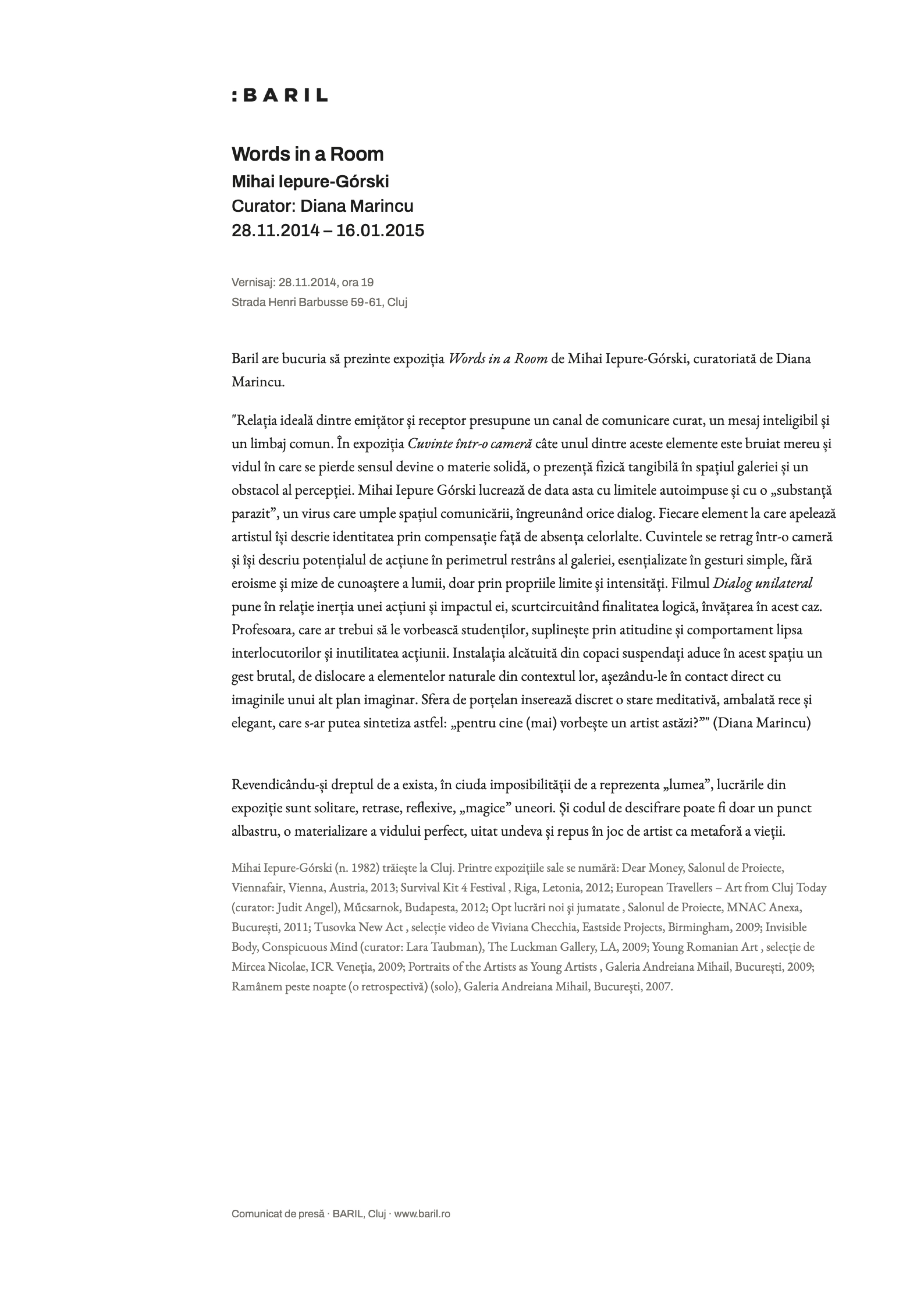
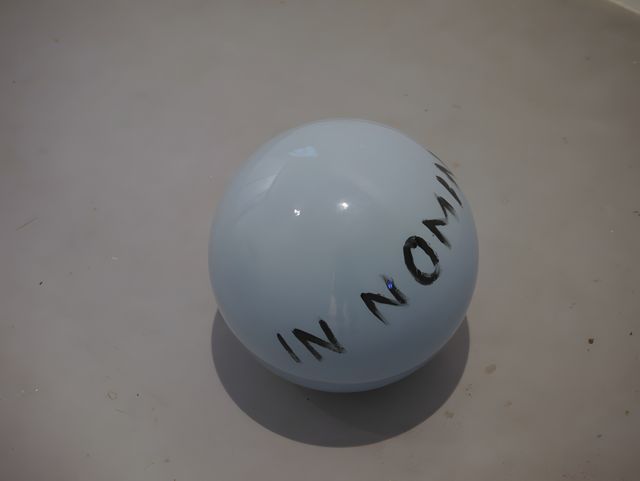
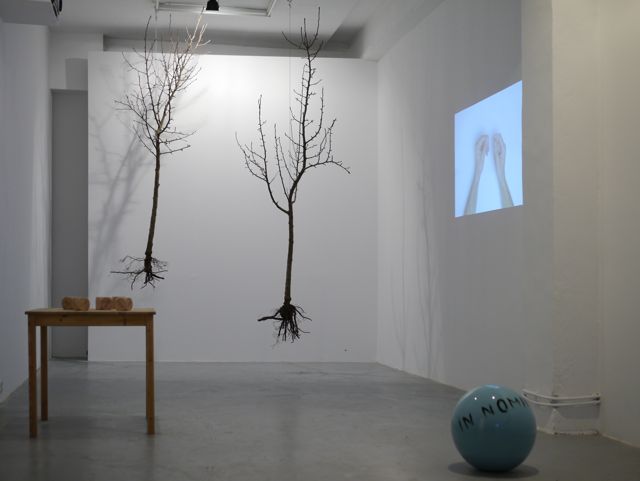
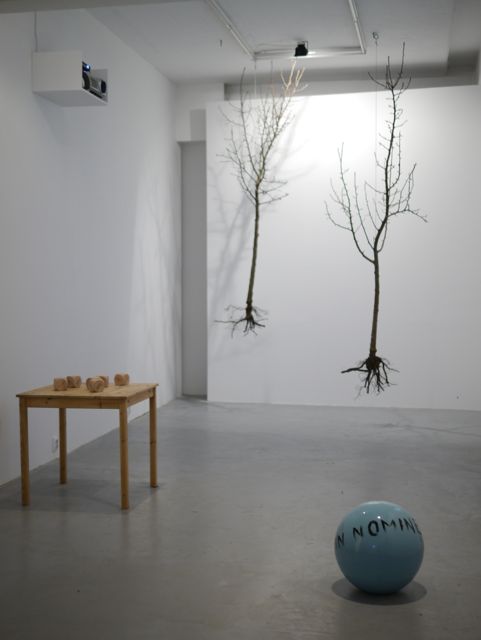
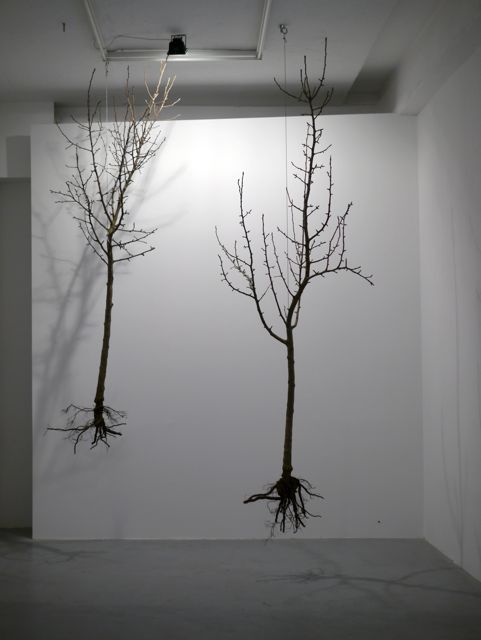
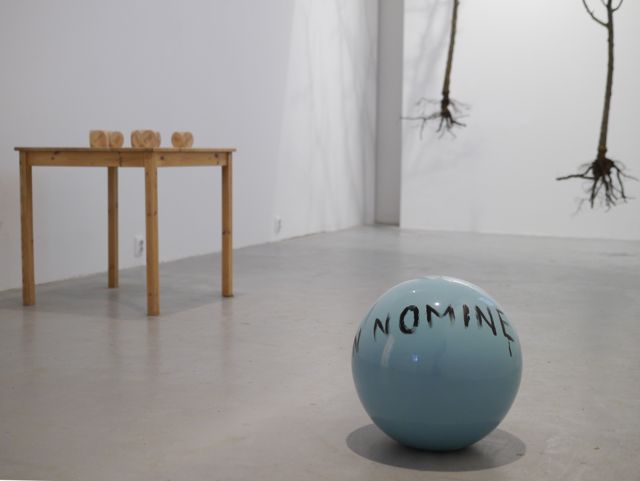
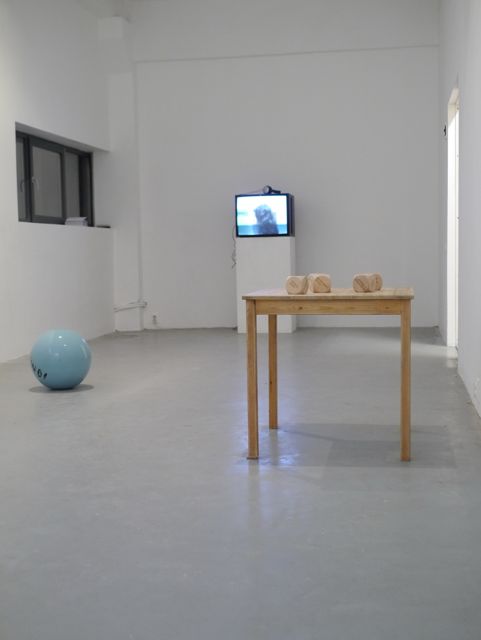
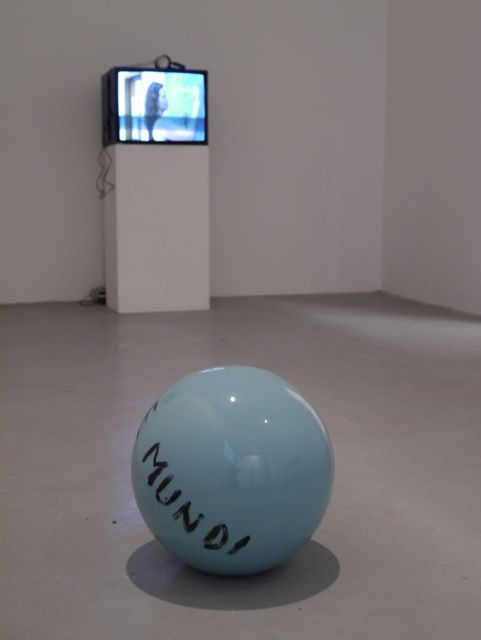
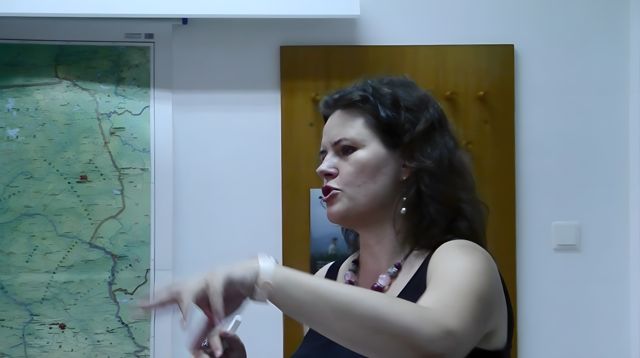
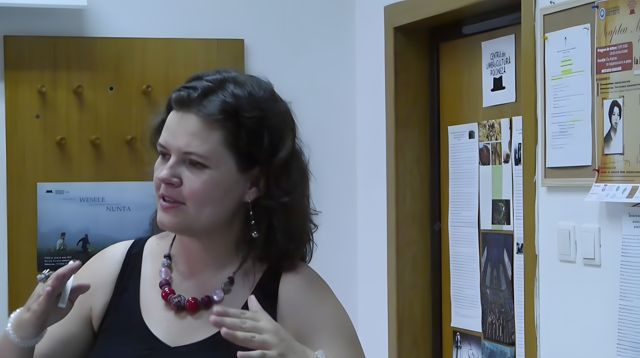
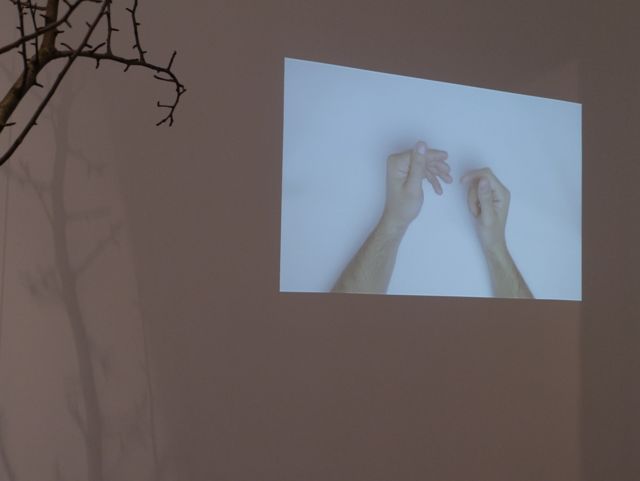
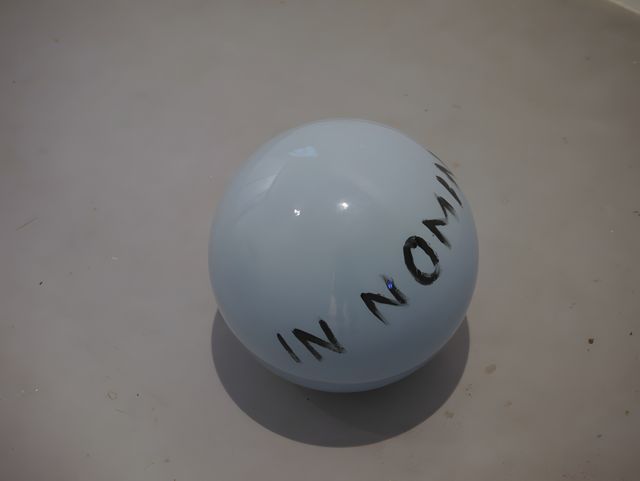
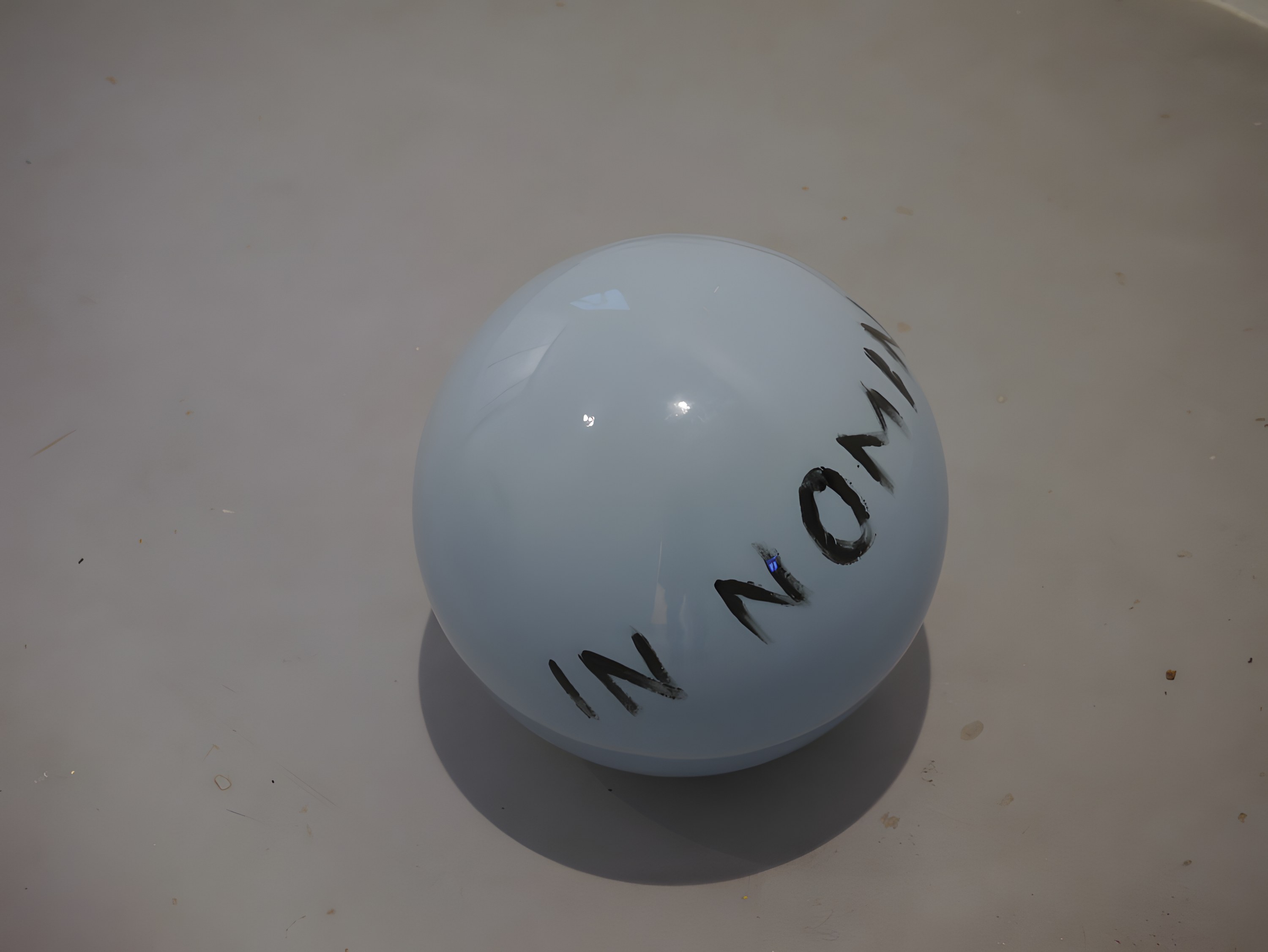
The ideal relation between a transmitter and a receiver entails a clear channel of communication, an intelligible message and a shared language. In the exhibition Words in a Room, each of these elements is scrambled in turn while the void in which meaning fades away becomes concrete, a tangible physical presence in the gallery space and an obstacle for perception. Here Mihai Iepure Górski works with self-imposed limits and with a “parasitic substance”, a virus which colonizes the space of communication and hinders the dialogue. Each element which the artist uses describes its identity as compensation for the absence of the others. Words retreat in a room and stage their potential for action in the limited space of the gallery, essentialized as simple gestures, without heroism or knowledge stakes in relation to the world, only through their own limits and intensities. The film One-sided Dialogue makes the connection between the inertia of an action and its impact, eliding the logical finality, namely learning in this case. The teacher, who was supposed to speak to the students, compensates through attitude and behavior the absence of the interlocutors and the futility of the act. The installation made of suspended trees inserts in this space a brutal gesture which points out the dislocation of natural objects from their context and which repositions them against the images of a different imaginary plane. The porcelain sphere discretely adds a state of meditation in an elegant and discrete wrapping: “to whom does the artist speak today?”

Claiming their right to exist despite their impossibility of representing the world, the works in the exhibition are isolated, withdrawn, reflexive, and occasionally magical. Moreover, the deciphering code can be a mere blue dot, a materialization of the perfect void, forgotten somewhere and reintroduced in the game by the artist as a metaphor of life.

Relația ideală dintre emițător și receptor presupune un canal de comunicare curat, un mesaj inteligibil și un limbaj comun. În expoziția Cuvinte într-o cameră câte unul dintre aceste elemente este bruiat mereu și vidul în care se pierde sensul devine o materie solidă, o prezență fizică tangibilă în spațiul galeriei și un obstacol al percepției. Mihai Iepure Górski lucrează de data asta cu limitele autoimpuse și cu o „substanță parazit”, un virus care umple spațiul comunicării, îngreunând orice dialog. Fiecare element la care apelează artistul își descrie identitatea prin compensație față de absența celorlalte. Cuvintele se retrag într-o cameră și își descriu potențialul de acțiune în perimetrul restrâns al galeriei, esențializate în gesturi simple, fără eroisme și mize de cunoaștere a lumii, doar prin propriile limite și intensități. Filmul Dialog unilateral pune în relație inerția unei acțiuni și impactul ei, scurtcircuitând finalitatea logică, învățarea în acest caz. Profesoara, care ar trebui să le vorbească studenților, suplinește prin atitudine și comportament lipsa interlocutorilor și inutilitatea acțiunii. Instalația alcătuită din copaci suspendați aduce în acest spațiu un gest brutal, de dislocare a elementelor naturale din contextul lor, așezându-le în contact direct cu imaginile unui alt plan imaginar. Sfera de porțelan inserează discret o stare meditativă, ambalată rece și elegant, care s-ar putea sintetiza astfel: „pentru cine (mai) vorbește un artist astăzi?”

Revendicându-și dreptul de a exista, în ciuda imposibilității de a reprezenta „lumea”, lucrările din expoziție sunt solitare, retrase, reflexive, „magice” uneori. Și codul de descifrare poate fi doar un punct albastru, o materializare a vidului perfect, uitat undeva și repus în joc de artist ca metaforă a vieții.

Mihai Iepure-Górski (b. 1982) lives in Cluj. Selected shows: Dear Money, Salonul de Proiecte, Viennafair, Vienna, Austria, 2013; Survival Kit 4 Festival, Riga, Latvia, 2012; European Travelers – Art from Cluj Today (curator: Judit Angel), Műcsarnok, Budapesta, 2012; Eight Works and a Half, Salonul de Proiecte, MNAC Anexa, Bucharest, 2011; Tusovka New Act, video selection by Viviana Checchia, Eastside Projects, Birmingham, 2009; Invisible Body, Conspicuous Mind (curator: Lara Taubman), The Luckman Gallery, LA, 2009; Young Romanian Art, selection by Mircea Nicolae, The Romanian Cultural Institute in Venice, 2009; Portraits of the Artists as Young Artists, Andreiana Mihail Gallery, Bucharest, 2009; We're Staying Overnight (A Retrospective) (solo), Andreiana Mihail Gallery, Bucharest, 2007.

Mihai Iepure-Górski (n. 1982) trăiește la Cluj. Printre expozițiile sale se numără:

Dear Money,

Salonul de Proiecte, Viennafair, Vienna, Austria, 2013;

Survival Kit 4 Festival

, Riga, Letonia, 2012;

European Travellers – Art from Cluj Today

(curator: Judit Angel), Műcsarnok, Budapesta, 2012;

Opt lucrări noi şi jumatate

, Salonul de Proiecte, MNAC Anexa, București, 2011;

Tusovka New Act

, selecție video de Viviana Checchia, Eastside Projects, Birmingham, 2009;

Invisible Body, Conspicuous Mind

(curator: Lara Taubman), The Luckman Gallery, LA, 2009;

Young Romanian Art

, selecție de Mircea Nicolae, ICR Veneția, 2009;

Portraits of the Artists as Young Artists

, Galeria Andreiana Mihail, București, 2009;

Ramânem peste noapte (o retrospectivă)

(solo), Galeria Andreiana Mihail, București, 2007.
Words in a Room

Mihai Iepure-Górski
curated by Diana Marincu
28.11.2014 – 16.1.2015
2013 | Wunderkammer2017 | Sieranevada
views
press
Text

The ideal relation between a transmitter and a receiver entails a clear channel of communication, an intelligible message and a shared language. In the exhibition Words in a Room, each of these elements is scrambled in turn while the void in which meaning fades away becomes concrete, a tangible physical presence in the gallery space and an obstacle for perception. Here Mihai Iepure Górski works with self-imposed limits and with a “parasitic substance”, a virus which colonizes the space of communication and hinders the dialogue. Each element which the artist uses describes its identity as compensation for the absence of the others. Words retreat in a room and stage their potential for action in the limited space of the gallery, essentialized as simple gestures, without heroism or knowledge stakes in relation to the world, only through their own limits and intensities. The film One-sided Dialogue makes the connection between the inertia of an action and its impact, eliding the logical finality, namely learning in this case. The teacher, who was supposed to speak to the students, compensates through attitude and behavior the absence of the interlocutors and the futility of the act. The installation made of suspended trees inserts in this space a brutal gesture which points out the dislocation of natural objects from their context and which repositions them against the images of a different imaginary plane. The porcelain sphere discretely adds a state of meditation in an elegant and discrete wrapping: “to whom does the artist speak today?”

Claiming their right to exist despite their impossibility of representing the world, the works in the exhibition are isolated, withdrawn, reflexive, and occasionally magical. Moreover, the deciphering code can be a mere blue dot, a materialization of the perfect void, forgotten somewhere and reintroduced in the game by the artist as a metaphor of life.

Relația ideală dintre emițător și receptor presupune un canal de comunicare curat, un mesaj inteligibil și un limbaj comun. În expoziția Cuvinte într-o cameră câte unul dintre aceste elemente este bruiat mereu și vidul în care se pierde sensul devine o materie solidă, o prezență fizică tangibilă în spațiul galeriei și un obstacol al percepției. Mihai Iepure Górski lucrează de data asta cu limitele autoimpuse și cu o „substanță parazit”, un virus care umple spațiul comunicării, îngreunând orice dialog. Fiecare element la care apelează artistul își descrie identitatea prin compensație față de absența celorlalte. Cuvintele se retrag într-o cameră și își descriu potențialul de acțiune în perimetrul restrâns al galeriei, esențializate în gesturi simple, fără eroisme și mize de cunoaștere a lumii, doar prin propriile limite și intensități. Filmul Dialog unilateral pune în relație inerția unei acțiuni și impactul ei, scurtcircuitând finalitatea logică, învățarea în acest caz. Profesoara, care ar trebui să le vorbească studenților, suplinește prin atitudine și comportament lipsa interlocutorilor și inutilitatea acțiunii. Instalația alcătuită din copaci suspendați aduce în acest spațiu un gest brutal, de dislocare a elementelor naturale din contextul lor, așezându-le în contact direct cu imaginile unui alt plan imaginar. Sfera de porțelan inserează discret o stare meditativă, ambalată rece și elegant, care s-ar putea sintetiza astfel: „pentru cine (mai) vorbește un artist astăzi?”

Revendicându-și dreptul de a exista, în ciuda imposibilității de a reprezenta „lumea”, lucrările din expoziție sunt solitare, retrase, reflexive, „magice” uneori. Și codul de descifrare poate fi doar un punct albastru, o materializare a vidului perfect, uitat undeva și repus în joc de artist ca metaforă a vieții.

Mihai Iepure-Górski (b. 1982) lives in Cluj. Selected shows: Dear Money, Salonul de Proiecte, Viennafair, Vienna, Austria, 2013; Survival Kit 4 Festival, Riga, Latvia, 2012; European Travelers – Art from Cluj Today (curator: Judit Angel), Műcsarnok, Budapesta, 2012; Eight Works and a Half, Salonul de Proiecte, MNAC Anexa, Bucharest, 2011; Tusovka New Act, video selection by Viviana Checchia, Eastside Projects, Birmingham, 2009; Invisible Body, Conspicuous Mind (curator: Lara Taubman), The Luckman Gallery, LA, 2009; Young Romanian Art, selection by Mircea Nicolae, The Romanian Cultural Institute in Venice, 2009; Portraits of the Artists as Young Artists, Andreiana Mihail Gallery, Bucharest, 2009; We're Staying Overnight (A Retrospective) (solo), Andreiana Mihail Gallery, Bucharest, 2007.

Mihai Iepure-Górski (n. 1982) trăiește la Cluj. Printre expozițiile sale se numără:

Dear Money,

Salonul de Proiecte, Viennafair, Vienna, Austria, 2013;

Survival Kit 4 Festival

, Riga, Letonia, 2012;

European Travellers – Art from Cluj Today

(curator: Judit Angel), Műcsarnok, Budapesta, 2012;

Opt lucrări noi şi jumatate

, Salonul de Proiecte, MNAC Anexa, București, 2011;

Tusovka New Act

, selecție video de Viviana Checchia, Eastside Projects, Birmingham, 2009;

Invisible Body, Conspicuous Mind

(curator: Lara Taubman), The Luckman Gallery, LA, 2009;

Young Romanian Art

, selecție de Mircea Nicolae, ICR Veneția, 2009;

Portraits of the Artists as Young Artists

, Galeria Andreiana Mihail, București, 2009;

Ramânem peste noapte (o retrospectivă)

(solo), Galeria Andreiana Mihail, București, 2007.
Site typography

Two voices: Archivo for the apparatus and the poster, EB Garamond for long-form reading. The three words of the identity (BARIL · ARCHIVE · 2012–2019) are drawn, not typeset.

The apparatus — Archivo

9px · 400 fine print: the artist on a polaroid, the OCD sheets, the „generated…" line
10,5px · 400 · .15em labels · filter · imported · menu · press release
12px · 400 filters, timeline, artist list, tooltips, captions — tabular figures
14px · 500accordion headers

The poster — also Archivo

clamp(17→24px) · 700exhibition title
clamp(15→19px) · 600artist name
14px · 400 31.10.2018 – 31.1.2019
10,5px · 500curated by

Reading — EB Garamond

15.5px / 1.6texts in column 4: press releases, biographies, the poem — with true italics
19.5px / 1.62 · 58chfull screen
30px · 600the title in the reader

Conventions: uppercase labels always carry .14–.16em tracking in muted ink; figures are tabular so they never dance while scrolling; italics appear only in reading.