
Artists
: B A R I L
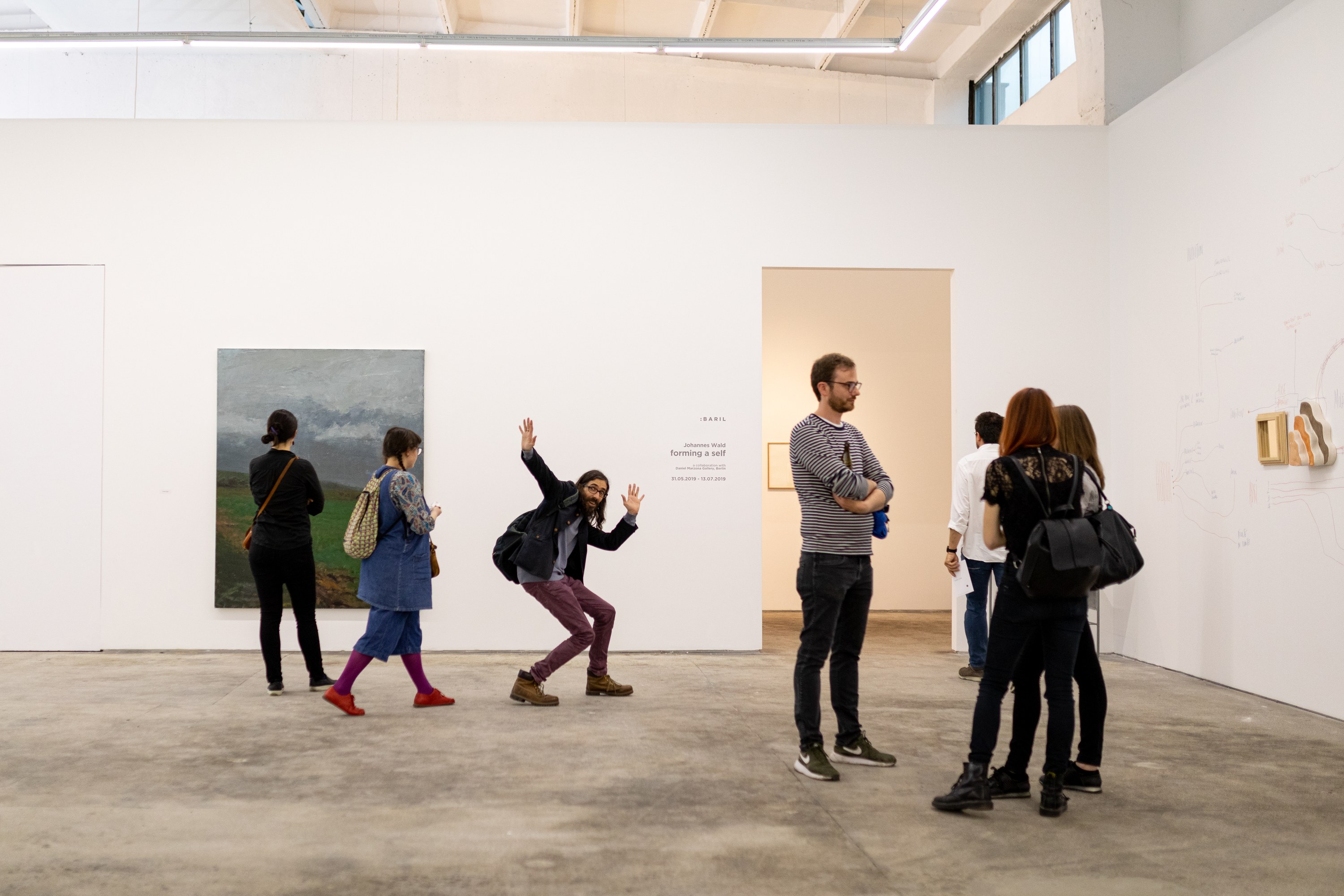
forming a self
Johannes Wald
31.5.2019 – 13.7.2019

As an artist, one creates not only a work, but at the same time also one’s own persona as an artist.

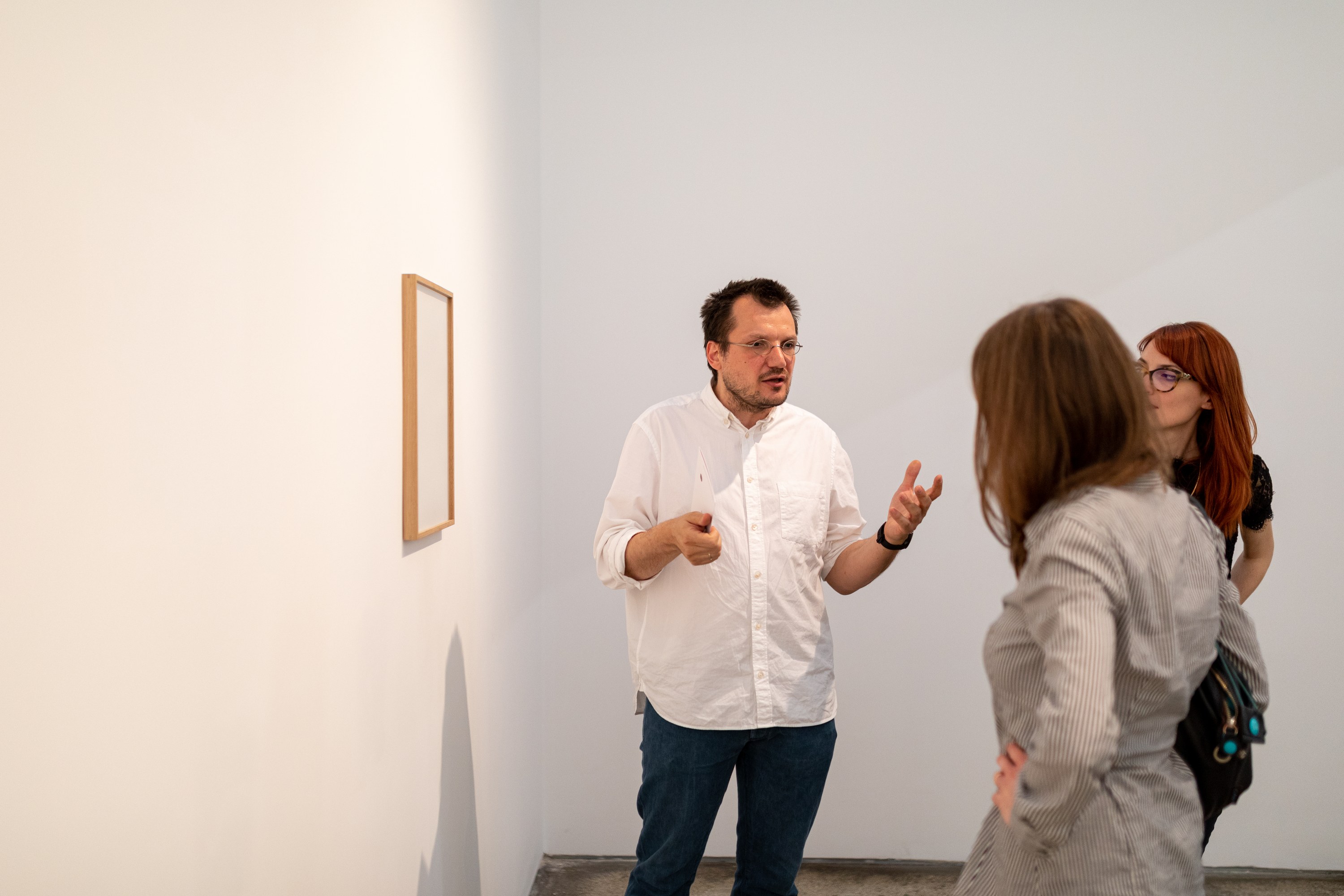
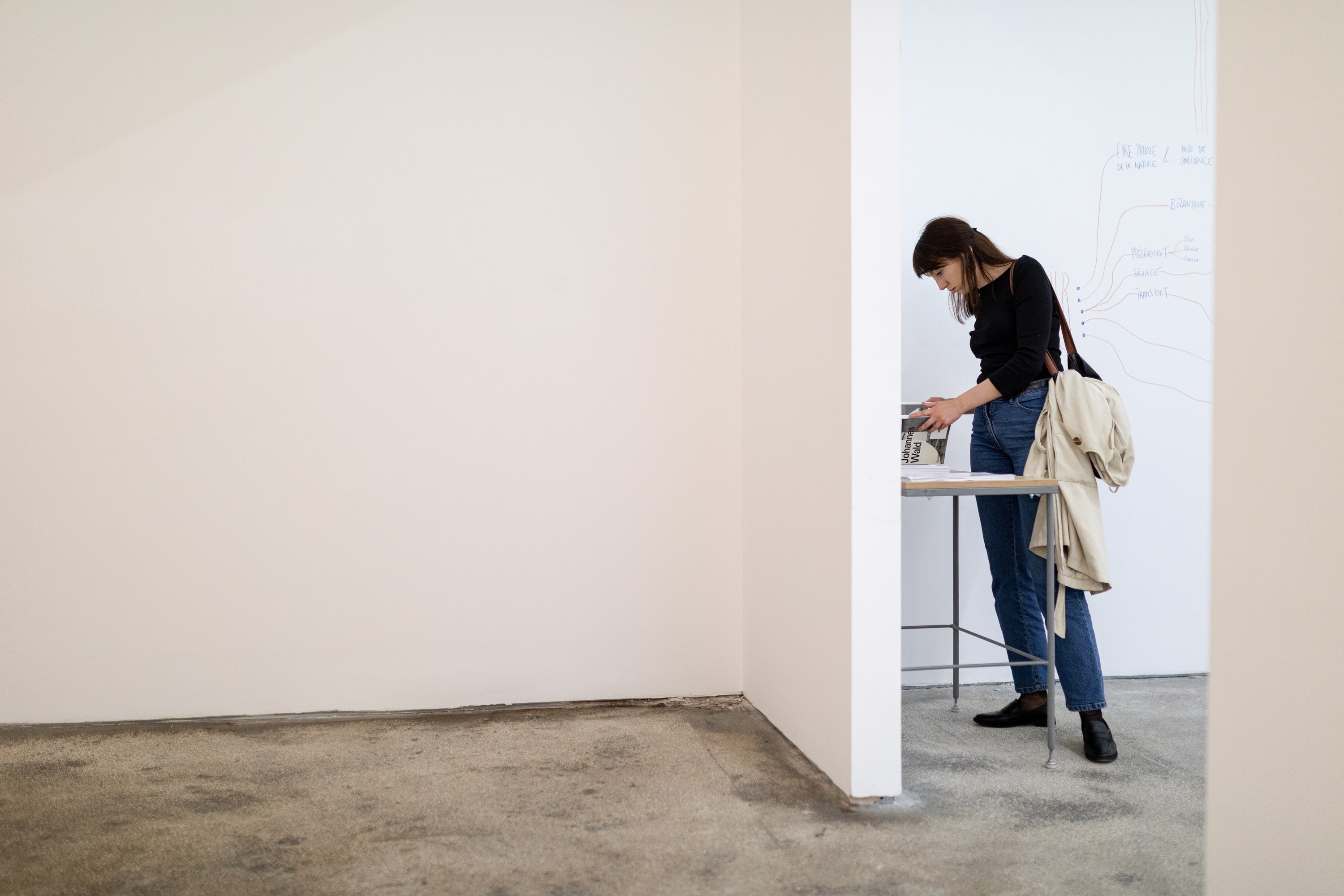
Some of the works in Johannes Wald’s exhibition in the Baril Gallery deal with the unavoidable combination of these two aspects, while others are concerned with fundamental issues of sculpture – with the inside and outside, material, form, space, and emotion as possible content. While some works point to the future, others come from the past or unite their before and after in the here and now.

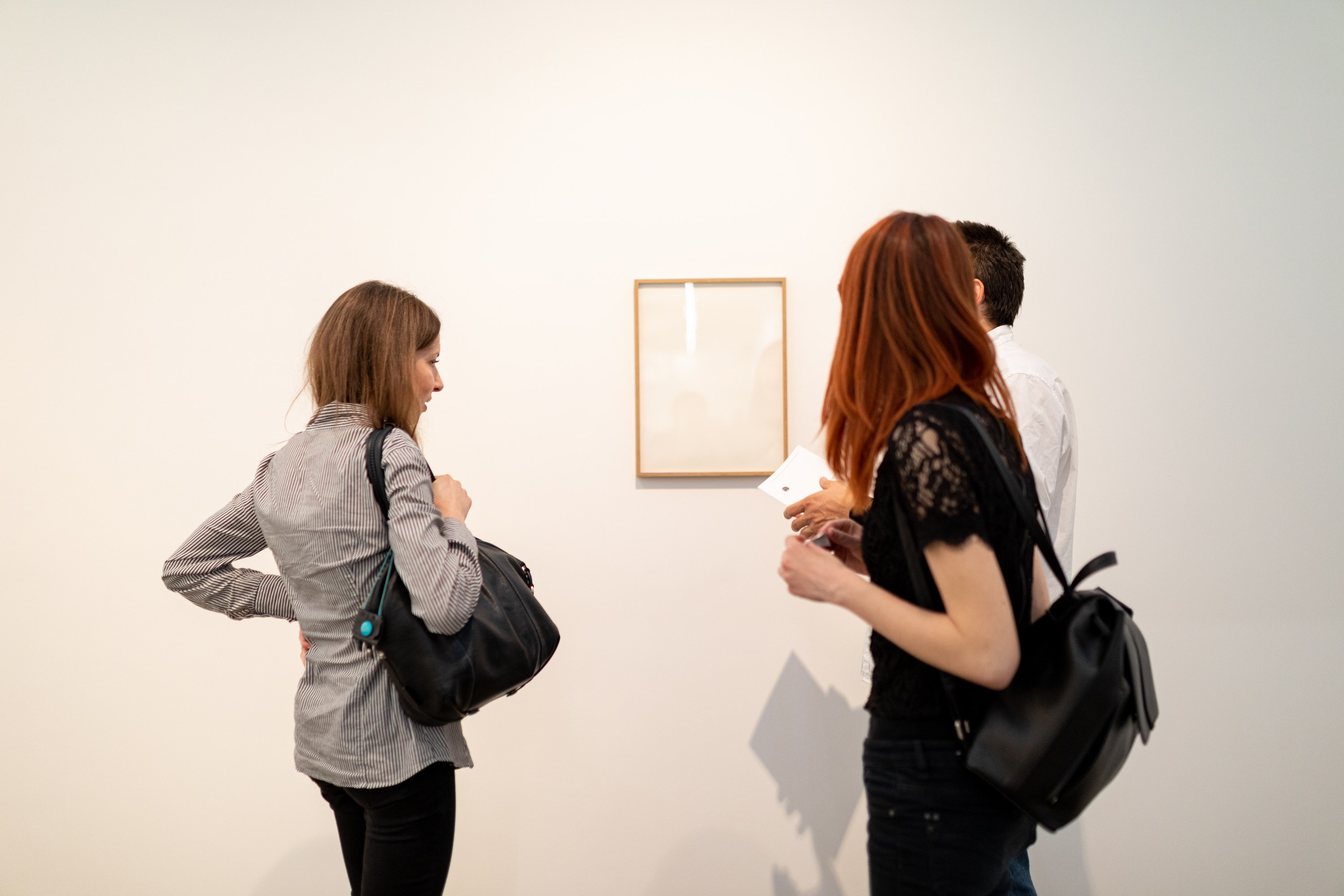
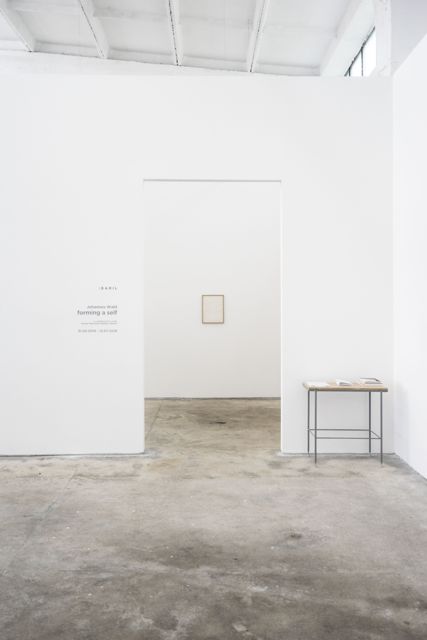
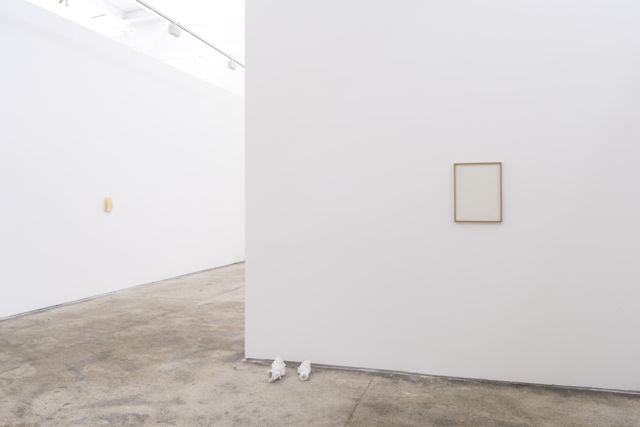
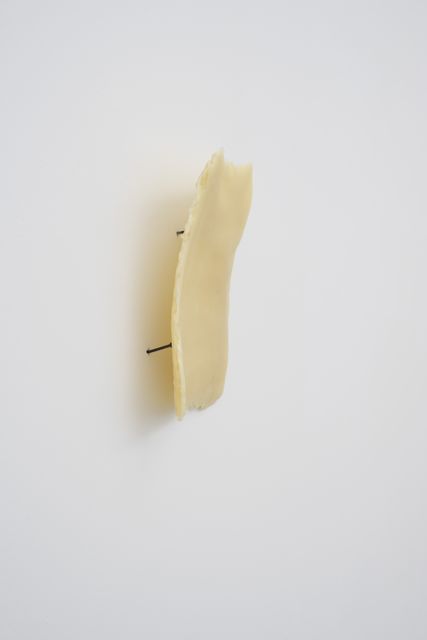
In front of the entrance to the gallery room hangs, inconspicuously, a framed sheet of paper from the year 2012 embossed with the inscription “Johannes Wald – Bildhauer” (sculptor); it sets the tone for the exhibition’s entire staging.

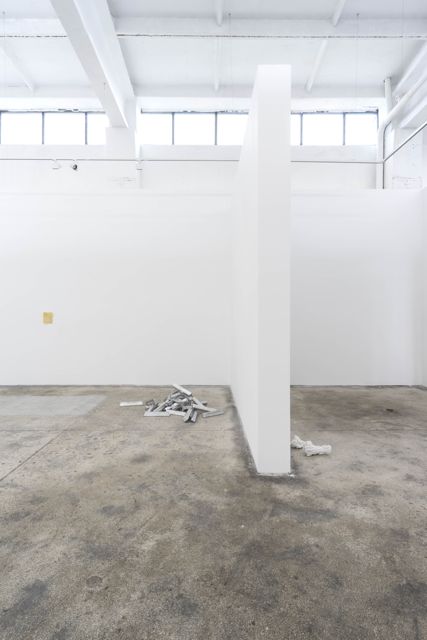
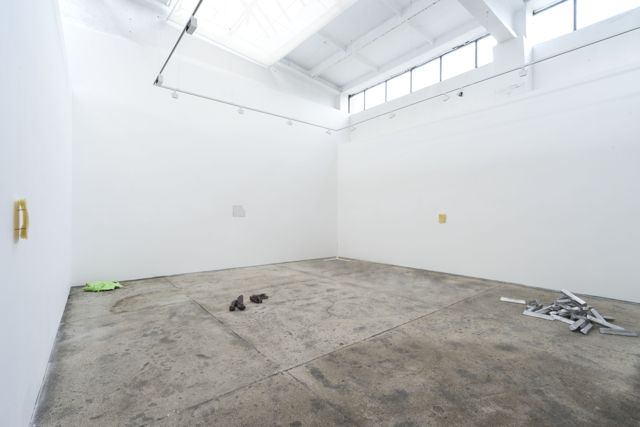
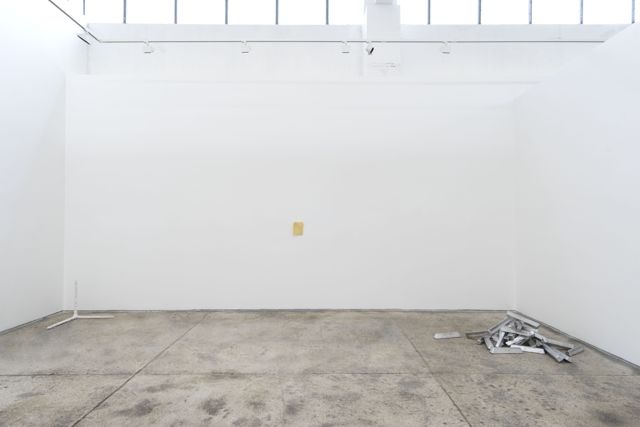
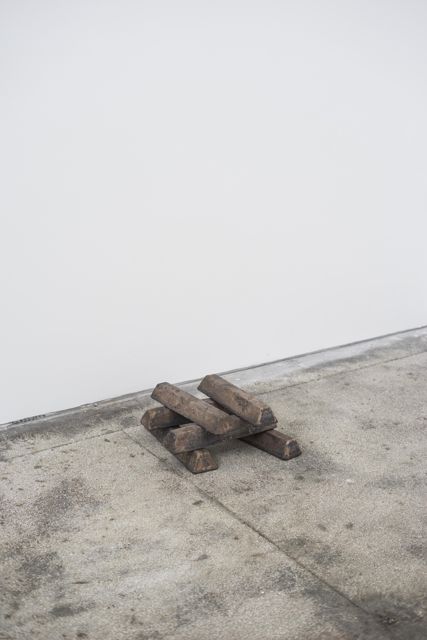
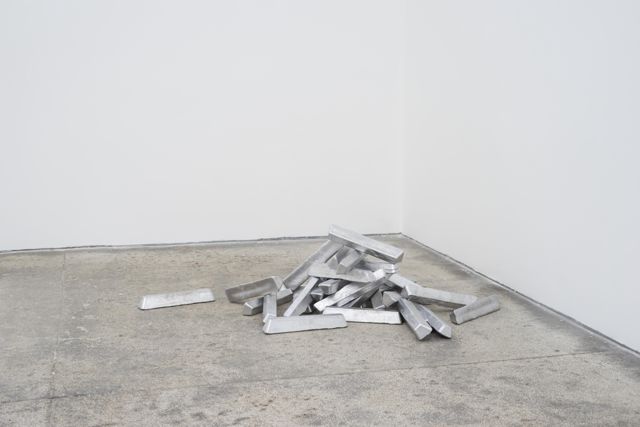
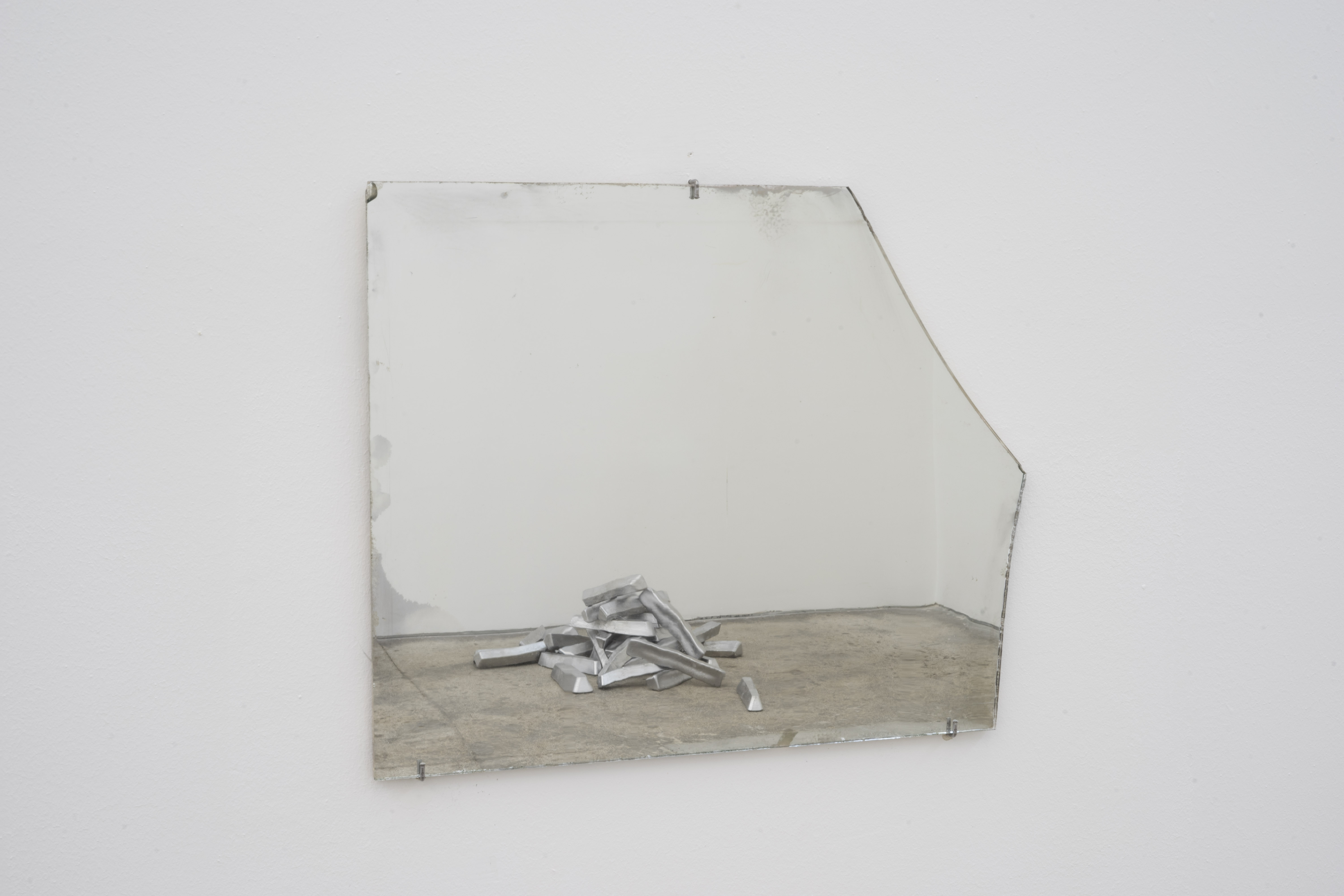
In front of the short partition wall in the room, we first encounter an 85-kg (the same weight as the artist’s body) pile of bronze ingots titled “Ioan Pădure – sculptor neterminat” (Johannes Wald – unfinished sculptor). Behind the partition wall is another loose pile – of aluminum bars (also 85 kg, but with many more bars) titled “John Forest – sculptor laying dormant“. In the future, the ingots can be melted down by the artist or someone else, or, still as bars, they can be put in different arrangements any number of times – two abstractions of a self-portrait in progress.

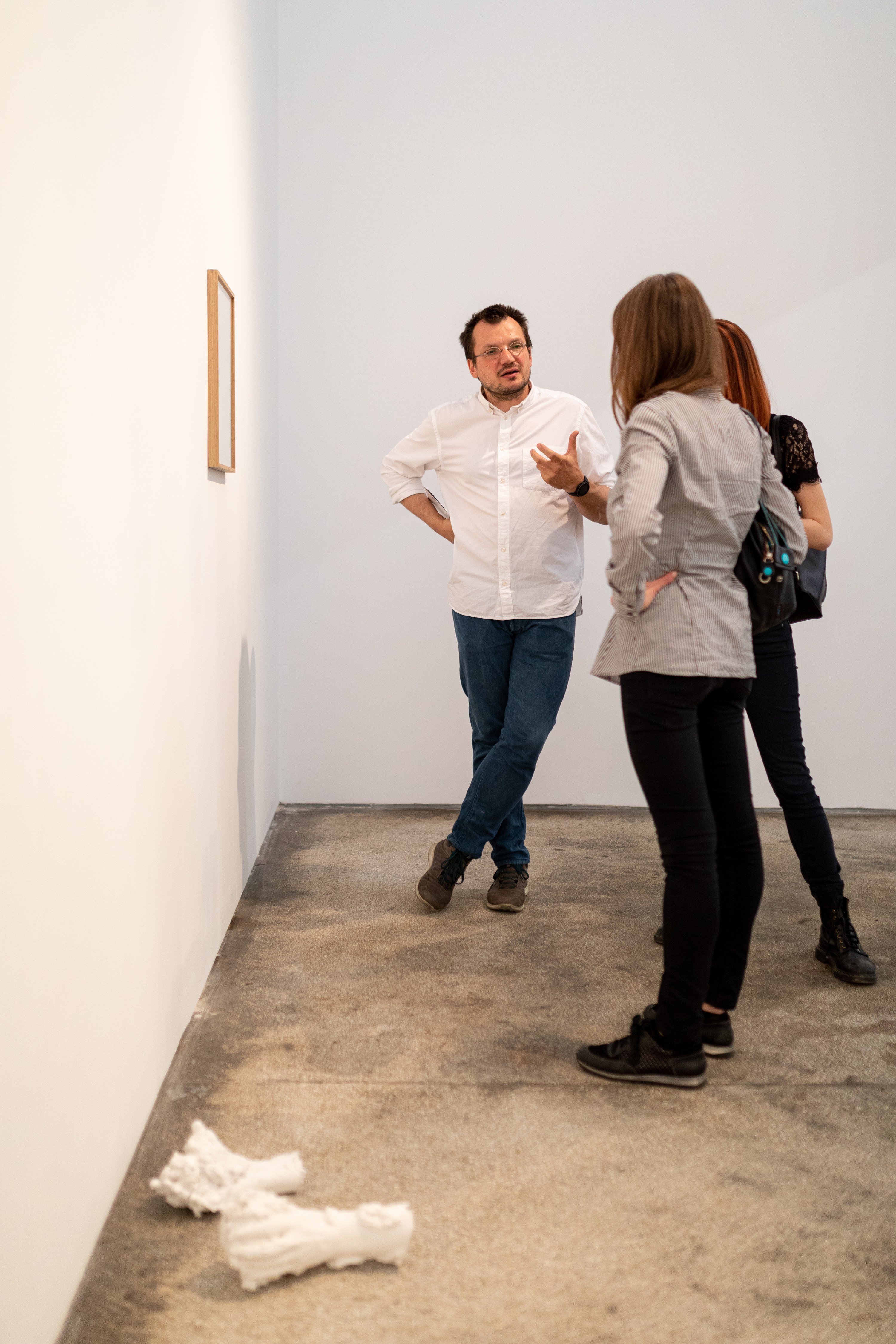
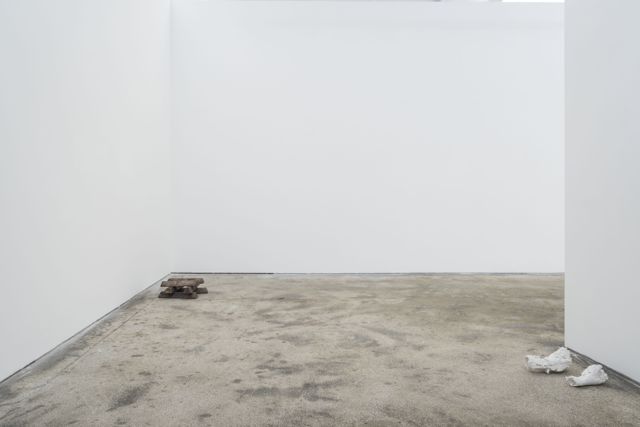
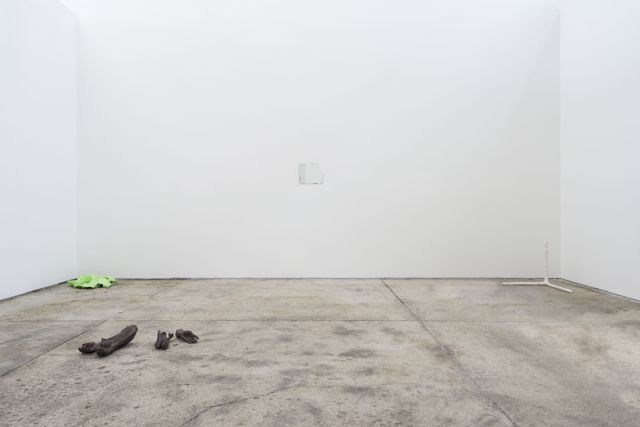
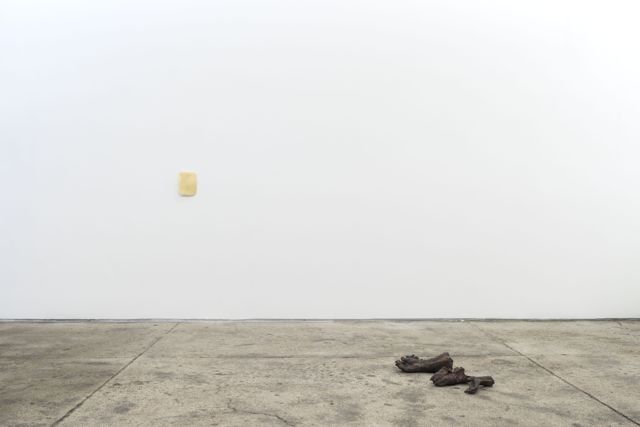
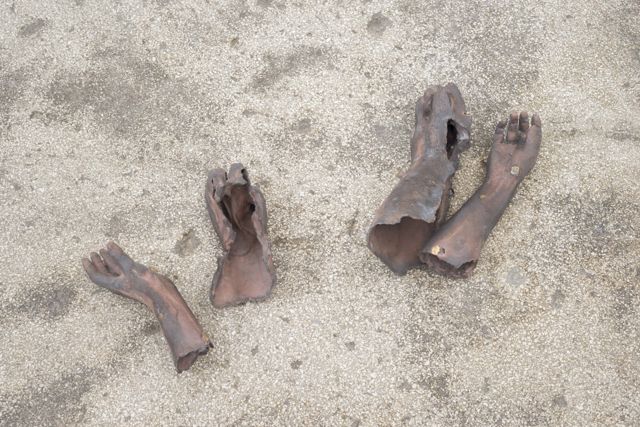
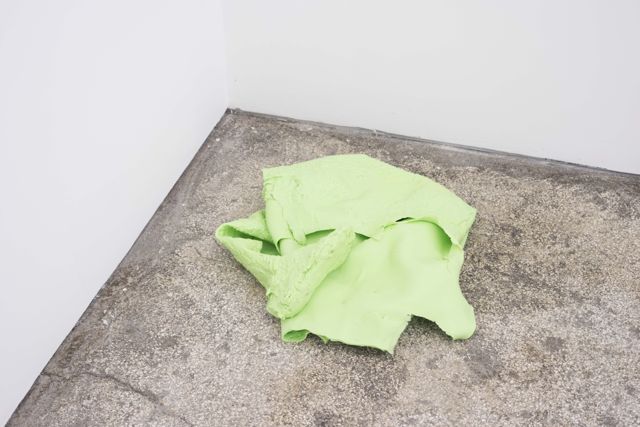
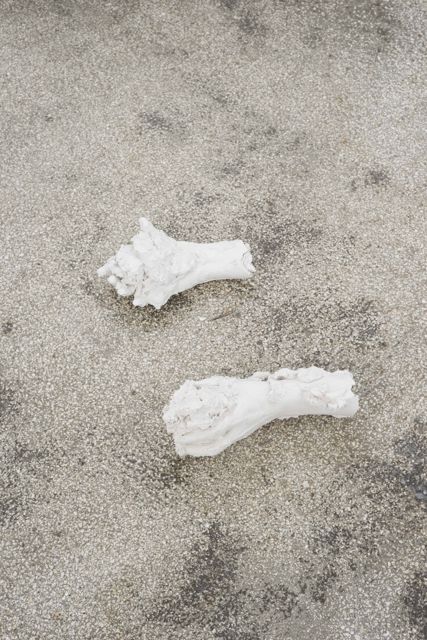
The work “Untitled (model for a self)” is a kind of short circuit of the sculpting process. Wald’s hands and the material that these hands are just forming are cast in plaster, inseparable; the boundary between object and subject literally dissolves here. Also seemingly in a process of dissolution is the sculpture titled “Torso”. A silicon form directly molded from a human model lies, cut open and as if shed, on the floor. The viewer sees both interior and exterior surfaces of the form. The interior surfaces bear the negative impression of the skin, while the external traces testify to the application of the material. Actual body contours are only fragmentarily recognizable. The work can be read as a casting mold for a possible figure, but it is intended as a completed work that, forever formless, can be laid out differently in every installation and is abandoned to gradual decay.

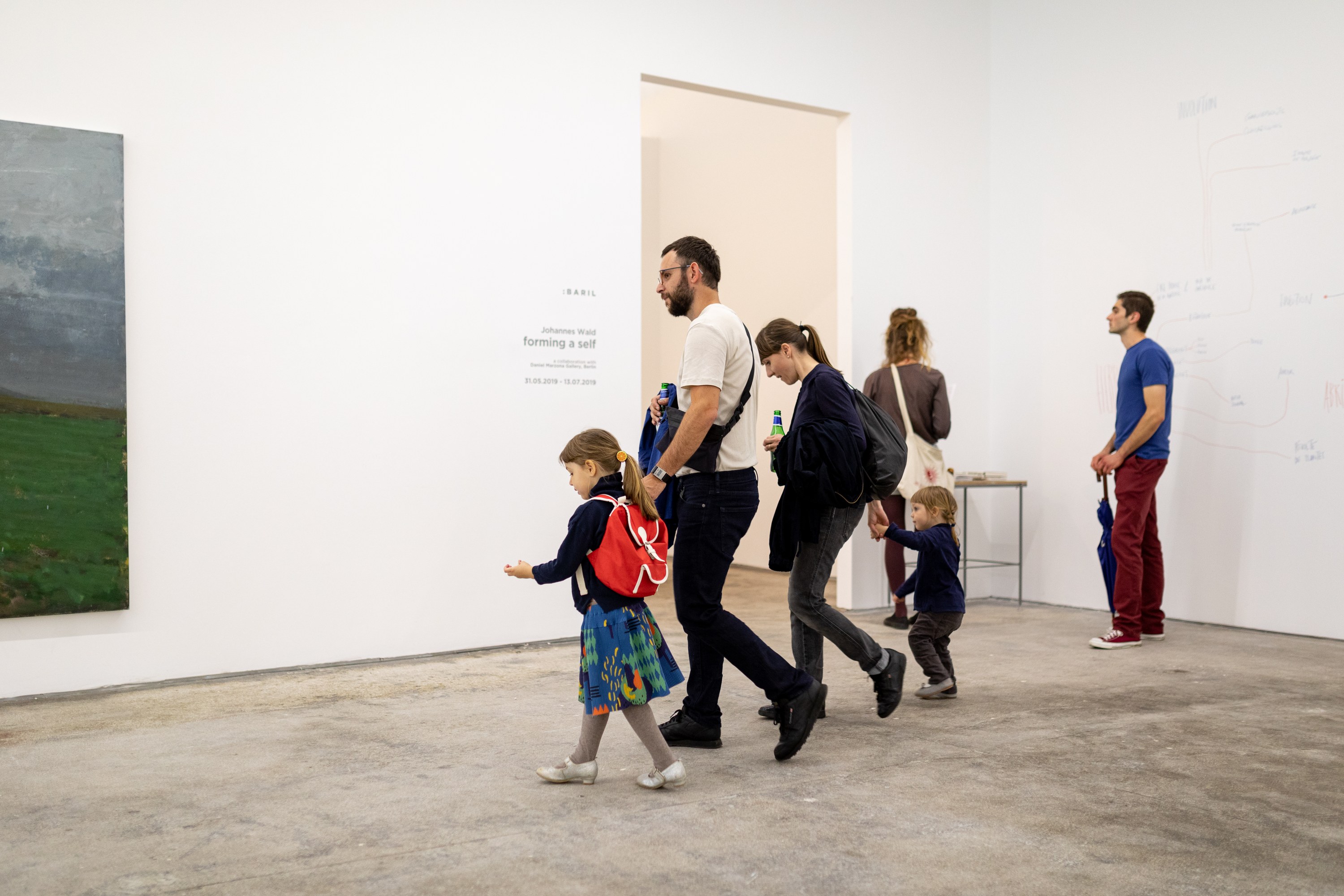
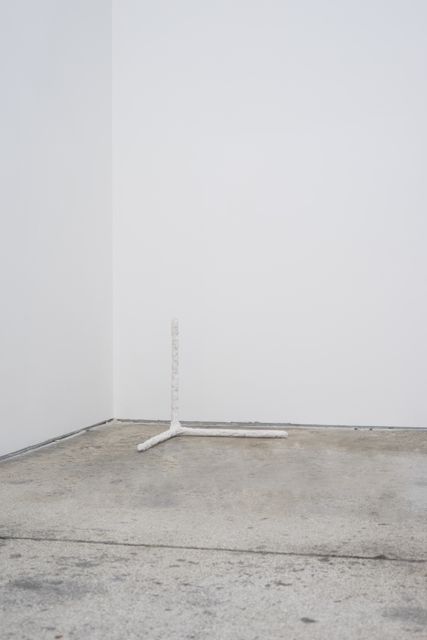
The work “Range of my sentiments” describes a kind of emotional space – a strange coordinate system, such as is used in mathematics to depict spatial complexes. Formed from plaster directly as a positive, it displays fingerprints and other traces of manual processing. It connects subjective activity with the cool, abstract, and generally readable signs for space. The supposed theme of the sculpture is the three-dimensionality inscribed per se in a sculpture. Even if associations of this tautological zeroing of the object as the level of its meaning are always evoked, the inconspicuous work goes far beyond that. Set up in the corner of the exhibition room, the sculpture namely seems to take up all the other works in itself, thereby becoming a kind of frame comprising and locating all of Wald’s artistic expressions.

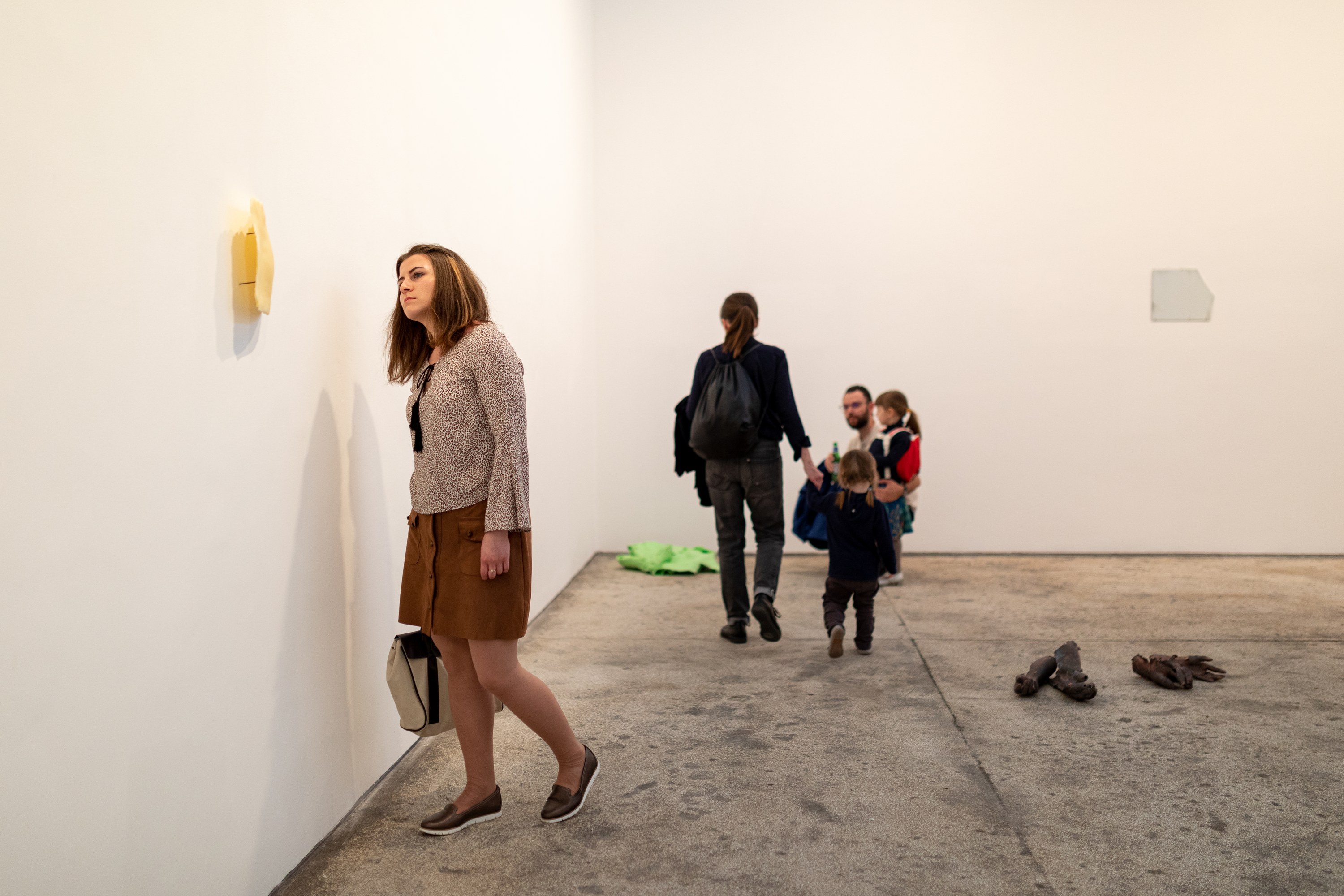
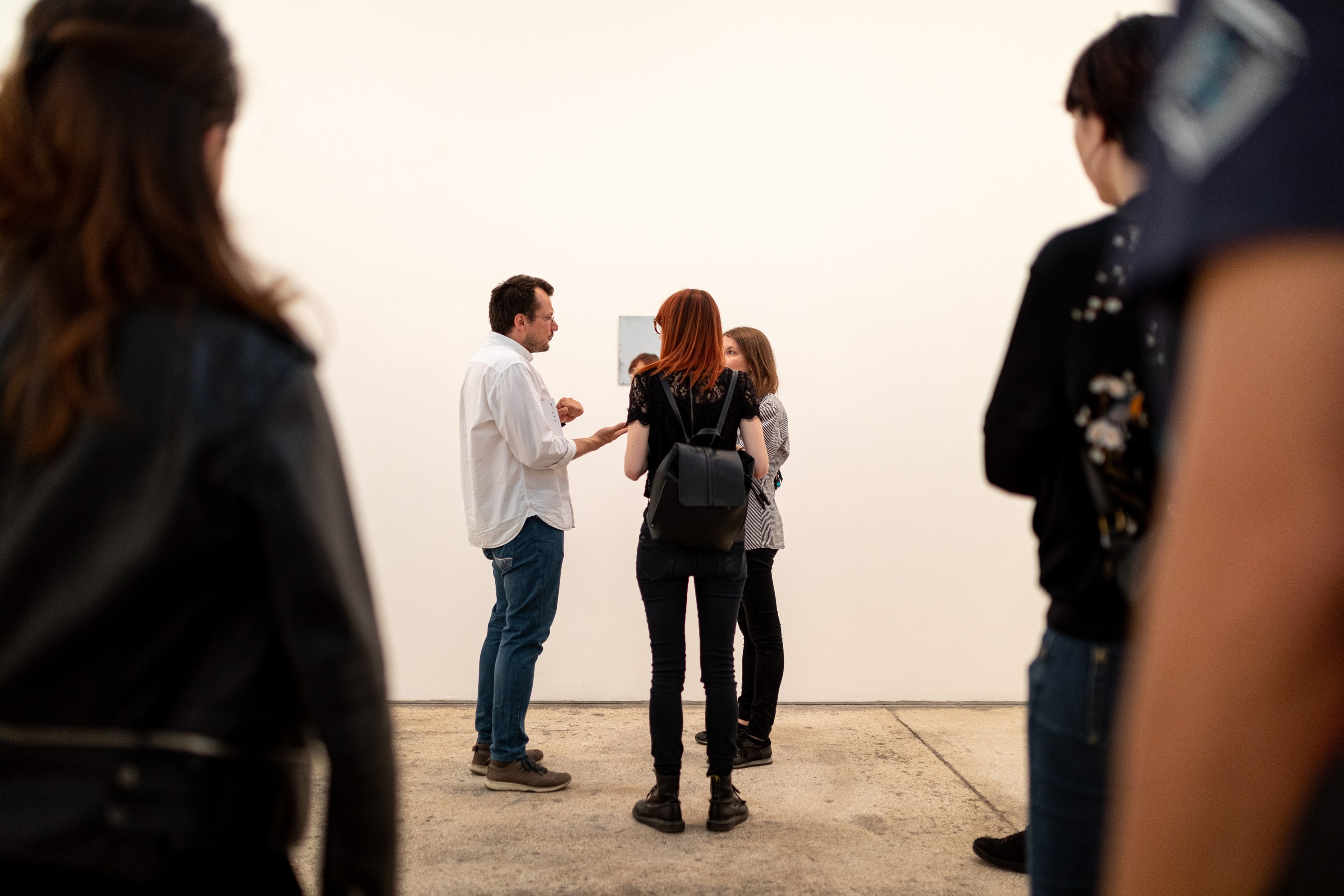
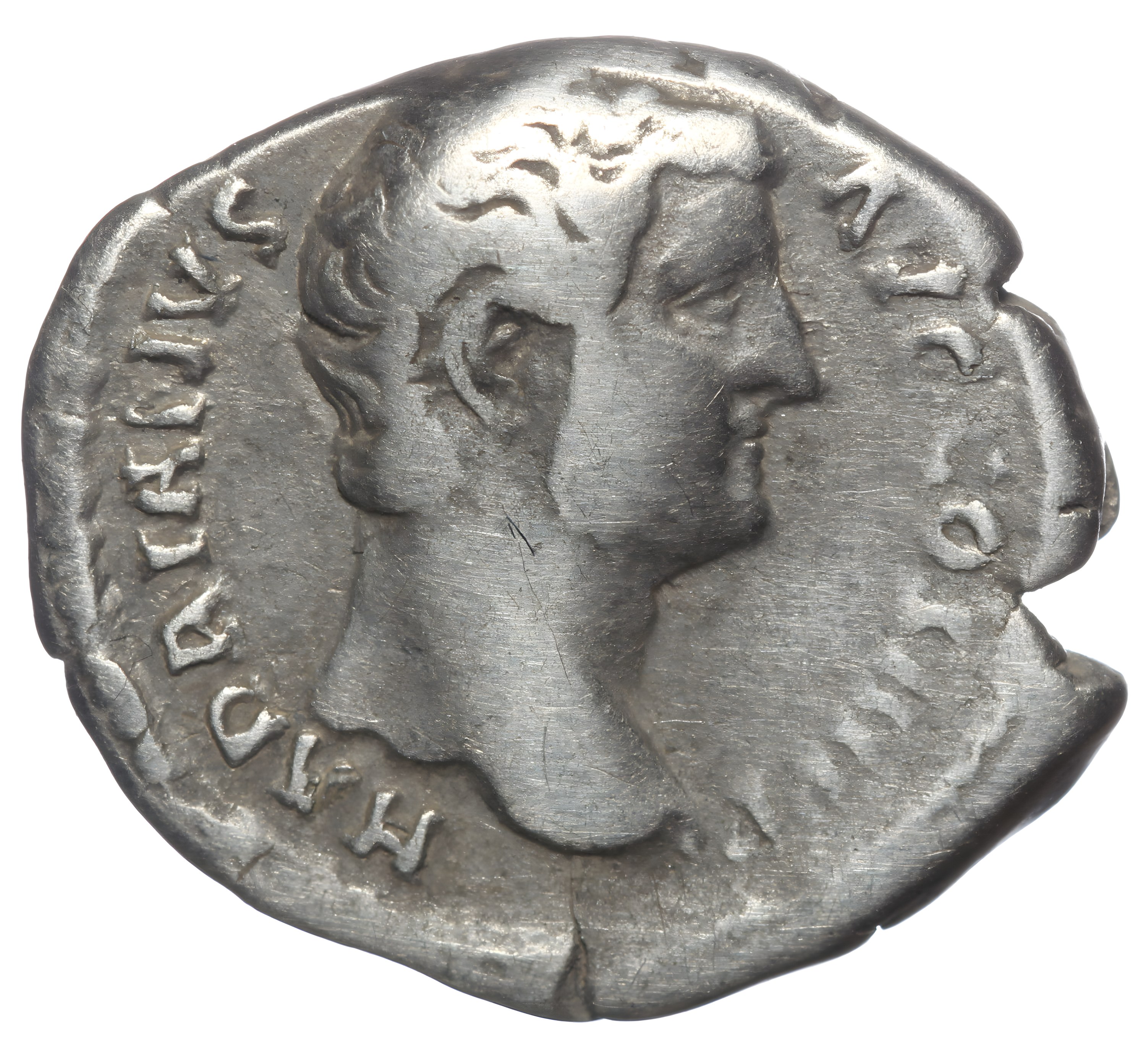
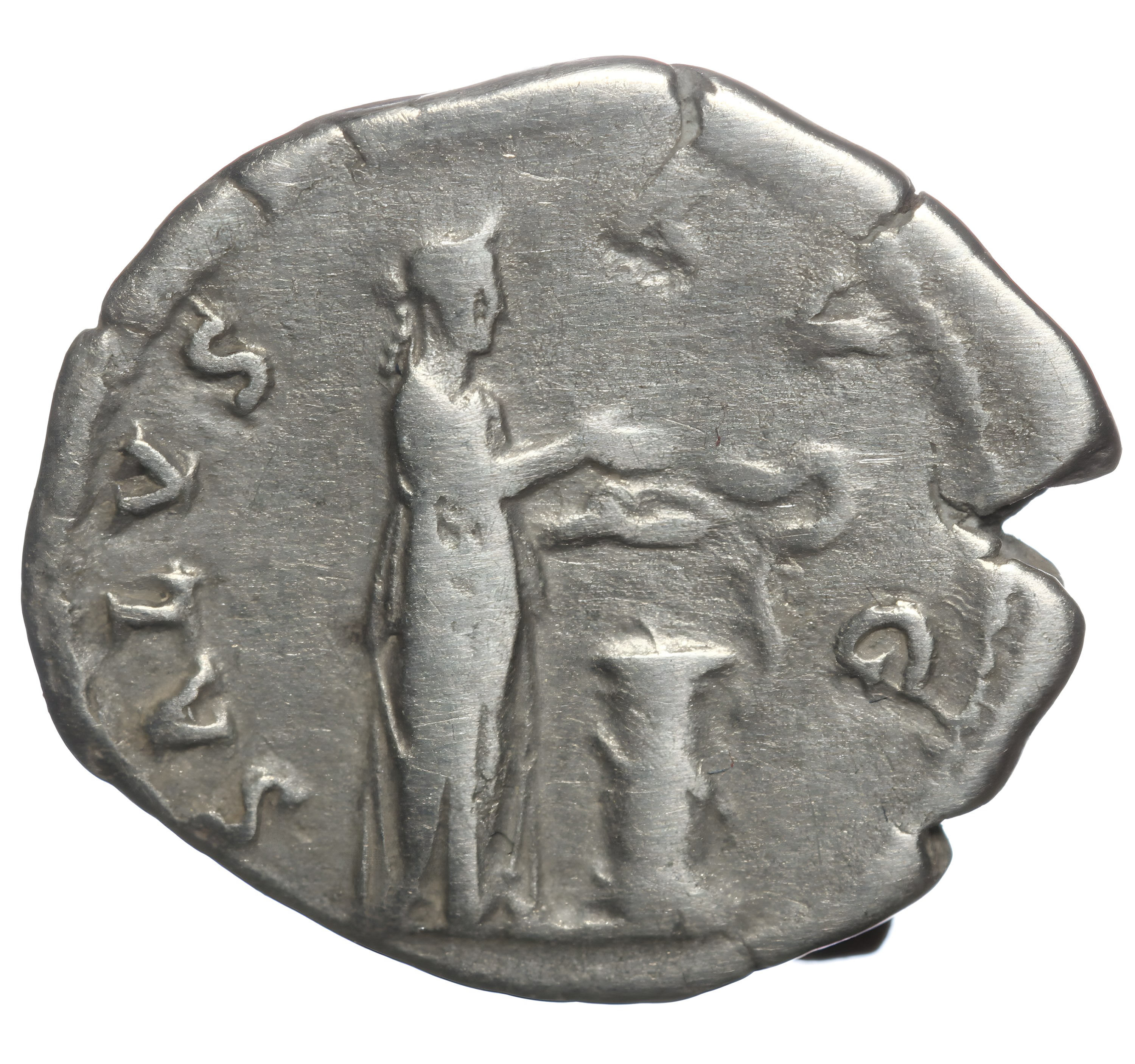
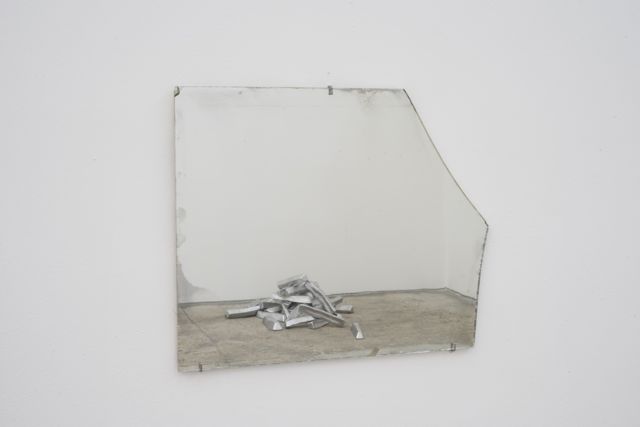
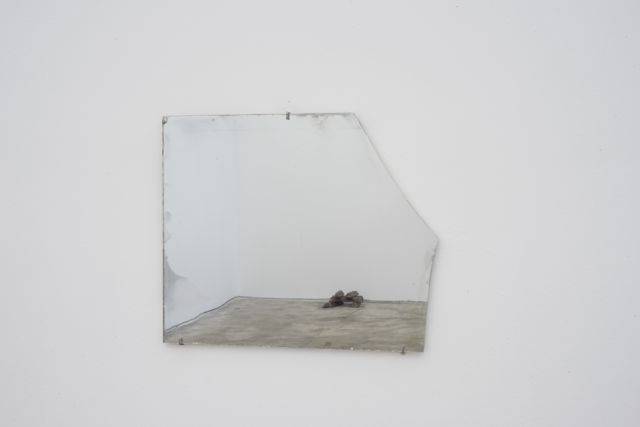
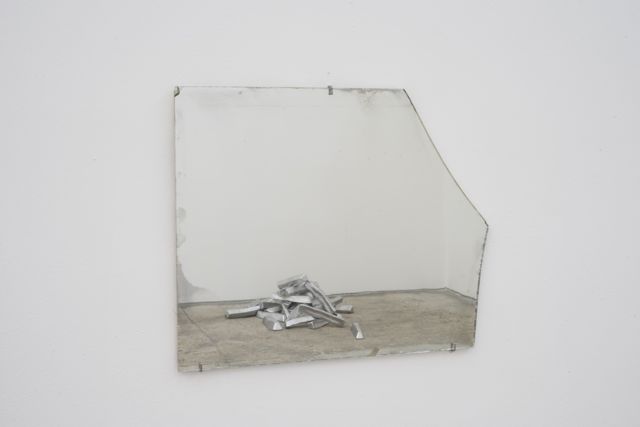
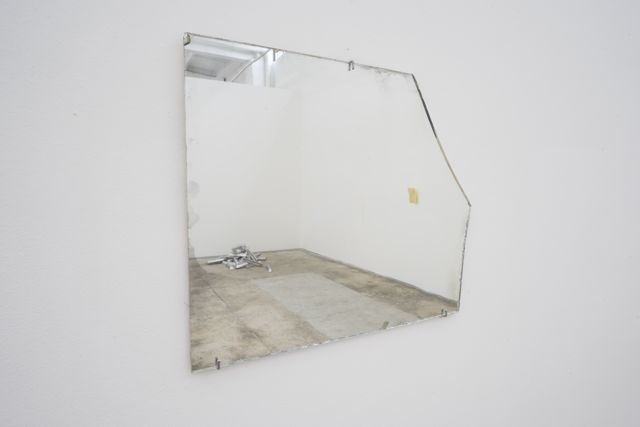
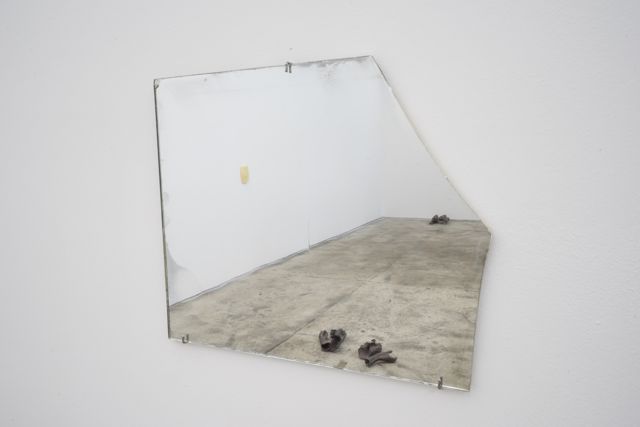
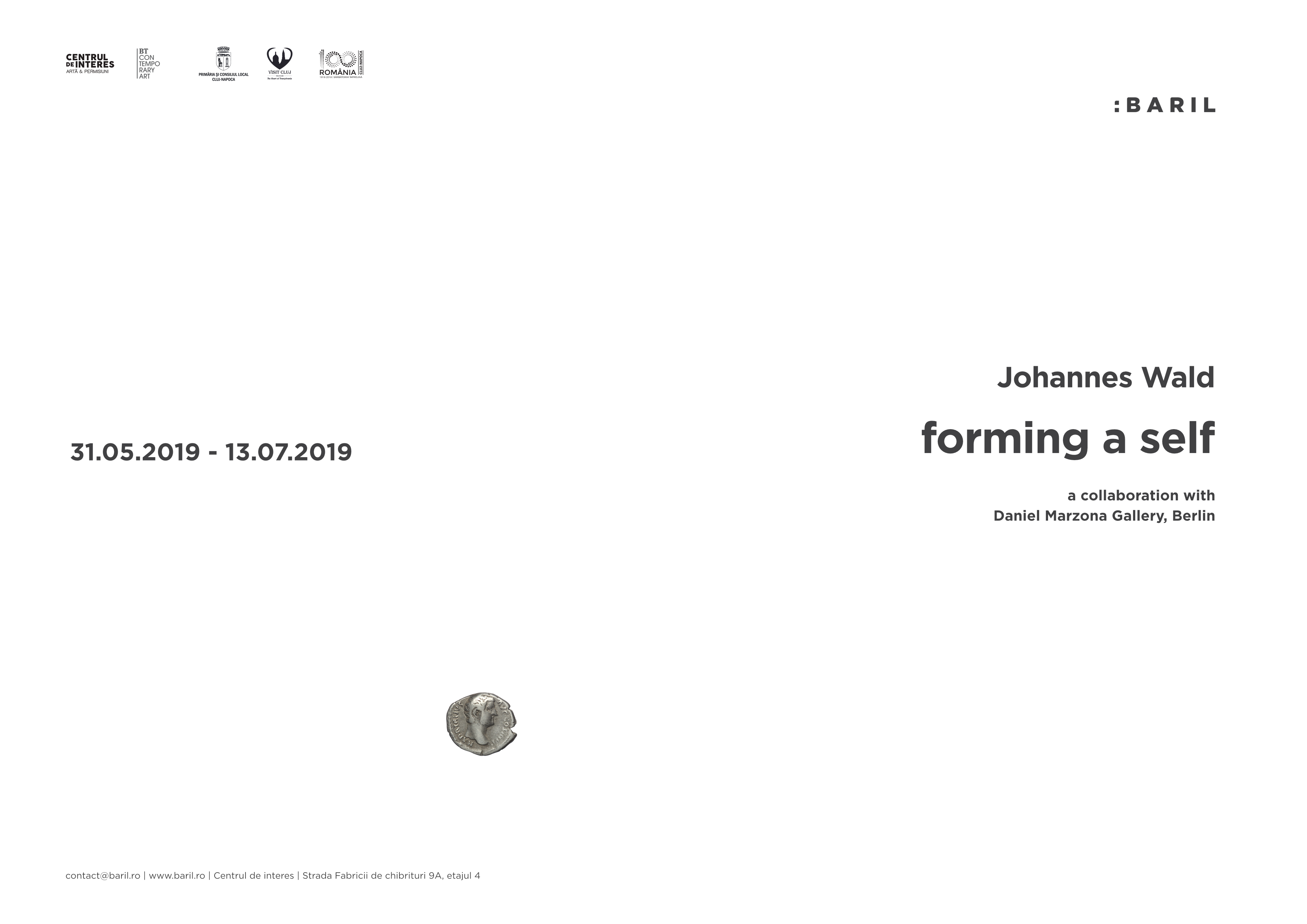
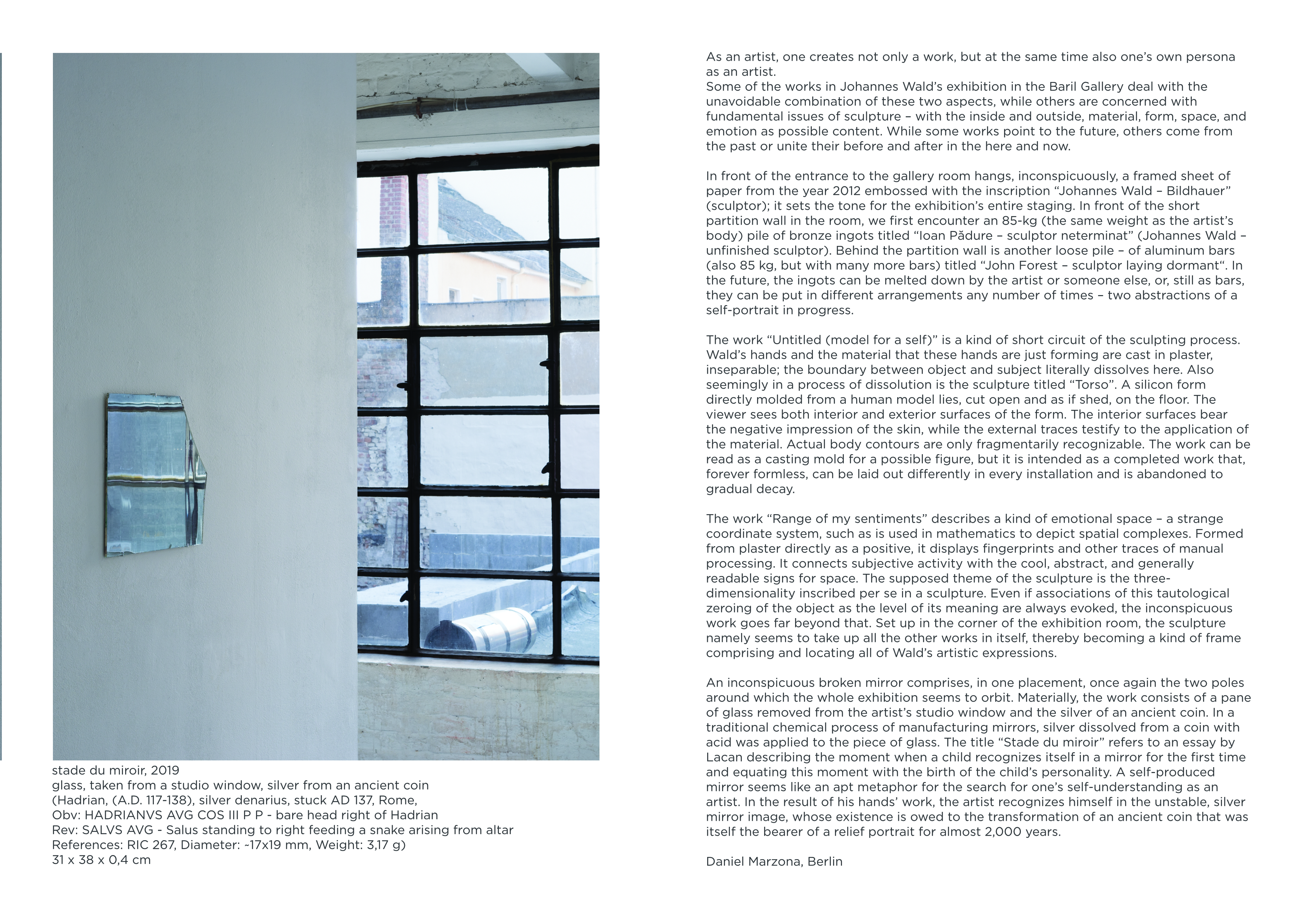
An inconspicuous broken mirror comprises, in one placement, once again the two poles around which the whole exhibition seems to orbit. Materially, the work consists of a pane of glass removed from the artist’s studio window and the silver of an ancient coin. In a traditional chemical process of manufacturing mirrors, silver dissolved from a coin with acid was applied to the piece of glass. The title “Stade du miroir” refers to an essay by Lacan describing the moment when a child recognizes itself in a mirror for the first time and equating this moment with the birth of the child’s personality. A self-produced mirror seems like an apt metaphor for the search for one’s self-understanding as an artist. In the result of his hands’ work, the artist recognizes himself in the unstable, silver mirror image, whose existence is owed to the transformation of an ancient coin that was itself the bearer of a relief portrait for almost 2,000 years.

Ca artist, nu creezi doar o operă, ci, în același timp, îți construiești și propria identitate artistică.

Unele dintre lucrările prezentate în expoziția lui Johannes Wald de la Galeria Baril abordează legătura inevitabilă dintre aceste două aspecte, în timp ce altele se ocupă de probleme fundamentale ale sculpturii: interiorul și exteriorul, materialul, forma, spațiul și emoția ca potențial conținut. Unele lucrări sunt orientate spre viitor, altele provin din trecut, iar altele își reunesc starea de dinainte și cea de după în aici și acum.

În fața intrării în spațiul galeriei, aproape neobservată, se află o foaie de hârtie înrămată, datată 2012, pe care este imprimată în relief inscripția „Johannes Wald – Bildhauer” („Johannes Wald – sculptor”). Lucrarea dă tonul întregii puneri în scenă a expoziției.

În fața peretelui despărțitor din încăpere întâlnim mai întâi o grămadă de lingouri de bronz cu o greutate de 85 de kilograme — egală cu greutatea corporală a artistului — intitulată „Ioan Pădure – sculptor neterminat” („Johannes Wald – unfinished sculptor”). În spatele peretelui se află o altă grămadă neordonată, alcătuită din bare de aluminiu — tot 85 de kilograme, însă împărțite într-un număr mult mai mare de bare —, intitulată „John Forest – sculptor laying dormant” („John Forest – sculptor în stare latentă”). În viitor, lingourile vor putea fi topite de artist sau de altcineva ori, păstrate sub formă de bare, vor putea fi rearanjate în nenumărate configurații. Sunt două abstracții ale unui autoportret aflat în continuă devenire.

Lucrarea „Untitled (model for a self)” („Fără titlu — model pentru un sine”) produce un fel de scurtcircuit al procesului sculptural. Mâinile lui Wald și materialul pe care acestea tocmai îl modelează sunt turnate împreună în ghips, devenind inseparabile; granița dintre obiect și subiect se dizolvă aici în sens literal. Sculptura intitulată „Torso” („Tors”) pare, la rândul ei, surprinsă într-un proces de destrămare. O formă din silicon, mulată direct pe un model uman, zace pe podea, tăiată și desfăcută, ca o piele lepădată. Privitorul poate vedea atât suprafețele interioare, cât și pe cele exterioare ale formei. Suprafețele interioare poartă amprenta negativă a pielii, în timp ce urmele de la exterior depun mărturie despre modul în care a fost aplicat materialul. Contururile propriu-zise ale corpului mai pot fi recunoscute doar fragmentar. Lucrarea poate fi interpretată drept matrița unei posibile figuri, însă este concepută ca o operă încheiată: lipsită pentru totdeauna de o formă definitivă, ea poate fi așezată diferit la fiecare instalare și este lăsată pradă degradării treptate.

Lucrarea „Range of my sentiments” („Întinderea sentimentelor mele”) descrie un fel de spațiu emoțional — un sistem straniu de coordonate, asemănător celor folosite în matematică pentru reprezentarea structurilor spațiale complexe. Modelată direct în ghips ca formă pozitivă, ea păstrează amprentele și alte urme ale prelucrării manuale. Lucrarea pune în legătură activitatea subiectivă cu semnele reci, abstracte și universal recognoscibile prin care este reprezentat spațiul. Tema aparentă a sculpturii este tridimensionalitatea înscrisă, prin definiție, în orice sculptură. Deși această reducere tautologică a obiectului la propriul său nivel de semnificație stârnește inevitabil diverse asocieri, lucrarea discretă depășește cu mult această interpretare. Amplasată în colțul spațiului expozițional, sculptura pare să cuprindă în sine toate celelalte lucrări, devenind astfel un fel de cadru care reunește și situează toate formele de expresie artistică ale lui Wald.

O oglindă spartă, aproape neobservată, reunește într-o singură alcătuire cei doi poli în jurul cărora pare să graviteze întreaga expoziție. Din punct de vedere material, lucrarea este alcătuită dintr-un geam scos de la fereastra atelierului artistului și din argintul unei monede antice. Printr-un procedeu chimic tradițional de fabricare a oglinzilor, argintul extras din monedă cu ajutorul acidului a fost aplicat pe bucata de sticlă. Titlul „Stade du miroir” („Stadiul oglinzii”) face trimitere la un eseu al lui Lacan care descrie momentul în care copilul se recunoaște pentru prima dată într-o oglindă și asociază acest moment cu nașterea personalității sale. O oglindă realizată de artist însuși pare o metaforă potrivită pentru căutarea propriei înțelegeri de sine ca artist. În rezultatul muncii propriilor mâini, artistul se recunoaște în imaginea instabilă a oglinzii de argint, a cărei existență se datorează transformării unei monede antice care, vreme de aproape două mii de ani, fusese ea însăși purtătoarea unui portret în relief.

Born in 1980, at Sindelfingen, Germany, Johannes Wald studied sculpture at Staatliche Akademie der Bildenden Künste Karlsruhe(2002-2007), in the class of Prof. Harald Klingelhöller and Prof. Daniel Roth and at “Meisterschüler“ (2007-2009)with Prof. Harald Klingelhöller. He lives and works in Berlin.

Născut în 1980, la Sindelfingen, în Germania, Johannes Wald a studiat sculptura la Academia de Stat de Arte Frumoase din Karlsruhe (Staatliche Akademie der Bildenden Künste Karlsruhe), între 2002 și 2007, în clasele profesorilor Harald Klingelhöller și Daniel Roth. Între 2007 și 2009, și-a continuat studiile ca „Meisterschüler” al profesorului Harald Klingelhöller. Trăiește și lucrează la Berlin.
forming a self

Johannes Wald
31.5.2019 – 13.7.2019
2019 | Pillars of Creation2019 | Fozakakozfea
views
booklet
press
opening
trivia
Text

As an artist, one creates not only a work, but at the same time also one’s own persona as an artist.

Some of the works in Johannes Wald’s exhibition in the Baril Gallery deal with the unavoidable combination of these two aspects, while others are concerned with fundamental issues of sculpture – with the inside and outside, material, form, space, and emotion as possible content. While some works point to the future, others come from the past or unite their before and after in the here and now.

In front of the entrance to the gallery room hangs, inconspicuously, a framed sheet of paper from the year 2012 embossed with the inscription “Johannes Wald – Bildhauer” (sculptor); it sets the tone for the exhibition’s entire staging.

In front of the short partition wall in the room, we first encounter an 85-kg (the same weight as the artist’s body) pile of bronze ingots titled “Ioan Pădure – sculptor neterminat” (Johannes Wald – unfinished sculptor). Behind the partition wall is another loose pile – of aluminum bars (also 85 kg, but with many more bars) titled “John Forest – sculptor laying dormant“. In the future, the ingots can be melted down by the artist or someone else, or, still as bars, they can be put in different arrangements any number of times – two abstractions of a self-portrait in progress.

The work “Untitled (model for a self)” is a kind of short circuit of the sculpting process. Wald’s hands and the material that these hands are just forming are cast in plaster, inseparable; the boundary between object and subject literally dissolves here. Also seemingly in a process of dissolution is the sculpture titled “Torso”. A silicon form directly molded from a human model lies, cut open and as if shed, on the floor. The viewer sees both interior and exterior surfaces of the form. The interior surfaces bear the negative impression of the skin, while the external traces testify to the application of the material. Actual body contours are only fragmentarily recognizable. The work can be read as a casting mold for a possible figure, but it is intended as a completed work that, forever formless, can be laid out differently in every installation and is abandoned to gradual decay.

The work “Range of my sentiments” describes a kind of emotional space – a strange coordinate system, such as is used in mathematics to depict spatial complexes. Formed from plaster directly as a positive, it displays fingerprints and other traces of manual processing. It connects subjective activity with the cool, abstract, and generally readable signs for space. The supposed theme of the sculpture is the three-dimensionality inscribed per se in a sculpture. Even if associations of this tautological zeroing of the object as the level of its meaning are always evoked, the inconspicuous work goes far beyond that. Set up in the corner of the exhibition room, the sculpture namely seems to take up all the other works in itself, thereby becoming a kind of frame comprising and locating all of Wald’s artistic expressions.

An inconspicuous broken mirror comprises, in one placement, once again the two poles around which the whole exhibition seems to orbit. Materially, the work consists of a pane of glass removed from the artist’s studio window and the silver of an ancient coin. In a traditional chemical process of manufacturing mirrors, silver dissolved from a coin with acid was applied to the piece of glass. The title “Stade du miroir” refers to an essay by Lacan describing the moment when a child recognizes itself in a mirror for the first time and equating this moment with the birth of the child’s personality. A self-produced mirror seems like an apt metaphor for the search for one’s self-understanding as an artist. In the result of his hands’ work, the artist recognizes himself in the unstable, silver mirror image, whose existence is owed to the transformation of an ancient coin that was itself the bearer of a relief portrait for almost 2,000 years.

Ca artist, nu creezi doar o operă, ci, în același timp, îți construiești și propria identitate artistică.

Unele dintre lucrările prezentate în expoziția lui Johannes Wald de la Galeria Baril abordează legătura inevitabilă dintre aceste două aspecte, în timp ce altele se ocupă de probleme fundamentale ale sculpturii: interiorul și exteriorul, materialul, forma, spațiul și emoția ca potențial conținut. Unele lucrări sunt orientate spre viitor, altele provin din trecut, iar altele își reunesc starea de dinainte și cea de după în aici și acum.

În fața intrării în spațiul galeriei, aproape neobservată, se află o foaie de hârtie înrămată, datată 2012, pe care este imprimată în relief inscripția „Johannes Wald – Bildhauer” („Johannes Wald – sculptor”). Lucrarea dă tonul întregii puneri în scenă a expoziției.

În fața peretelui despărțitor din încăpere întâlnim mai întâi o grămadă de lingouri de bronz cu o greutate de 85 de kilograme — egală cu greutatea corporală a artistului — intitulată „Ioan Pădure – sculptor neterminat” („Johannes Wald – unfinished sculptor”). În spatele peretelui se află o altă grămadă neordonată, alcătuită din bare de aluminiu — tot 85 de kilograme, însă împărțite într-un număr mult mai mare de bare —, intitulată „John Forest – sculptor laying dormant” („John Forest – sculptor în stare latentă”). În viitor, lingourile vor putea fi topite de artist sau de altcineva ori, păstrate sub formă de bare, vor putea fi rearanjate în nenumărate configurații. Sunt două abstracții ale unui autoportret aflat în continuă devenire.

Lucrarea „Untitled (model for a self)” („Fără titlu — model pentru un sine”) produce un fel de scurtcircuit al procesului sculptural. Mâinile lui Wald și materialul pe care acestea tocmai îl modelează sunt turnate împreună în ghips, devenind inseparabile; granița dintre obiect și subiect se dizolvă aici în sens literal. Sculptura intitulată „Torso” („Tors”) pare, la rândul ei, surprinsă într-un proces de destrămare. O formă din silicon, mulată direct pe un model uman, zace pe podea, tăiată și desfăcută, ca o piele lepădată. Privitorul poate vedea atât suprafețele interioare, cât și pe cele exterioare ale formei. Suprafețele interioare poartă amprenta negativă a pielii, în timp ce urmele de la exterior depun mărturie despre modul în care a fost aplicat materialul. Contururile propriu-zise ale corpului mai pot fi recunoscute doar fragmentar. Lucrarea poate fi interpretată drept matrița unei posibile figuri, însă este concepută ca o operă încheiată: lipsită pentru totdeauna de o formă definitivă, ea poate fi așezată diferit la fiecare instalare și este lăsată pradă degradării treptate.

Lucrarea „Range of my sentiments” („Întinderea sentimentelor mele”) descrie un fel de spațiu emoțional — un sistem straniu de coordonate, asemănător celor folosite în matematică pentru reprezentarea structurilor spațiale complexe. Modelată direct în ghips ca formă pozitivă, ea păstrează amprentele și alte urme ale prelucrării manuale. Lucrarea pune în legătură activitatea subiectivă cu semnele reci, abstracte și universal recognoscibile prin care este reprezentat spațiul. Tema aparentă a sculpturii este tridimensionalitatea înscrisă, prin definiție, în orice sculptură. Deși această reducere tautologică a obiectului la propriul său nivel de semnificație stârnește inevitabil diverse asocieri, lucrarea discretă depășește cu mult această interpretare. Amplasată în colțul spațiului expozițional, sculptura pare să cuprindă în sine toate celelalte lucrări, devenind astfel un fel de cadru care reunește și situează toate formele de expresie artistică ale lui Wald.

O oglindă spartă, aproape neobservată, reunește într-o singură alcătuire cei doi poli în jurul cărora pare să graviteze întreaga expoziție. Din punct de vedere material, lucrarea este alcătuită dintr-un geam scos de la fereastra atelierului artistului și din argintul unei monede antice. Printr-un procedeu chimic tradițional de fabricare a oglinzilor, argintul extras din monedă cu ajutorul acidului a fost aplicat pe bucata de sticlă. Titlul „Stade du miroir” („Stadiul oglinzii”) face trimitere la un eseu al lui Lacan care descrie momentul în care copilul se recunoaște pentru prima dată într-o oglindă și asociază acest moment cu nașterea personalității sale. O oglindă realizată de artist însuși pare o metaforă potrivită pentru căutarea propriei înțelegeri de sine ca artist. În rezultatul muncii propriilor mâini, artistul se recunoaște în imaginea instabilă a oglinzii de argint, a cărei existență se datorează transformării unei monede antice care, vreme de aproape două mii de ani, fusese ea însăși purtătoarea unui portret în relief.

Born in 1980, at Sindelfingen, Germany, Johannes Wald studied sculpture at Staatliche Akademie der Bildenden Künste Karlsruhe(2002-2007), in the class of Prof. Harald Klingelhöller and Prof. Daniel Roth and at “Meisterschüler“ (2007-2009)with Prof. Harald Klingelhöller. He lives and works in Berlin.

Născut în 1980, la Sindelfingen, în Germania, Johannes Wald a studiat sculptura la Academia de Stat de Arte Frumoase din Karlsruhe (Staatliche Akademie der Bildenden Künste Karlsruhe), între 2002 și 2007, în clasele profesorilor Harald Klingelhöller și Daniel Roth. Între 2007 și 2009, și-a continuat studiile ca „Meisterschüler” al profesorului Harald Klingelhöller. Trăiește și lucrează la Berlin.
Site typography

Two voices: Archivo for the apparatus and the poster, EB Garamond for long-form reading. The three words of the identity (BARIL · ARCHIVE · 2012–2019) are drawn, not typeset.

The apparatus — Archivo

9px · 400 fine print: the artist on a polaroid, the OCD sheets, the „generated…" line
10,5px · 400 · .15em labels · filter · imported · menu · press release
12px · 400 filters, timeline, artist list, tooltips, captions — tabular figures
14px · 500accordion headers

The poster — also Archivo

clamp(17→24px) · 700exhibition title
clamp(15→19px) · 600artist name
14px · 400 31.10.2018 – 31.1.2019
10,5px · 500curated by

Reading — EB Garamond

15.5px / 1.6texts in column 4: press releases, biographies, the poem — with true italics
19.5px / 1.62 · 58chfull screen
30px · 600the title in the reader

Conventions: uppercase labels always carry .14–.16em tracking in muted ink; figures are tabular so they never dance while scrolling; italics appear only in reading.